
Chicken Cacciatore Recipe (Italian Hunter Style)
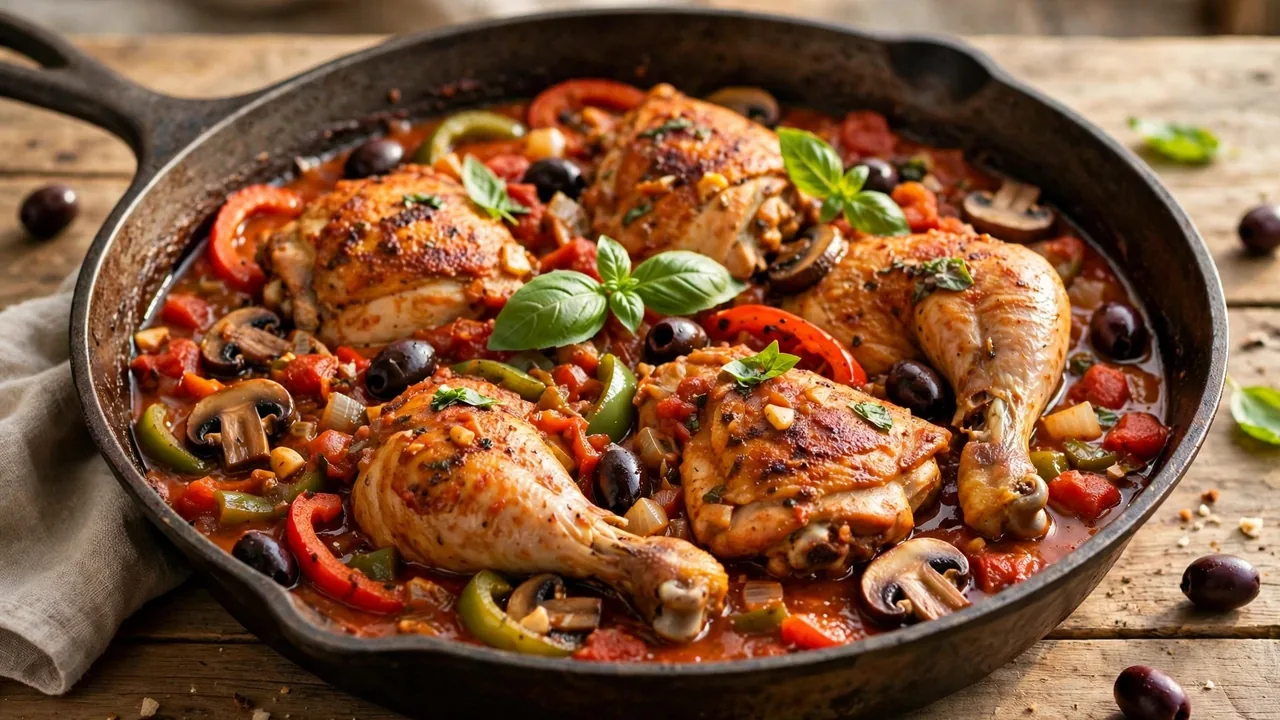
This chicken cacciatore recipe is rustic Italian cooking at its best. The name means hunter style, and it tastes like it was made after a long day outdoors: browned chicken braised slowly with peppers, mushrooms, tomatoes and olives until everything is tender and the sauce is rich enough to demand bread. It is a one pot dinner that fills the kitchen with a wonderful smell and the table with happy people.
The dish comes from central Italy, where hunters would cook their catch in a pot with whatever vegetables were on hand. There is no single official recipe. Every region, and honestly every family, has its own version. Some add wine, some add olives, some add capers, and some insist on mushrooms while others leave them out entirely.
This version brings together the best of those traditions. Bone in chicken stays juicy during the braise, peppers and mushrooms add sweetness and earthiness, and the olives and capers give the sauce a little salty bite that keeps it from being one note. It is ready in about an hour, and most of that time the pot looks after itself.
What Is Chicken Cacciatore?
Chicken cacciatore is an Italian braised chicken dish cooked in a tomato sauce with peppers, onions, mushrooms and herbs. The chicken is browned first, then simmered gently in the sauce until it is fall off the bone tender. It is peasant food in the best sense, built from simple ingredients and slow cooking.
The sauce is the star alongside the chicken. Tomatoes, white wine and stock reduce together into something savoury and slightly sweet, with the peppers softening into it and the mushrooms adding depth. A handful of olives and capers at the end gives it a Mediterranean lift that makes the whole dish sing.
It is traditionally served with polenta, crusty bread or pasta, so that nothing of the sauce goes to waste. It is also excellent over mashed potatoes or rice. However you serve it, the rule is the same: provide something to mop up the sauce, because that is where the flavour lives.
Why This Chicken Cacciatore Recipe Works
Bone in, skin on chicken is the right choice here. The bones add flavour to the sauce as it braises, and the skin protects the meat from drying out. The single most important step is browning the chicken well before braising, because that golden crust is where most of the flavour comes from.
Deglazing the pan with white wine after the vegetables have cooked lifts all the browned bits into the sauce. Those bits are concentrated flavour, and losing them would be a waste. The wine cooks down quickly, leaving brightness without any alcohol taste.
Adding the olives and capers at the very end keeps their flavour sharp and distinct. If they go in at the start, they soften and disappear into the sauce. Stirred in for the last five minutes, they stay punchy and give every bite a little salty surprise.
Choosing the Chicken
Thighs and drumsticks are the best cuts for cacciatore. They have more fat and connective tissue than breast meat, which means they stay juicy through a long braise. Breast meat can work, but it dries out easily and needs a much shorter cooking time.
Look for bone in, skin on pieces. The skin renders during browning and adds richness to the sauce, and the bones keep the meat moist and add flavour. If you buy a whole chicken, ask the butcher to cut it into eight pieces, or do it yourself at home.
Pat the chicken very dry before it goes in the pan. Wet skin will not brown, it will steam, and you will lose the crisp golden crust that makes the dish. Season generously with salt and pepper, and let the pieces sit for a few minutes so the seasoning sticks.
How to Make Chicken Cacciatore Step by Step
Heat olive oil in a large deep skillet and brown the chicken in batches, skin side down first. Give each piece space and do not move it around. Five minutes per side should give you a deep golden crust. Set the chicken aside as you go.
In the same pan, soften the onions and peppers, then add the mushrooms and let them brown. Stir in the garlic, tomato paste, oregano and chilli flakes, then pour in the wine and scrape the bottom of the pan. Add the tomatoes, stock and bay leaves and bring it to a simmer.
Nestle the chicken back into the sauce, skin side up, cover the pan and cook on low heat for thirty five minutes. The chicken should be cooked through and tender. Stir in the olives and capers, cook uncovered for five minutes to thicken the sauce, and finish with fresh basil.
Variations Worth Trying
Some families make cacciatore with red wine instead of white, which gives the sauce a deeper colour and a richer flavour. Either works, so use what you have open. A splash of balsamic vinegar at the end can add a similar depth if you are cooking without wine.
For a spicier version, increase the red pepper flakes and add a sliced fresh chilli with the peppers. For a milder, sweeter version, add a grated carrot with the onions. It melts into the sauce and adds natural sweetness that children especially like.
You can also make this in the oven. Brown the chicken and build the sauce on the stove, then transfer the whole pan to a 180 C oven for forty minutes. The even heat of the oven is very forgiving, and it frees up the stovetop for the side dishes.
Serving and Storage
Serve chicken cacciatore over creamy polenta, which is the traditional partner and soaks up the sauce perfectly. Crusty bread, pasta, mashed potatoes or rice all work well too. A simple green salad with lemon dressing balances the richness of the sauce.
For a dinner party, this is an excellent dish because it holds well. You can make it a few hours ahead and keep it warm on the lowest heat, or make it the day before and reheat it gently. Like most braises, it tastes even better the next day.
Leftovers keep in the fridge for up to four days in a sealed container. Reheat gently on the stove over low heat, adding a splash of stock or water if the sauce has thickened. It freezes well for up to three months. Thaw overnight in the fridge and reheat slowly, then finish with fresh basil.
If you have leftover sauce, use it as a pasta sauce the next day. Shred any leftover chicken into the sauce and toss it through penne with parmesan. One pot can easily stretch into two different meals, which is exactly how good home cooking should work.
Frequently Asked Questions
Can I use boneless chicken for cacciatore?
Yes, boneless thighs work well and cook a little faster. Reduce the braising time to about 25 minutes so they do not dry out. Avoid boneless breast if you can, because it tends to become tough and stringy in a long braise.
Can I make chicken cacciatore without wine?
Yes. Replace the white wine with an equal amount of chicken stock plus a tablespoon of lemon juice or white wine vinegar. The flavour will be slightly less complex, but the dish will still be delicious and the sauce will still have good depth.
What is the difference between cacciatore and chicken parmesan?
Cacciatore is a braised chicken stew in tomato sauce with peppers and mushrooms, served with bread or polenta. Chicken parmesan is breaded fried chicken topped with tomato sauce and melted cheese. They share Italian roots but they are very different dishes in both method and flavour.
Can I make chicken cacciatore in a slow cooker?
Yes. Brown the chicken and vegetables on the stove first, then transfer everything to the slow cooker. Cook on low for 5 to 6 hours or on high for 3 hours. Add the olives and capers in the last 15 minutes so they keep their flavour.
For more chicken dinners, try our chicken parmesan or chicken tikka masala. The spaghetti bolognese is another family favorite, and garlic butter chicken is the quick weeknight option.
Chicken Cacciatore Recipe (Italian Hunter Style)
Ingredients
Equipment
Method
- Pat the chicken pieces dry and season with salt and pepper.
- Heat the olive oil in a large deep skillet over medium high heat. Brown the chicken in batches, skin side down first, about 5 minutes per side. Remove and set aside.
- Lower the heat to medium. Add the onion and peppers and cook for 6 minutes until softened.
- Add the mushrooms and cook for 5 minutes until they release their liquid and begin to brown.
- Stir in the garlic, tomato paste, oregano and red pepper flakes. Cook for 1 minute.
- Pour in the white wine and scrape the bottom of the pan. Simmer for 2 minutes.
- Add the crushed tomatoes, chicken stock and bay leaves. Stir well.
- Return the chicken to the pan, nestling the pieces into the sauce. Bring to a gentle simmer.
- Cover and cook on low heat for 35 minutes, until the chicken is cooked through and tender.
- Stir in the olives and capers. Cook uncovered for 5 minutes to thicken the sauce slightly.
- Remove the bay leaves. Taste and adjust the seasoning.
- Rest for 5 minutes, then serve scattered with fresh basil.
About the Author
Luke is the home cook and writer behind Lumomint Foods. He spends his time testing comforting, practical recipes from around the world and writing them up in plain, easy language for everyday cooks.