
Ratatouille Recipe (Classic French Vegetable Stew)
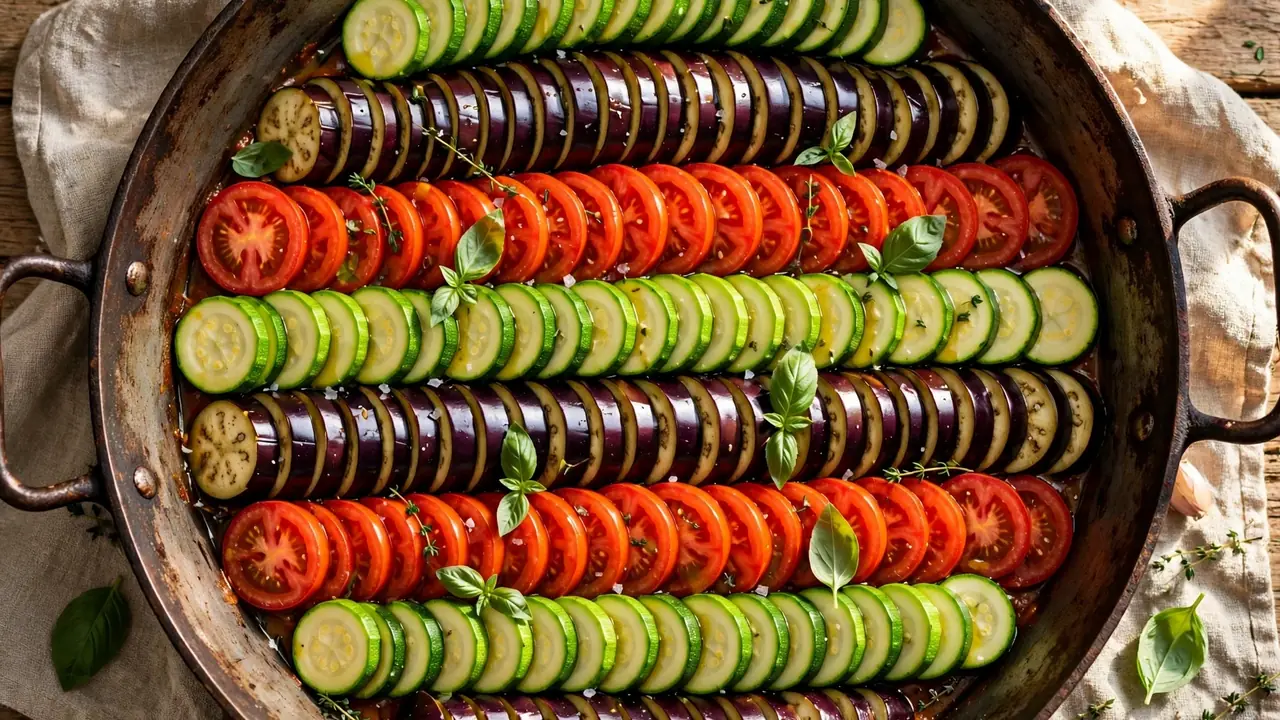
This ratatouille recipe proves simple vegetables, cooked with care, can taste extraordinary. Eggplant, zucchini, peppers and tomatoes melt together slowly until the flavours blend into something rich, sweet and deeply savoury. It is the taste of a Provençal summer, and it works in almost any season if you use good tomatoes.
The dish comes from Nice, in the south of France, where it began as a humble farmers stew. The name comes from the French word touiller, which means to stir or toss. It was peasant food, made from whatever the garden produced, and it is still at its best when the vegetables are ripe and in season.
There are two schools of thought about how to cook it. Some cooks layer the vegetables in neat rows and bake them, the way the famous film showed it. Others cook each vegetable separately, then bring them together to simmer. This recipe follows the second method, because it gives you the best flavour and the best texture.
What Is Ratatouille?
At its heart, ratatouille is a stew of eggplant, zucchini, bell peppers, onions, garlic and tomatoes, cooked in olive oil with herbs. It is seasoned with thyme, bay leaf and basil, and it is finished with a drizzle of good olive oil. It is naturally vegan, naturally gluten free, and it tastes even better the next day.
The classic Provençal version cooks each vegetable separately before combining them. That is the key detail. Eggplant needs high heat and oil to turn golden and creamy. Zucchini needs a quick sear so it stays firm. Peppers and onions need a slow softening. If you throw everything in together, you get a mushy stew where every vegetable tastes the same.
Ratatouille is served warm, at room temperature, or even cold. It is a side dish for roast chicken or grilled fish, a main dish over rice or with crusty bread, and a filling for omelettes and sandwiches. It is one of the most versatile dishes in French cooking.
Why This Ratatouille Recipe Works
Cooking the vegetables in batches is the whole secret. Eggplant is the thirstiest vegetable in the pan, and if you cook it with everything else it will soak up all the oil and turn greasy. Browned on its own, it becomes golden and creamy. The single most important step is browning each vegetable separately before combining them, because that is what keeps the flavours distinct.
The tomato base is cooked down before the vegetables go back in, which concentrates the flavour and stops the stew from becoming watery. A pinch of sugar is optional, but it rounds out the acidity of the tomatoes, especially if they are not at their sweetest.
Resting the finished ratatouille for ten minutes matters more than it sounds. The flavours settle, the sauce thickens slightly, and the vegetables relax into each other. Like many stews, it genuinely tastes better after a few hours, so do not be afraid to make it ahead.
Choosing the Vegetables
Look for firm, glossy eggplant with no soft spots. A heavy eggplant for its size is usually fresher and less bitter. Smaller eggplants tend to have fewer seeds and a sweeter flavour. Salting the cubes for fifteen minutes draws out bitterness and moisture, and helps them brown instead of steaming.
Zucchini should be firm and small to medium in size. Very large zucchini are watery and full of seeds, and they fall apart in the stew. Cut them into half moons about a centimetre thick so they cook through without turning to mush.
Use ripe, fragrant tomatoes. In summer, fresh tomatoes are unbeatable. In winter, good quality canned tomatoes are honestly the better choice, because out of season fresh tomatoes are often pale and flavourless. A mix of red and yellow peppers adds sweetness and colour, but one colour alone is fine too.
How to Make Ratatouille Step by Step
Start by salting the eggplant and letting it sit while you prepare everything else. Pat it dry, then brown it in batches in hot olive oil. Do not crowd the pan. Crowded eggplant steams instead of browning, and you will end up with grey, soggy cubes. Give each piece space and let it develop colour.
Brown the zucchini the same way, quickly, just until the edges take on colour. Then lower the heat and soften the onions and peppers slowly until they are sweet and tender. Add the garlic and tomato paste and cook for a minute until the raw smell disappears.
Pour in the tomatoes, add the herbs, bay leaf and seasoning, and let the sauce simmer for ten minutes. Then return the eggplant and zucchini to the pan, stir gently, and simmer on low heat for twenty five to thirty minutes. The vegetables should be tender but still hold their shape when you lift a spoonful.
The Baked Layered Version
If you prefer the beautiful layered look, you can bake ratatouille instead. Make the tomato sauce as described, spread it in a baking dish, then arrange thinly sliced eggplant, zucchini and tomato in overlapping rows on top. Brush with olive oil, cover with foil and bake at 190 C for about forty minutes.
Remove the foil for the last ten minutes so the top colours. This version is more elegant and it is the one to make when you want to impress guests. The flavour is slightly different, more roasted and less stew like, but it is equally good.
Either way, finish with fresh basil and a drizzle of your best olive oil. Basil should go in at the end, off the heat, so its flavour stays bright instead of turning dark and bitter.
Serving and Storage
Ratatouille is endlessly flexible at the table. Serve it warm over rice, polenta or couscous for a filling main course. Spoon it onto toasted bread rubbed with garlic for a rustic bruschetta. Serve it as a side with roast chicken, grilled fish or a simple omelette.
It is also excellent cold or at room temperature, tossed through pasta or spooned into a sandwich with goat cheese. In Provence it is often served the day after it is made, because the flavours deepen overnight. If you can, make it a day ahead and reheat it gently.
Leftovers keep in the fridge for up to five days in a sealed container. Reheat gently on the stove with a splash of water if the sauce has thickened. It freezes well for up to three months, though the zucchini will be softer after thawing. That is fine for a stew, just not ideal for the layered baked version.
If you have a large batch, try using it as a base for other meals. Stir it into cooked pasta with parmesan, spoon it over a baked potato, or use it as a filling for a savoury tart. One pot of ratatouille can feed you three different ways across a week.
Frequently Asked Questions
Why is my ratatouille mushy?
Mushy ratatouille usually comes from cooking all the vegetables together at once, or from simmering too long. Brown each vegetable separately, then simmer gently for no more than thirty minutes. The vegetables should be tender but still recognisable when you serve them.
Can I make ratatouille without eggplant?
Yes, you can leave the eggplant out and add extra zucchini and peppers. The dish will be lighter and a little sweeter. Some Provençal cooks actually prefer a version without eggplant, so it is a legitimate variation rather than a compromise.
Is ratatouille better the next day?
Almost always, yes. The flavours meld and deepen overnight in the fridge. Reheat it gently on the stove or serve it at room temperature. Many French cooks deliberately make it a day ahead for this reason.
What should I serve with ratatouille?
Crusty bread is the classic partner, along with rice, polenta or couscous if you want a main course. It also works beautifully as a side for grilled chicken, roast lamb or baked fish. A simple green salad and a glass of rosé complete the meal.
For more vegetable dishes, start with our creamy tomato soup or toss pasta with traditional pesto sauce. The spaghetti bolognese is a heartier Italian option, and a fresh Greek salad pairs well with this stew.
Ratatouille Recipe (Classic French Vegetable Stew)
Ingredients
Equipment
Method
- Salt the eggplant cubes and leave them in a colander for 15 minutes. Pat them dry with a clean towel.
- Heat 2 tablespoons olive oil in a large wide pan over medium high heat. Brown the eggplant in batches until golden, about 5 minutes per batch. Remove and set aside.
- Add another tablespoon of oil and brown the zucchini for 4 minutes. Remove and set aside.
- Lower the heat to medium. Add the remaining oil, onion and peppers. Cook for 8 minutes until soft.
- Add the garlic and tomato paste. Cook for 1 minute until fragrant.
- Add the tomatoes, herbes de Provence, bay leaf, sugar, salt and pepper. Simmer for 10 minutes.
- Return the eggplant and zucchini to the pan. Stir gently, cover partially, and simmer on low for 25 to 30 minutes until everything is tender but still holds its shape.
- Remove the bay leaf. Stir in the basil and thyme. Taste and adjust the seasoning.
- Rest for 10 minutes before serving warm or at room temperature.
About the Author
Luke is the home cook and writer behind Lumomint Foods. He spends his time testing comforting, practical recipes from around the world and writing them up in plain, easy language for everyday cooks.