
Garlic Bread Recipe (Crispy, Buttery, Easy)
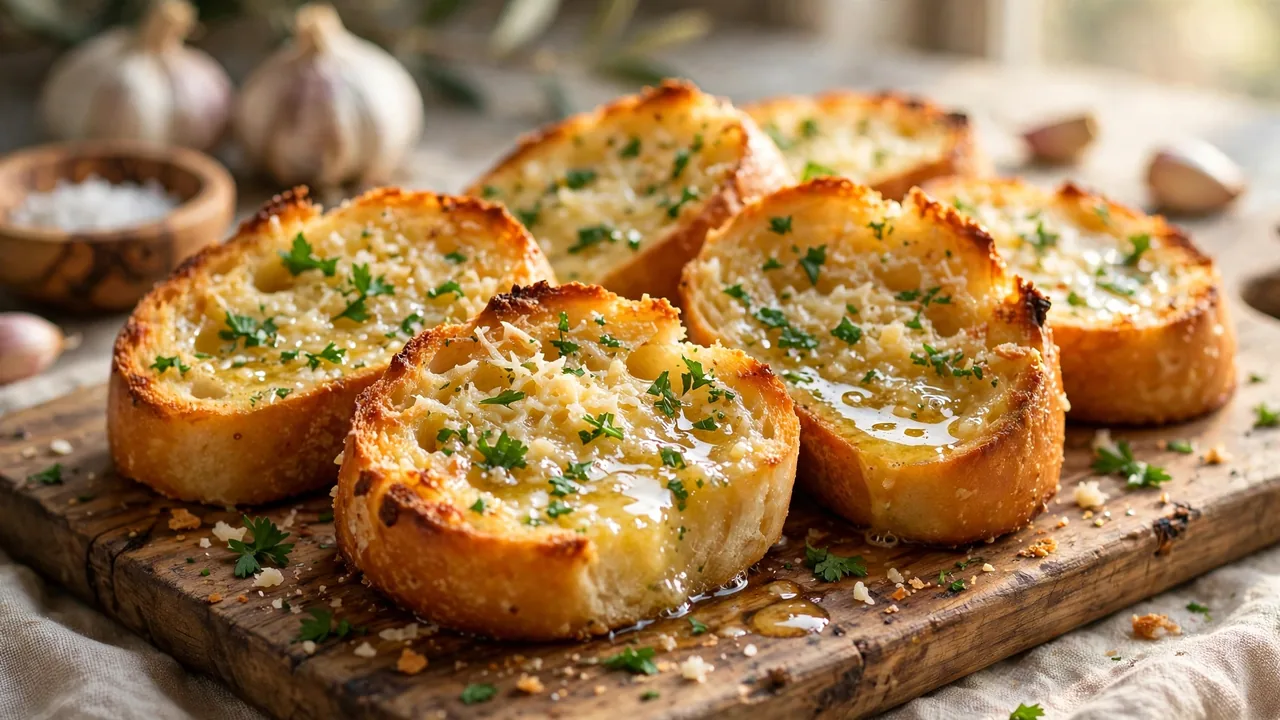
This garlic bread recipe is one of those foods that needs no introduction and no excuse. It appears next to pasta, soup, salad and grilled meat, and it disappears first every single time. Crisp on the outside, soft and buttery inside, with garlic in every bite and a little parmesan on top, it is the side dish that often steals the show.
The best garlic bread is simple. Good bread, real butter, fresh garlic and a hot oven. There is no need for jars of garlic spread or pre made mixes. Five minutes of preparation and twelve minutes in the oven will give you something far better than anything from a freezer bag.
This recipe works with a baguette, an Italian loaf or even a soft white loaf in a pinch. The method is the same, and the result is always the same too: golden, fragrant, buttery bread that makes any meal feel more generous.
What Makes Great Garlic Bread?
Great garlic bread is a balance of three things: crunch, butter and garlic. The outside should be crisp enough to hear when you bite it, the inside should be soft and soaked with butter, and the garlic should be present in every bite without being harsh or bitter.
The bread matters more than anything else. A crusty loaf with a firm crumb holds up to the butter and stays crisp in the oven. Soft sandwich bread turns soggy, and very dense bread stays chewy in the middle. A day old baguette is actually ideal, because it is slightly drier and soaks up the butter beautifully.
Fresh garlic is essential. Garlic powder has its place, but it cannot replace the flavour of fresh cloves mashed into soft butter. Five cloves sounds like a lot, but roasting in the oven mellows the garlic and turns it sweet and nutty rather than sharp.
Why This Garlic Bread Recipe Works
Softened butter, not melted butter, is the key. Soft butter mixes evenly with the garlic and parmesan, and it stays where you spread it instead of running off the bread and pooling on the tray. The single most important step is spreading softened garlic butter thickly into every cut, because that is what flavours the bread all the way through.
Cutting the bread without slicing all the way through, like a hasselback, lets the butter seep between the slices while keeping the loaf in one piece for serving. It looks impressive on the table, and people can tear off exactly as much as they want.
A short blast under the grill at the end gives you the golden, crisp top that makes garlic bread irresistible. Watch it closely, because the line between golden and burnt is about thirty seconds. Stay by the oven for those last two minutes.
Choosing the Bread
A French baguette is the classic choice. Its crisp crust and open crumb are made for garlic butter. An Italian loaf, ciabatta or a rustic sourdough all work well too. Ciabatta gives you a chewier result with big air pockets that fill with butter, which is wonderful.
Avoid very soft white sandwich loaves, which collapse under the butter and turn soggy. If that is all you have, use less butter, bake it for a shorter time, and serve it immediately. It will still taste good, it just will not have the same crunch.
Day old bread is better than fresh bread for this recipe. Fresh bread is soft and compresses when you spread butter on it. Bread that is a day old is firmer, holds its shape, and absorbs the butter without falling apart.
How to Make Garlic Bread Step by Step
Preheat the oven to 200 C and line a baking sheet with foil. Mash the softened butter with the garlic, parsley, parmesan, salt and pepper in a small bowl until it is smooth and evenly mixed. Taste it. It should be garlicky and well seasoned.
Slice the bread in half lengthwise, then cut each half into thick slices without cutting all the way through the base. Spread the garlic butter generously over the cut surfaces and push it into the cracks with a knife or a small spatula. Drizzle lightly with olive oil.
Bake cut side up for ten to twelve minutes until the edges are golden and crisp. If you want extra crunch, switch to the grill for the last minute or two and watch it like a hawk. Rest for two minutes, slice fully, and serve warm.
Variations Worth Trying
Cheesy garlic bread is the most popular variation. Add a generous layer of grated mozzarella over the butter before baking, and you get a gooey, stretchy topping that children love. A mix of mozzarella and parmesan gives you both melt and flavour.
For a herby version, add chopped rosemary or thyme to the butter, or use a little dried Italian seasoning. A pinch of chilli flakes adds a gentle warmth that works beautifully with the garlic. A squeeze of lemon zest in the butter brightens everything.
If you want to make it ahead, spread the butter on the bread, wrap it tightly in foil and refrigerate for up to a day. Bake it straight from the fridge, adding two or three extra minutes. You can also freeze buttered bread for up to a month and bake it from frozen.
Serving and Storage
Garlic bread goes with almost everything. It is the classic partner for pasta, especially tomato based sauces, and it is wonderful with soup, where it doubles as a spoon for mopping up the bowl. It is also excellent next to grilled chicken, roast vegetables or a big salad.
Serve it warm, straight from the oven, cut into pieces on a wooden board in the middle of the table. Garlic bread is at its best in the first ten minutes, while the crust is still crisp and the butter is still glistening.
Leftovers keep for a day in an airtight container, but the crust will soften. Reheat in a hot oven for five minutes to bring back some of the crispness. The microwave will warm it but will make it soft, so the oven is always better.
If you have leftover garlic butter, do not throw it away. It keeps in the fridge for a week and is wonderful melted over grilled vegetables, stirred into mashed potatoes, or spread on toast for breakfast. A little jar of it in the fridge is a cook’s secret weapon.
Frequently Asked Questions
Can I make garlic bread without an oven?
Yes. Spread the butter on the bread and cook it butter side down in a hot skillet for 2 to 3 minutes, then flip and cook the other side briefly. An air fryer also works well at 180 C for about 5 minutes. Both methods give a crisp result.
Why did my garlic bread turn out soggy?
Soggy garlic bread usually comes from too much butter, or from bread that was too soft. Use softened butter rather than melted, spread it evenly rather than thickly in one spot, and bake it until the edges are properly golden and crisp.
Can I use garlic powder instead of fresh garlic?
You can, but the flavour will be milder and less fresh. Use about 1 teaspoon of garlic powder mixed into the butter. Fresh garlic is much better, and if you only have powder, add a little extra parmesan and parsley to boost the flavour.
How do I store leftover garlic bread?
Wrap it tightly and keep it at room temperature for up to a day, or refrigerate it for two days. Reheat in a hot oven for 5 minutes to restore the crispness. Do not reheat it in the microwave unless you are happy with a soft result.
Garlic bread goes with almost everything, especially our white pizza and spaghetti bolognese. Learn how to make garlic confit for an even deeper flavour, and serve it with creamy tomato soup.
Garlic Bread Recipe (Crispy, Buttery, Easy)
Ingredients
Equipment
Method
- Preheat the oven to 200 C (400 F). Line a baking sheet with foil.
- In a small bowl, mash the softened butter with the minced garlic, parsley, parmesan, salt, pepper and oregano until well combined.
- Slice the bread in half lengthwise, then cut each half into 4 thick slices without cutting all the way through the base, or slice fully into individual pieces.
- Spread the garlic butter generously over the cut surfaces, getting it into all the cracks.
- Drizzle lightly with olive oil.
- Place the bread cut side up on the baking sheet. Bake for 10 to 12 minutes until golden and crisp at the edges.
- For extra crispiness, switch to the grill for the last 1 to 2 minutes, watching closely so it does not burn.
- Rest for 2 minutes, then slice fully and serve warm.
About the Author
Luke is the home cook and writer behind Lumomint Foods. He spends his time testing comforting, practical recipes from around the world and writing them up in plain, easy language for everyday cooks.