
Japanese Tamagoyaki: Sweet vs Savory Omelette Guide
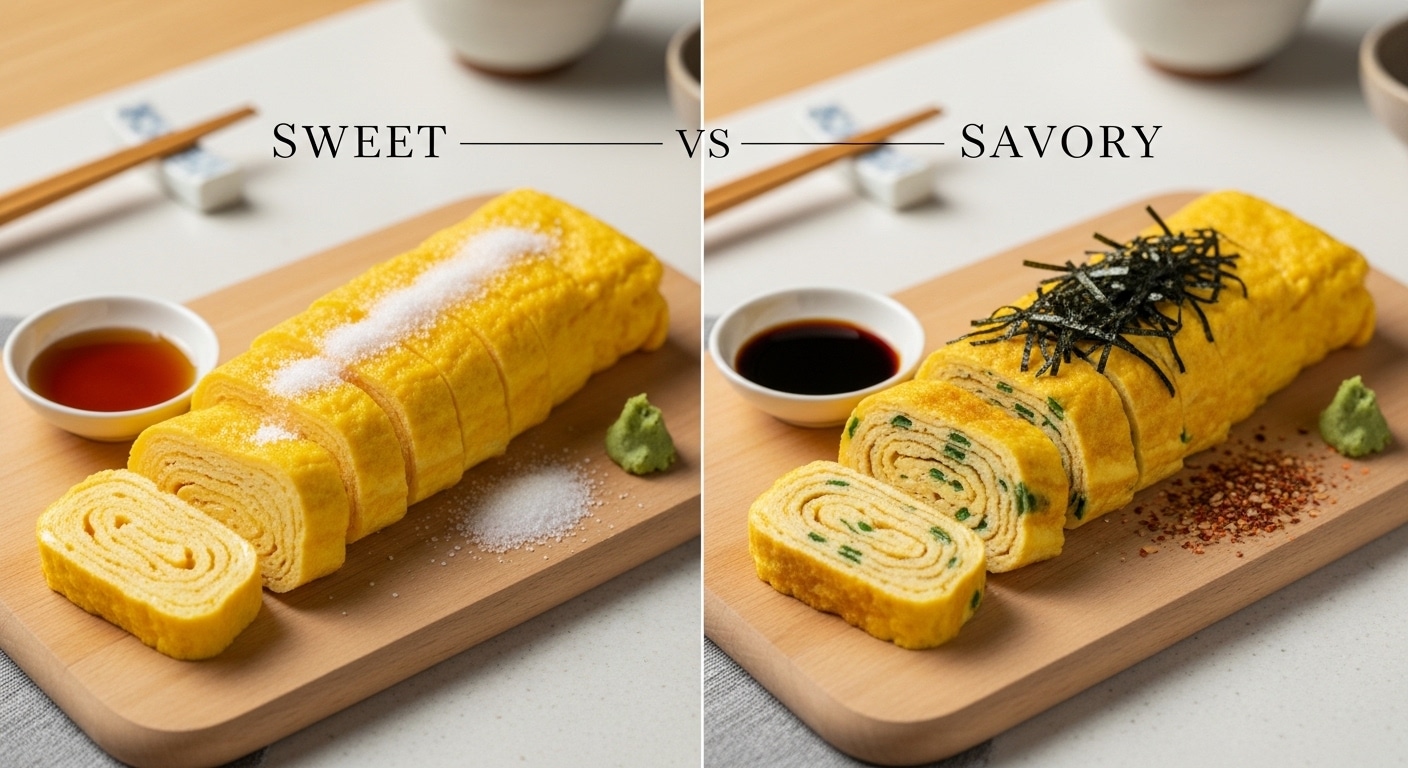
Tamagoyaki is a traditional Japanese rolled omelette known for its delicate texture, clean flavors, and elegant presentation. Commonly served in home cooking, bento boxes, and sushi restaurants, tamagoyaki comes in two main styles: sweet and savory. Understanding the difference helps you choose the right version for breakfast, lunch, or pairing with other dishes.
Japanese Tamagoyaki (Rolled Omelette)
Ingredients
Equipment
Method
- Whisk eggs, dashi, soy sauce, mirin, and salt in a bowl until smooth. Strain through a fine mesh sieve for a silky texture.
- Heat a rectangular tamagoyaki pan (or small nonstick skillet) over medium-low heat. Lightly oil the surface with a paper towel.
- Pour in a thin layer of egg mixture, just enough to cover the bottom. When the edges set but the top is still slightly wet, roll it up from one side using chopsticks or a spatula.
- Push the rolled egg to one side, oil the empty space, and pour in another thin layer. Lift the rolled egg slightly so the new layer flows underneath.
- When the new layer sets, roll it up again with the previous roll inside. Repeat until all the egg mixture is used.
- Transfer to a cutting board, let rest for 1 minute, then slice into 6 to 8 pieces. Serve warm or at room temperature.
Notes
What Is Tamagoyaki
Tamagoyaki is made by cooking thin layers of seasoned egg in a rectangular pan, rolling each layer as it sets to form a soft, layered omelette. Unlike Western omelettes, tamagoyaki focuses on balance, texture, and subtle seasoning rather than fillings. In Japan, it is considered both everyday food and a test of a cook’s technique. For a simpler egg breakfast, see our guide to perfect scrambled eggs.
Sweet Tamagoyaki Explained
Sweet tamagoyaki, often called dashimaki tamago in its sweeter form, uses sugar or mirin to create a lightly dessert-like flavor. It is especially popular in eastern Japan and is commonly served in sushi restaurants as tamago nigiri. The sweetness is gentle, not overpowering, and pairs well with rice and soy-based dishes.
Ingredients Used in Sweet Tamagoyaki
Sweet tamagoyaki typically includes eggs, sugar, mirin, soy sauce in very small quantity, and sometimes dashi. The goal is a glossy omelette with a custard-like interior. Too much sugar can cause burning, so heat control is critical.
Flavor Profile of Sweet Tamagoyaki
The taste is soft, mildly sweet, and clean, with a tender bite. It works well as a breakfast item, a bento side dish, or a sushi topping. Children and first-time Japanese food eaters often prefer this version due to its approachable flavor.
Savory Tamagoyaki Explained
Savory tamagoyaki focuses on umami rather than sweetness. It relies on dashi stock, soy sauce, and sometimes salt, without added sugar. This version is more common in home kitchens and western regions of Japan.
Ingredients Used in Savory Tamagoyaki
Savory tamagoyaki uses eggs, dashi, soy sauce, and occasionally mirin in very small amounts for balance rather than sweetness. Some variations include chopped scallions, shredded nori, or grated daikon mixed into the egg.
Flavor Profile of Savory Tamagoyaki
Savory tamagoyaki tastes light, aromatic, and deeply umami. The dashi adds complexity without heaviness. This version pairs well with grilled fish, rice, miso soup, and vegetable side dishes. Like shakshuka, another beloved egg dish, it shows how versatile eggs can be.
Key Differences Between Sweet and Savory Tamagoyaki
Sweet tamagoyaki highlights sugar and mirin, creating a soft sweetness, while savory tamagoyaki emphasizes dashi and soy sauce for umami depth. Sweet versions are often served cold or at room temperature, while savory versions are commonly eaten warm. Texture-wise, both are soft, but savory tamagoyaki tends to be lighter and less custard-like.
Which Tamagoyaki Is More Authentic
Both versions are authentic. Regional preference, family tradition, and intended use determine the style. Sushi chefs often favor sweet tamagoyaki, while home cooks lean toward savory versions for daily meals.
Best Pan for Making Tamagoyaki
A rectangular tamagoyaki pan, called a makiyakinabe, helps create even layers and sharp edges. While a round pan can work, the traditional pan makes rolling easier and results more consistent. Serious Eats shares a detailed home-style tamagoyaki recipe with helpful rolling tips.
Common Mistakes to Avoid
Cooking on high heat causes browning and dryness. Over-seasoning masks the egg’s natural flavor. Skipping oil between layers leads to sticking and tearing. Gentle heat and patience are essential.
How to Choose Sweet or Savory
Choose sweet tamagoyaki for sushi, bento boxes, or as a standalone snack. Choose savory tamagoyaki for traditional Japanese breakfasts, balanced meals, or when serving alongside salty dishes.
Cultural Role of Tamagoyaki
Tamagoyaki represents simplicity and discipline in Japanese cooking. Sushi chefs are often judged by their tamagoyaki because it reveals knife skills, seasoning balance, and temperature control.
Learning From Trusted Japanese Sources
For step-by-step visuals and traditional ratios, Just One Cookbook offers detailed guides on both sweet and savory tamagoyaki styles: https://www.justonecookbook.com/tamagoyaki-japanese-rolled-omelette/. NHK World Japan provides cultural context and cooking demonstrations rooted in authentic technique: https://www3.nhk.or.jp/nhkworld/. For deeper insight into sushi-style tamago, Sushi University explains professional methods used by chefs: https://sushiuniversity.jp/.
Frequently Asked Questions
What does tamagoyaki taste like?
Tamagoyaki has a delicate, slightly sweet or savory flavor depending on the style. Sweet versions taste mildly sugary with a custard-like texture, while savory versions are light and umami-rich from dashi. Both are tender and not overpowering.
Can I make tamagoyaki without a special pan?
Yes, you can use a small nonstick skillet instead of a rectangular tamagoyaki pan. The shape will be less uniform, but the flavor and texture will still be delicious. A rectangular pan just makes rolling easier and gives cleaner edges.
Is tamagoyaki sweet or savory?
Both versions are authentic. Sweet tamagoyaki uses sugar or mirin and is popular in sushi restaurants, while savory tamagoyaki relies on dashi and soy sauce for umami. Choose based on your preference or what you are serving it with.
Final Insight on Sweet vs Savory Tamagoyaki
Sweet and savory tamagoyaki are not rivals but expressions of the same technique shaped by taste and purpose. Mastering both gives you flexibility in Japanese cooking and a deeper appreciation for how simple ingredients can create entirely different experiences when handled with care.
About the Author
Luke is the home cook and writer behind Lumomint Foods. He spends his time testing comforting, practical recipes from around the world and writing them up in plain, easy language for everyday cooks.