
Vietnamese Banh Mi at Home
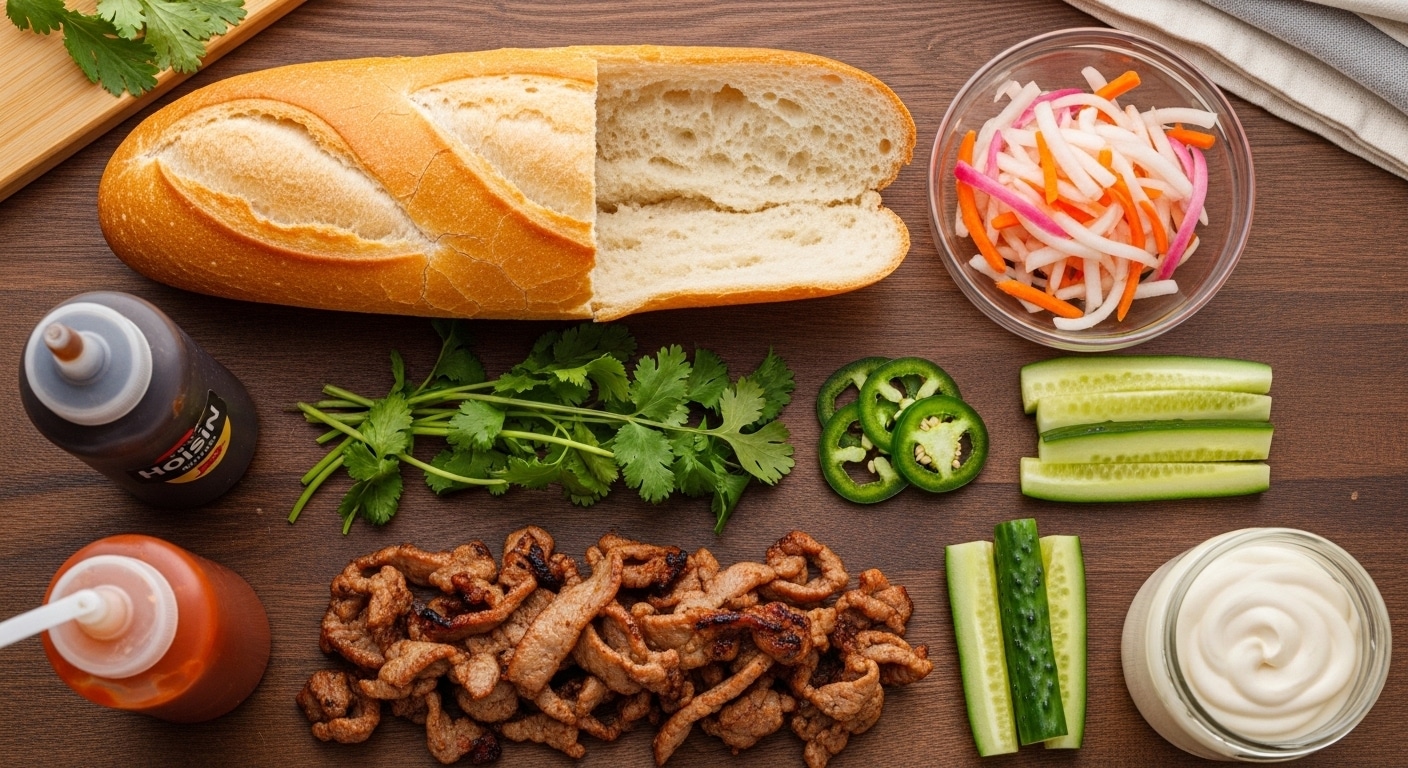
Vietnamese banh mi is a street-food classic built on contrast: crisp bread, savory fillings, bright pickles, fresh herbs, and rich sauces. Making banh mi at home is less about copying one fixed recipe and more about understanding each component so you can assemble a balanced sandwich with authentic flavor and texture. Like America’s iconic burgers, banh mi proves a great sandwich is all about balance.
Classic Vietnamese Banh Mi
Ingredients
Equipment
Method
- Marinate pork with soy sauce, fish sauce, sugar, and garlic for 30 minutes.
- Grill or sear pork until cooked and slightly charred.
- Slice baguettes lengthwise, leaving one side attached. Toast lightly.
- Spread mayonnaise on both sides of bread.
- Layer pork, pickles, cucumber, cilantro, and chilies.
- Close, press gently, and serve immediately.
What Is Banh Mi
Banh mi is a Vietnamese sandwich that combines French baking techniques with Vietnamese ingredients. It became popular in Vietnam during the colonial period and evolved into a uniquely local food. A proper banh mi is light yet filling, crunchy yet soft, rich but always refreshing.
The Importance of Balance in Banh Mi
Great banh mi depends on balance. Fatty meats are offset by acidic pickles, airy bread contrasts with crisp vegetables, and savory flavors are lifted by herbs and chili. If one element dominates, the sandwich feels heavy or flat.
Banh Mi Bread Explained
The bread is the foundation of banh mi and one of its most misunderstood parts. Traditional banh mi uses a light Vietnamese-style baguette made with a mix of wheat flour and rice flour. This creates a thin, crackly crust and a fluffy, almost hollow interior. The bread should shatter slightly when bitten but compress easily without tearing the mouth.
How to Choose the Right Bread at Home
If you cannot find Vietnamese baguettes, look for small French-style baguettes with thin crusts. Avoid dense artisan loaves or sourdough, which overpower the fillings. Warming the bread briefly in the oven restores crispness and improves texture.
Why Bread Texture Matters
Dense bread absorbs sauces and becomes soggy. Proper banh mi bread holds fillings while staying light, allowing flavors to remain distinct. This is why bread choice is as important as the fillings themselves.
Vietnamese Pickles Explained
Pickled vegetables provide the sharp contrast that defines banh mi. The most common pickles are do chua, a mix of julienned carrots and daikon radish lightly pickled in vinegar, sugar, and salt. The flavor should be mildly sweet and tangy, never aggressively sour.
How to Make Classic Banh Mi Pickles
Carrots and daikon are salted briefly to release moisture, then rinsed and soaked in a vinegar-sugar solution. These quick pickles are ready in one hour and improve after resting overnight. They stay crisp and fresh for several days refrigerated.
Role of Pickles in the Sandwich
Pickles cut through fatty meats and mayo, cleanse the palate, and keep the sandwich from feeling greasy. Without pickles, banh mi loses its signature brightness.
Traditional Banh Mi Proteins
Banh mi fillings vary widely, but traditional options include grilled pork, caramelized pork belly, Vietnamese pork meatballs, and steamed pork loaf. Each provides savory depth while allowing other ingredients to shine.
Grilled Pork Banh Mi
Grilled pork is marinated with fish sauce, sugar, garlic, and lemongrass. It is smoky, slightly sweet, and deeply savory. This is one of the most popular and accessible banh mi fillings for home cooks.
Cold Cuts and Pate
Classic banh mi often includes Vietnamese pork cold cuts paired with liver pate. The pate adds richness and umami, while sliced meats provide salt and structure. This combination reflects French influence while remaining distinctly Vietnamese.
Chicken and Beef Variations
Grilled chicken works well when marinated properly and sliced thin. Beef is less traditional but still common, especially when stir-fried quickly with soy sauce and aromatics. The key is keeping the protein juicy and not overpowering.
Vegetarian and Tofu Fillings
Crispy tofu, lemongrass-marinated tempeh, or sautéed mushrooms make excellent vegetarian banh mi fillings. These options rely heavily on seasoning and texture to replicate the savory satisfaction of meat.
Fresh Vegetables and Herbs
Fresh vegetables add crunch and aroma. Common choices include cucumber spears, sliced chili, and cilantro. Some versions include thinly sliced onion or shredded lettuce, but restraint is important to avoid clutter.
Why Cilantro Is Essential
Cilantro adds a fresh, citrusy note that ties all components together. Without herbs, banh mi tastes flat and overly rich.
Sauces Used in Banh Mi
Mayonnaise is traditional and provides creaminess. Some versions use a slightly sweet Vietnamese-style mayo. Maggi seasoning, soy sauce, or fish sauce may be drizzled lightly for umami. Chili sauce or fresh chilies add heat.
How Much Sauce to Use
Sauce should coat, not drown. Too much mayo makes the sandwich greasy, while too much seasoning masks subtle flavors. Moderation keeps the sandwich clean and balanced.
Assembling Banh Mi at Home
Start by slicing warm bread lengthwise without cutting all the way through. Spread a thin layer of mayo and pate if using. Add protein, followed by pickles, fresh vegetables, herbs, and chili. Press gently to combine flavors without crushing the bread.
Temperature Matters
Warm protein and room-temperature bread contrast beautifully with cool pickles and herbs. Avoid assembling banh mi far in advance, as freshness is essential.
Common Mistakes to Avoid
Using heavy bread, skipping pickles, overloading fillings, or adding too many sauces all disrupt balance. Banh mi succeeds through restraint, not excess.
Regional and Modern Variations
Across Vietnam and abroad, banh mi adapts to local tastes. Some versions include fried eggs, sardines, or seafood. While creative versions are popular, understanding the traditional structure helps keep even modern twists grounded.
Why Banh Mi Works Globally
Banh mi’s appeal lies in its flexibility and affordability. It uses simple ingredients but delivers complex flavor, making it adaptable across cultures without losing identity.
Learning From Authentic Sources
For traditional techniques and ingredient explanations, Vietnam Online offers cultural context on banh mi history and components: https://www.vietnamonline.com/food/banh-mi.html. Serious Eats provides detailed breakdowns of bread, pickles, and fillings with practical home-cooking tips: https://www.seriouseats.com/banh-mi-vietnamese-sandwich-guide. Saveur documents classic Vietnamese sandwich variations and preparation methods: https://www.saveur.com/.
Frequently Asked Questions
What bread is best for banh mi?
Traditional Vietnamese baguettes are best: light, airy, with a thin crisp crust. If unavailable, use small French-style baguettes and avoid dense sourdough.
Can I make banh mi ahead of time?
Prep the pickles, proteins, and sauces ahead, but assemble just before serving. Assembled banh mi gets soggy within an hour.
What is the white radish in banh mi pickles?
It is daikon radish, pickled with carrots in vinegar, sugar, and salt. It adds a mild peppery crunch that balances rich fillings.
Is banh mi gluten-free?
Traditional banh mi is not gluten-free because of the wheat baguette. For a gluten-free version, use a gluten-free baguette and check that soy and fish sauces are certified gluten-free.
Final Insight on Making Banh Mi at Home
Making Vietnamese banh mi at home is about understanding contrast and balance rather than strict rules. Once you master the components, you can build a sandwich that tastes authentic and fresh every time. Serve it with crispy onion rings for a complete meal.
About the Author
Luke is the home cook and writer behind Lumomint Foods. He spends his time testing comforting, practical recipes from around the world and writing them up in plain, easy language for everyday cooks.
2 thoughts on “Vietnamese Banh Mi at Home”