
Focaccia Bread Recipe (Soft, Golden, Easy)
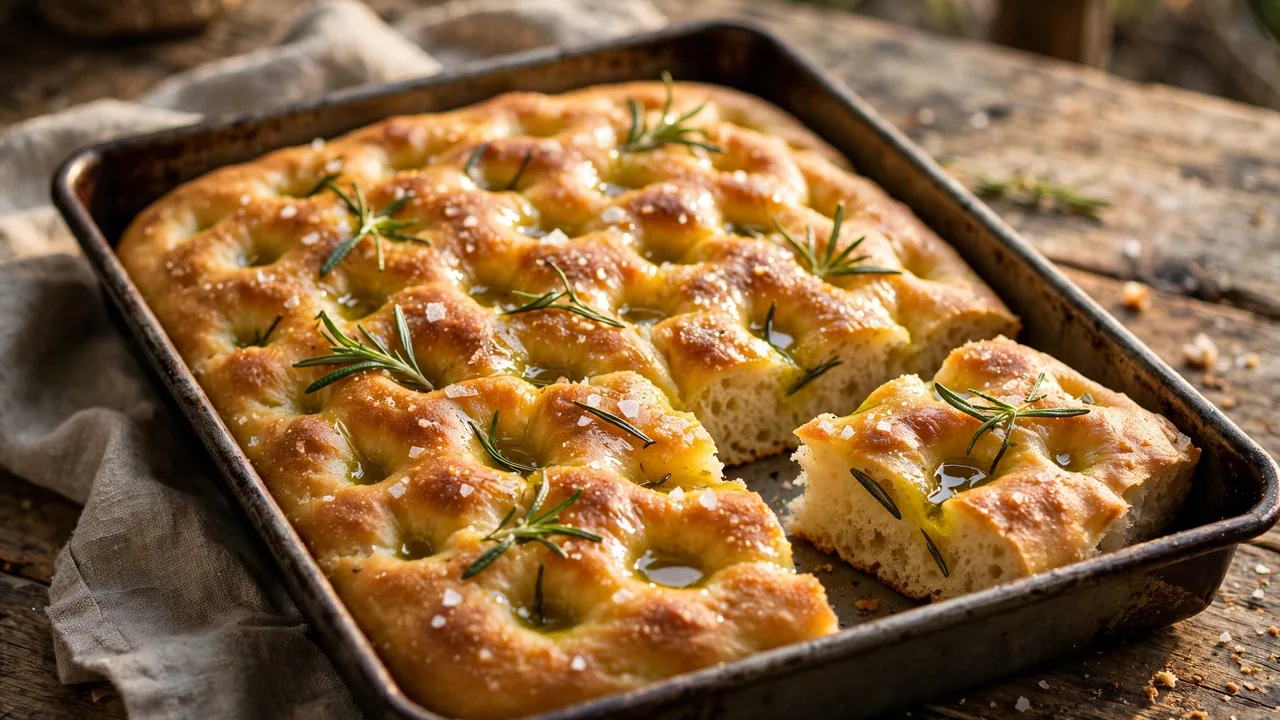
This focaccia bread recipe is the friendliest bread a home cook can make. There is no kneading, no shaping, no scoring and no stress. You mix a wet dough, let it rise in a pan, press it with your fingers and bake it. What comes out is soft and pillowy inside, crisp and golden outside, and rich with olive oil in every bite.
The bread comes from Liguria, on the Italian coast, where it has been baked for centuries. Fishermen and workers carried it as a portable meal, and bakers sold it warm from wood fired ovens. The classic version is topped with rosemary and flaky salt, but the dough itself is a blank canvas for almost anything.
This recipe uses a no knead method with a series of gentle folds. The folds build strength in the dough without any hard work, and the long rise gives the bread its open, airy crumb. It is the kind of baking that makes you feel like a proper baker with very little effort.
What Is Focaccia?
Focaccia is a flat Italian bread baked in a pan with a generous amount of olive oil. The oil does two jobs: it keeps the bread moist and it fries the bottom and edges in the oven, giving them a crisp, golden crust. The top is dimpled with fingertips, and those dimples catch pools of oil and hold the toppings.
The crumb should be soft and open, with irregular holes, and the flavour should be rich from the oil. Good focaccia is never dry and never dense. It is substantial enough to hold a sandwich filling, but light enough to eat on its own, warm from the oven, torn into pieces.
It is served as a side with soup and salad, as a base for sandwiches, cut into squares for dipping in olive oil and balsamic, or simply eaten on its own. In Liguria it is even eaten for breakfast, dipped in a milky coffee, which sounds strange until you try it.
Why This Focaccia Recipe Works
A high hydration dough, meaning a lot of water relative to flour, is what makes focaccia soft and open. The dough will feel sticky and wet, and that is correct. The single most important step is using plenty of olive oil in the pan and on top, because that is what creates the crisp golden crust.
The folding method replaces kneading. Every thirty minutes you fold the dough over itself a few times, which builds structure gradually. After three rounds of folds, the dough is strong enough to hold its shape but still soft and extensible.
Dimpling is not decoration, it is essential. The dimples stop the dough from puffing up like a balloon in the oven, and they create little wells that hold olive oil and toppings. Press firmly, right down to the bottom of the pan, and do not be shy about it.
The Olive Oil Question
Use the best extra virgin olive oil you can afford for this bread. The oil is a main flavour, not a background ingredient, and a good fruity oil makes a noticeable difference. You need about sixty millilitres in the dough and pan, plus more for drizzling, so do not be stingy.
A peppery, grassy olive oil gives the bread a wonderful flavour. A mild oil works too, but the bread will taste plainer. If you have a special bottle you save for finishing dishes, this is the time to use it.
Do not substitute vegetable oil or butter. Olive oil is what makes focaccia focaccia. Butter would burn at this temperature, and vegetable oil would give you a pale, flavourless crust. The right oil is worth the small expense.
How to Make Focaccia Step by Step
Whisk the flour, yeast and salt in a large bowl, then add the lukewarm water and olive oil. Stir until a sticky dough forms with no dry flour left. Cover and rest for fifteen minutes. The dough will look rough and shaggy, which is exactly right.
Over the next hour and a half, fold the dough three times, resting thirty minutes between folds. Wet your hands first so the dough does not stick to them, then lift one side and fold it over the centre. Turn the bowl and repeat a few times.
Transfer the dough to a well oiled pan and let it rise until puffy and doubled, about one to one and a half hours. Preheat the oven, drizzle oil over the top, and dimple the surface firmly with oiled fingers. Scatter rosemary and flaky salt, then bake for twenty to twenty five minutes until deep golden.
Variations Worth Trying
The classic rosemary and sea salt topping is hard to beat, but focaccia takes endless variations. Cherry tomatoes, halved and pressed into the dimples, roast into sweet jammy pockets. Thinly sliced red onion and olives are a Ligurian favourite. Roasted garlic cloves, pushed into the dough before baking, turn soft and sweet.
For a cheesy version, scatter grated parmesan or crumbled feta over the top before baking. For a sweet version, use grapes, a drizzle of honey and a little rosemary, which is a traditional Tuscan combination called schiacciata con l’uva.
You can also turn focaccia into a sandwich bread. Slice it horizontally, fill it with mozzarella, tomato and basil, or with roasted vegetables and pesto, and press it in a hot pan until the cheese melts. It is one of the best sandwiches you will ever make.
Serving and Storage
Serve focaccia warm or at room temperature, cut into squares or rectangles. It is wonderful with soup, where it soaks up the broth, and with salad, where it turns a light meal into a satisfying one. Cut into strips, it is perfect for dipping in good olive oil with a little balsamic vinegar.
As a sandwich bread, it is unbeatable. Split it, fill it generously, and you have a lunch that puts any café sandwich to shame. For a party, cut it into small squares and serve it on a board with cheese, cured meats and olives.
Focaccia is best on the day it is baked, but it keeps for two days in an airtight container at room temperature. Reheat slices in a hot oven for five minutes to bring back the crispness. It freezes well for up to a month. Thaw at room temperature and warm in the oven before serving.
If it goes stale, do not throw it away. Cube it, toss it with olive oil and bake it into croutons, or tear it into a panzanella salad with tomatoes and basil. Stale focaccia makes the best croutons of any bread.
Frequently Asked Questions
Why is my focaccia dense?
Dense focaccia usually means the dough did not rise long enough, or the yeast was old. Let the dough rise until it is visibly puffy and doubled, which can take up to 90 minutes in a cool kitchen. Check your yeast is in date and that the water was lukewarm, not hot, which kills yeast.
Can I make focaccia without a stand mixer?
Yes, this recipe is designed for mixing by hand. The dough is stirred with a wooden spoon and strengthened with folds, so no mixer is needed. In fact, hand mixing is better here because it is gentler on the dough.
Can I make focaccia ahead of time?
Yes. You can refrigerate the dough in the pan overnight after the folds. Let it come to room temperature and rise for about an hour before dimpling and baking. This slow cold rise actually improves the flavour.
What pan should I use for focaccia?
A 9×13 inch metal baking pan is ideal because it conducts heat well and gives crisp edges. Glass and ceramic pans work too, but you may need a few extra minutes of baking. Avoid dark non stick pans that can over brown the base.
For more breads, try the classic margherita pizza and our white pizza. Fresh butter naan is another favourite, and homemade tzatziki is perfect for dipping.
Focaccia Bread Recipe (Soft, Golden, Easy)
Ingredients
Equipment
Method
- In a large bowl, whisk together the flour, yeast and fine sea salt.
- Add the lukewarm water and 2 tablespoons olive oil. Stir with a wooden spoon until a sticky dough forms and no dry flour remains.
- Cover the bowl and rest for 15 minutes.
- Wet your hands and fold the dough over itself a few times in the bowl. Cover and rest for 30 minutes. Repeat the folds twice more, resting 30 minutes between each.
- Oil a 9×13 inch pan generously. Transfer the dough to the pan and turn it to coat in oil.
- Cover and let it rise for 1 to 1.5 hours until puffy and doubled, filling the pan.
- Preheat the oven to 220 C (425 F).
- Drizzle olive oil over the dough. Oil your fingers and press straight down to make deep dimples all over the surface.
- Scatter the rosemary and flaky sea salt over the top.
- Bake for 20 to 25 minutes until deep golden brown.
- Cool in the pan for 5 minutes, then lift out and cool on a rack for 10 minutes before slicing.
About the Author
Luke is the home cook and writer behind Lumomint Foods. He spends his time testing comforting, practical recipes from around the world and writing them up in plain, easy language for everyday cooks.