
Bibimbap
Why This Bibimbap Works
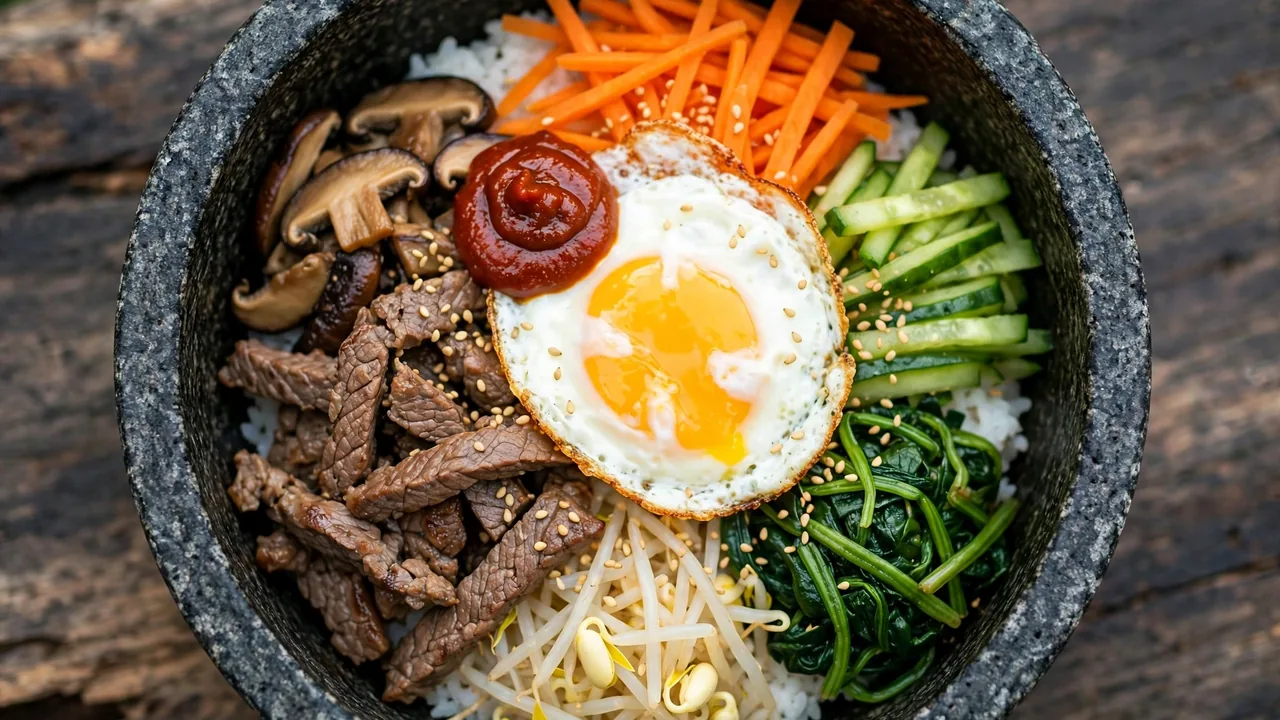
Bibimbap is Korea’s most famous rice bowl, and it is a joy to eat. Warm rice, colorful seasoned vegetables, savory beef, and a fried egg are arranged in neat sections, then mixed together with spicy gochujang right at the table. The mixing is part of the experience, and every spoonful has a little of everything.
The secret is that each component is cooked and seasoned separately. The carrots, zucchini, mushrooms, spinach, and bean sprouts each get their own quick turn in the pan with a little sesame oil and garlic. This takes a bit more time, but it means every vegetable keeps its own flavor and texture instead of turning into a muddled stir fry.
Bibimbap is also wonderfully flexible. The vegetables change with the season, the protein changes with your mood, and the heat level is entirely up to you. It is a template more than a rigid recipe, and once you understand the structure, you can build a bibimbap from whatever is in your fridge.
The Rice and the Bowl
Short grain rice is the right choice for bibimbap. It is stickier than long grain rice, which helps it hold together in the bowl and cling to the toppings. Cook it fresh if you can, because warm rice is essential. Cold rice does not mix well with the toppings, and the egg will not stay warm on top of it.
A stone bowl, called a dolsot, is the traditional way to serve bibimbap. The stone is heated until it is very hot, and the rice is added to it. The bottom layer of rice crisps up against the hot stone, creating a crunchy layer called nurungji that is one of the best parts of the dish. If you have a stone bowl, heat it in the oven before assembling.
If you do not have a stone bowl, a regular bowl works fine. You can also use a cast iron skillet to get a similar crispy rice effect. Heat the skillet, add a little sesame oil, and press the rice into it. Let it sit for a few minutes until the bottom crisps, then add the toppings. It is not traditional, but it captures the spirit of the dish.
The rice should be warm, not hot, when you assemble the bowl. If it is too hot, it wilts the vegetables and overcooks the egg. If it is too cold, the whole dish feels flat. Cook the rice while you prepare the toppings, and assemble the bowls as soon as the rice is done.
How to Make Bibimbap
Start by preparing all the vegetables. Blanch the spinach for one minute, drain it well, and squeeze out the excess water. Season it with sesame oil, garlic, and a pinch of salt. Blanch the bean sprouts the same way, for about two minutes, then season them similarly. These two vegetables are the only ones that get blanched.
Stir fry the carrots, zucchini, and mushrooms separately in a little oil over medium high heat. Each one needs only two to three minutes, just until it is tender but still crisp. Season each vegetable with a pinch of salt and a drizzle of sesame oil as it comes out of the pan. Keeping them separate preserves their individual flavors and colors.
Cook the beef in a hot skillet for three to four minutes until it is browned and cooked through. The beef should be thinly sliced and marinated in soy sauce and sesame oil, which gives it a savory flavor that matches the vegetables. Remove it to a plate and keep it warm.
Fry the eggs sunny side up in a little oil. The yolks should stay runny, because the yolk mixes into the rice and adds richness to the whole bowl. Cook them one at a time if your pan is small, and keep them warm on a plate.
Divide the warm rice among four bowls. Arrange the vegetables and beef in neat sections on top of the rice, keeping each component separate so the colors show. Place a fried egg in the center of each bowl, add a spoonful of gochujang on the side, and sprinkle with sesame seeds and sliced green onions. Serve immediately, and mix everything together at the table before eating.
Variations Worth Trying
Vegetarian bibimbap is just as good as the meat version. Replace the beef with extra mushrooms, tofu, or a second egg. Seasoned tofu, pressed and pan fried until golden, absorbs the flavors of the bowl beautifully. The vegetables and the gochujang carry the dish on their own.
You can use leftover vegetables and proteins from the fridge to build a bibimbap. Roasted vegetables, grilled chicken, and leftover steak all work. The structure stays the same: warm rice, arranged toppings, a fried egg, and gochujang. It is one of the best ways to use up leftovers.
For a spicier version, add more gochujang or a spoonful of gochugaru, which is Korean chili flakes. The heat builds slowly and pairs well with the richness of the egg yolk. Serve extra gochujang on the side so each person can adjust the heat to their liking.
Mistakes to Avoid
Overcooking the vegetables is the most common mistake. Each vegetable should be tender but still crisp, with its color intact. Two to three minutes in a hot pan is enough. If the vegetables go soft and dull, they lose the contrast that makes bibimbap beautiful and delicious.
Mixing everything before serving is another error. The toppings should be arranged in separate sections so the colors show, and the mixing happens at the table. This is part of the ritual of bibimbap, and it is also practical, because it lets each person mix as much or as little as they like.
Using cold rice is the third trap. The rice needs to be warm so it heats the toppings slightly and helps the gochujang blend in. Cold rice makes the whole bowl feel flat, and the egg cools down too fast. Cook the rice last, and assemble the bowls as soon as it is done.
Skipping the sesame oil is the last mistake. Sesame oil is the flavor that ties the whole bowl together. It seasons the vegetables, it goes on the rice, and it adds a nutty aroma that is unmistakable. Use toasted sesame oil, not regular sesame oil, because the toasted version has a much deeper flavor.
How to Serve and Store It
Serve bibimbap immediately after assembling, with extra gochujang on the side. The bowls should be colorful and neat when they reach the table, and the mixing happens right before eating. A side of kimchi is the classic accompaniment, and a light soup makes the meal complete.
Bibimbap is best eaten fresh, but the components store well separately. Keep the cooked vegetables, beef, and rice in separate containers in the fridge for up to three days. Reheat the rice and beef, and assemble fresh bowls with a newly fried egg. The vegetables are good cold or gently warmed.
Frequently Asked Questions
What does bibimbap mean?
Bibimbap means mixed rice in Korean. The name describes exactly what you do with it: mix the rice, vegetables, protein, egg, and gochujang together before eating. The mixing is essential, because it distributes the flavors and the heat evenly through the bowl. It is not a garnish, it is the whole point.
Can I make bibimbap without a stone bowl?
Yes, a regular bowl works perfectly well. The stone bowl creates a crispy layer of rice at the bottom, which is wonderful, but it is not essential to the dish. You can get a similar effect with a hot cast iron skillet. The flavors and the structure are the same in any bowl.
Is bibimbap spicy?
It depends on how much gochujang you add. Gochujang is a fermented chili paste with a moderate heat and a deep, slightly sweet flavor. One tablespoon per bowl gives a gentle warmth, while two tablespoons makes it noticeably spicy. Serve extra gochujang on the side so each person can adjust the heat.
Can I use brown rice for bibimbap?
Yes, brown rice works, though the texture is different. Brown rice is chewier and nuttier than white short grain rice, and it does not cling to the toppings as well. If you use brown rice, cook it until it is fully tender and serve it warm. The flavor is good, and it adds extra fiber to the meal.
For more Korean dishes, our gochujang sauce is the pantry staple behind this bowl. The fried rice uses the same rice skills, and our sushi rolls are a good companion. A perfectly cooked egg is a skill worth mastering for this dish and many others. The separate cooking of each vegetable is what makes bibimbap work, so do not combine them into one stir fry, or you lose the color and the flavor of every component.
Ingredients
Equipment
Method
- Cook the spinach for 1 minute, drain, and season with sesame oil and garlic.
- Stir fry the carrots, zucchini, mushrooms, and bean sprouts separately until just tender, seasoning each with salt and sesame oil.
- Cook the marinated beef in a hot skillet for 3 to 4 minutes until browned.
- Fry the eggs sunny side up.
- Divide the warm rice among four bowls and arrange the vegetables and beef in sections on top.
- Place a fried egg in the center, add a spoonful of gochujang, and sprinkle with sesame seeds and green onions. Mix well before eating.
About the Author
Luke is the home cook and writer behind Lumomint Foods. He spends his time testing comforting, practical recipes from around the world and writing them up in plain, easy language for everyday cooks.