
Beef Pho (Authentic Vietnamese Noodle Soup)
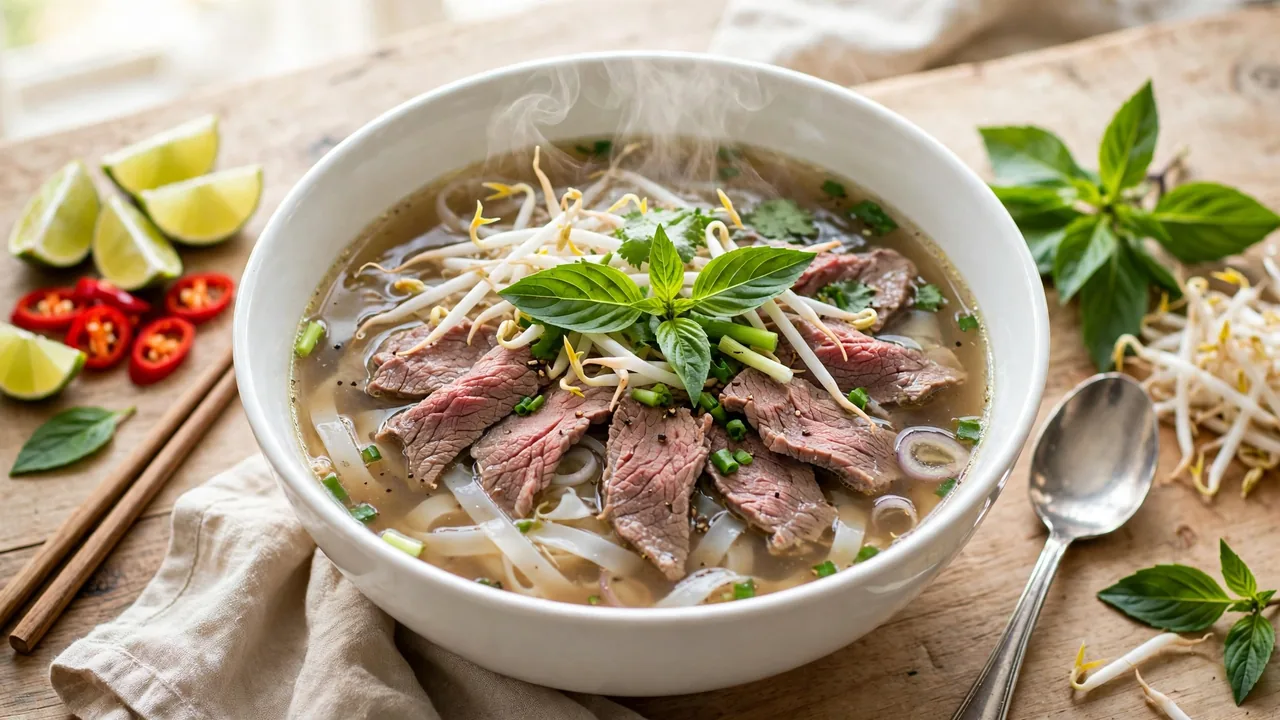
Craving pho but intimidated by the long ingredient list? This beef pho gives you an authentic Vietnamese noodle soup with a clear, aromatic broth. It takes time, but most of it is hands off simmering.
Why This Beef Pho Works
Pho is all about the broth. Charring the onion and ginger before simmering gives it that deep, smoky sweetness you taste in good Vietnamese restaurants. The spices are toasted, not boiled to death, so they stay fragrant.
The secret is a gentle simmer, never a rolling boil. That keeps the broth clear and clean. Skim often in the first hour for the clearest result.
Ingredients for Authentic Pho
You need beef bones for body, plus brisket or chuck for tender meat. Fish sauce, rock sugar, and toasted spices (star anise, cinnamon, cloves, cardamom) build the signature flavor. Flat rice noodles, thinly sliced raw beef, and fresh herbs finish each bowl.
How to Make Beef Pho at Home
Char onion and ginger under the broiler until blackened in spots. Toast the spices in a dry pot until fragrant, then add water, bones, and brisket. Simmer gently for 3 hours, skimming as needed.
Strain the broth and season with fish sauce and sugar. Cook noodles separately. Slice the brisket thin and arrange raw beef slices over noodles in bowls. Ladle over steaming broth to cook the beef, then top with herbs, bean sprouts, and lime.
Beef Pho (Authentic Vietnamese Noodle Soup)
Ingredients
Equipment
Method
- Char the onions and ginger under the broiler, turning occasionally, until blackened in spots, about 10 minutes.
- Toast the star anise, cinnamon, cloves, and coriander seeds in a dry large stockpot over medium heat until fragrant, about 2 minutes.
- Add the beef bones, brisket, charred onion and ginger, and water. Bring to a boil, then reduce to a gentle simmer. Skim off any foam.
- Simmer gently for 3 hours, until the brisket is tender. Remove the brisket and set aside. Strain the broth through a fine-mesh strainer and return to the pot.
- Stir in the fish sauce and rock sugar. Taste and adjust seasoning. Slice the brisket thinly against the grain.
- Cook the rice noodles according to package directions. Divide among bowls. Top with brisket slices and raw sirloin slices. Ladle over steaming broth to cook the beef. Serve with bean sprouts, herbs, and lime wedges.
Tips for Clear, Flavorful Broth
Parboil the bones first. Cover them with water, boil for 10 minutes, then drain and rinse. This removes impurities and gives you a clearer broth from the start.
Keep the simmer gentle. A hard boil makes the broth cloudy and greasy. You want lazy bubbles, not a rolling boil. Skim the surface in the first hour.
What to Serve with Beef Pho
Make it a Vietnamese feast. For another noodle soup, see Authentic Japanese Ramen or our Easy Chicken Ramen. For more Vietnamese flavor, try Vietnamese Banh Mi at Home. And for Thai noodles, check How to Make Authentic Pad Thai.
Pho has a rich history. Read about pho on Wikipedia, and see the Serious Eats traditional beef pho recipe for another take.
Beef Pho FAQs
Can I make pho in a slow cooker?
Yes. After charring and toasting, transfer everything to a slow cooker and cook on low for 8 to 10 hours. The broth will be rich and clear.
What is the best cut of beef for pho?
Brisket for the simmered meat, and thinly sliced sirloin or eye of round for the raw beef that cooks in the hot broth. Freeze the sirloin for 30 minutes to slice it thin.
Can I use chicken instead of beef?
Yes, that becomes pho ga (chicken pho). Use chicken carcasses and thighs, and simmer for 1.5 hours instead of 3. The spices stay the same.
How do I store leftover pho?
Store broth, noodles, and toppings separately. Broth keeps 4 days refrigerated or 3 months frozen. Cook fresh noodles when serving.
The Short Version
Charred aromatics, toasted spices, and a 3-hour simmer give you clear, deeply flavored beef pho. Tender brisket, silky noodles, and fresh herbs in every bowl. Worth every minute.
About the Author
Luke is the home cook and writer behind Lumomint Foods. He spends his time testing comforting, practical recipes from around the world and writing them up in plain, easy language for everyday cooks.