
Authentic Japanese Ramen
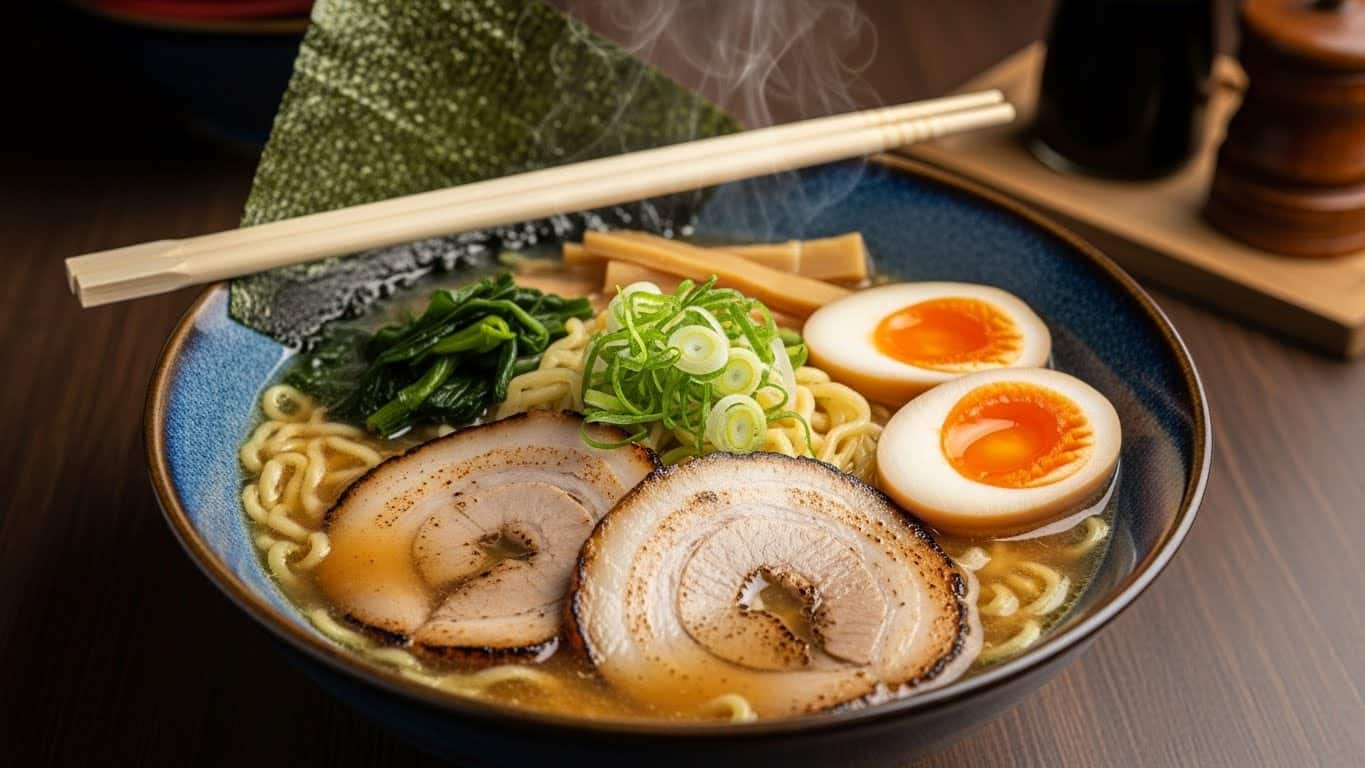
I still remember my first bowl of real ramen in Tokyo. The steam rising off the rich broth, the springy noodles, the perfectly jammy egg. It was nothing like the instant cups I had grown up with. That single bowl changed how I think about comfort food.
In this guide, I will walk you through what makes authentic Japanese ramen so special, from its fascinating history to the key elements of a perfect bowl, plus a recipe you can make at home.
Authentic Japanese Shoyu Ramen
Ingredients
Equipment
Method
- Blanch the bones: Cover pork neck bones with water, bring to a boil for 5 minutes. Drain, rinse bones, and clean the pot. This keeps the broth clear.
- Simmer the broth: Return bones to pot with 12 cups fresh water, garlic, ginger, and green onions. Simmer gently 4 hours, skimming occasionally. Strain.
- Make the tare: Simmer soy sauce, mirin, and kombu 5 minutes. Remove kombu and discard.
- Cook noodles and prep toppings: Boil noodles 2 to 3 minutes until springy. Drain. Warm chashu slices. Halve the marinated eggs.
- Assemble: Add 3 tbsp tare to each bowl. Pour in 2 cups hot broth. Add noodles, then top with chashu, egg, nori, and green onions. Serve immediately.
Notes
A Brief History of Ramen
Although ramen is now a symbol of Japan, its origins trace back to Chinese wheat noodles introduced in the late 19th century. Early Japanese ramen, called shina soba (Chinese-style noodles), was a simple noodle soup served by Chinese immigrants in port cities like Yokohama.
By the 20th century, ramen had become a popular dish among Japanese workers due to its affordability and filling nature. The post-World War II era accelerated its rise — American wheat flour imports made noodles widely available, and ramen shops flourished.
In 1958, Momofuku Ando invented instant ramen, revolutionizing global eating habits. What began as a quick survival food became an international staple. Today, authentic Japanese ramen has crossed borders, inspiring chefs worldwide while still remaining deeply tied to its roots. For a quick weeknight take, try this simple Japanese ramen noodle soup.
Key Elements of Authentic Japanese Ramen
The art of ramen lies in its balance. Every component must harmonize with the others. If you want to understand how a long simmer builds body and depth, Serious Eats has an excellent deep dive into the science of ramen broth. An authentic bowl contains four core elements:
The Broth (Dashi and Base)
The soul of ramen, simmered for hours.
Common bases: shoyu (soy sauce), shio (salt), miso, and tonkotsu (pork bone).
Broths may be light and clear or thick and creamy, depending on regional style.
The Noodles
Made from wheat flour, water, salt, and kansui (alkaline water), which gives noodles their firm, springy texture.
- Thickness and curl vary depending on broth type. Thin straight noodles pair with creamy tonkotsu, while curly noodles absorb lighter broths.
The Tare (Seasoning Base)
A concentrated sauce added to the broth before serving.
Determines the flavor profile (soy sauce for shoyu, miso paste for miso ramen, etc.).
Toppings
Classic: chashu (braised pork belly), ajitsuke tamago (marinated soft-boiled egg), nori (seaweed), menma (fermented bamboo shoots), and scallions.
Regional and modern variations include corn, butter, spicy oil, or seafood.
Regional Styles of Ramen
Japan is home to over 30 regional ramen varieties, each reflecting local ingredients and tastes. Some of the most iconic include:
Tokyo Shoyu Ramen
Soy sauce-based broth, medium curly noodles, and balanced flavor.
Sapporo Miso Ramen
- Rich miso broth topped with butter, corn, bean sprouts, and garlic, perfect for Hokkaido’s cold winters.
Hakata Tonkotsu Ramen
Creamy, pork bone broth with thin straight noodles; often served with kaedama (extra noodles).
Kitakata Ramen
Soy-based broth with flat, wide noodles; lighter and more refreshing.
Onomichi Ramen
Soy sauce broth with pork back fat for added richness.
Each bowl tells the story of its region, showcasing Japan’s diverse culinary heritage.
Step-by-Step: The Process of Making Authentic Ramen
Cooking authentic ramen is both science and art. Here’s a simplified process:
Prepare the Broth (6 to 12 hours)
Simmer pork bones, chicken carcasses, or seafood with aromatics.
Skim impurities to keep the broth clean.
Make the Tare
Blend soy sauce, miso, or salt with kombu, bonito flakes, or aromatics.
Cook the Noodles
Fresh noodles should be boiled briefly to maintain firmness.
Prepare Toppings
Slow-braise pork for chashu.
Soft-boil eggs, marinate in soy sauce and mirin.
Slice vegetables and prepare garnishes.
Assemble the Bowl
Add tare → pour hot broth → place noodles → finish with toppings.
Every step requires patience and precision, which is why ramen is regarded as a chef’s canvas.
Ramen Styles at a Glance
Here’s a quick comparison of Japan’s most famous ramen types:
| Style | Base Broth | Noodle Type | Signature Toppings | Region |
|---|---|---|---|---|
| Shoyu | Soy sauce | Medium curly | Chashu, menma, scallions | Tokyo |
| Miso | Miso paste | Thick curly | Corn, butter, garlic | Sapporo |
| Tonkotsu | Pork bone | Thin straight | Chashu, kikurage mushrooms | Hakata |
| Shio | Salt | Thin curly | Egg, nori, sesame seeds | Coastal |
| Kitakata | Soy sauce | Wide flat | Pork, bamboo shoots | Fukushima |
Opportunities and Risks in the Ramen World
As ramen spreads globally, it faces both exciting opportunities and serious challenges.
Opportunities
- Global Demand: Ramen has become a worldwide comfort food, opening markets for Japanese chefs and businesses.
- Fusion and Innovation: Creative chefs experiment with vegan broths, gluten-free noodles, and international toppings.
- Cultural Promotion: Ramen introduces Japanese food culture to millions, strengthening culinary diplomacy.
- Instant Ramen Evolution: Premium instant ramen lines bridge the gap between convenience and authenticity.
Risks
- Loss of Authenticity: Mass commercialization risks diluting traditional methods.
- Health Concerns: High sodium content and fatty broths can raise health issues if consumed excessively.
- Environmental Impact: Tonkotsu and meat-heavy broths rely on intensive animal farming.
- Over-Saturation: Too many ramen chains without quality control may harm its global reputation.
Why Ramen is an Art, Not Just Food
Ramen’s beauty lies in its philosophy: it is never “finished.” Chefs constantly refine broths, noodle textures, and toppings, making each bowl unique. Unlike standardized fast food, ramen celebrates craftsmanship and personal expression. A true ramen master spends years perfecting just one element, whether it’s noodles or broth.
This dedication is what transforms ramen from comfort food into culinary art, an edible symphony where each bite carries history, culture, and passion.
Frequently Asked Questions
Can I make ramen vegetarian or vegan?
Yes. Swap the pork broth for a rich mushroom or kombu dashi broth, and use tofu or extra vegetables as toppings. The tare and noodles are already plant based, so you will still get deep, satisfying flavor.
What is the difference between shoyu, miso, and tonkotsu ramen?
Shoyu uses a soy sauce based tare for a clear, savory broth. Miso uses fermented soybean paste for a richer, heartier bowl. Tonkotsu is made from pork bones simmered for many hours until the broth turns creamy white and full bodied.
Can I use store bought noodles instead of fresh?
Absolutely. Fresh noodles have the best springy texture, but good quality dried ramen noodles work well. Cook them separately and add to the bowl just before serving so they stay firm.
How do I store leftover ramen?
Store broth, noodles, and toppings separately in the fridge for up to 3 days. Keep noodles apart from the broth so they do not get soggy. Reheat the broth gently and cook fresh noodles when ready to serve.
Conclusion
The story of Japanese ramen is one of resilience, adaptation, and artistry. From humble Chinese-inspired noodles to a global culinary sensation, ramen has transcended boundaries while holding onto its identity.
Authentic ramen is more than soup and noodles. It is patience simmered into broth, tradition kneaded into noodles, and creativity layered into toppings. It reflects Japan’s ability to honor heritage while embracing change. If you love hands-on cooking projects like this, my authentic Thai green curry paste from scratch is another weekend adventure worth trying.
As ramen continues its journey across borders, the challenge lies in balancing authenticity with innovation. Whether you enjoy a hearty Hakata tonkotsu, a rich Sapporo miso, or a quick instant bowl at midnight, every sip connects you to a culinary legacy that has been perfected over generations. And when you want deep comfort in 30 minutes instead of hours, my best homemade tomato soup recipe delivers.
Ramen is not just a dish. It is an art form, and each bowl is a masterpiece waiting to be savored. For an easy homemade version, try our Easy Chicken Ramen too.
About the Author
Luke is the home cook and writer behind Lumomint Foods. He spends his time testing comforting, practical recipes from around the world and writing them up in plain, easy language for everyday cooks.