
Chicken Fajitas
Why This Chicken Fajitas Recipe Works
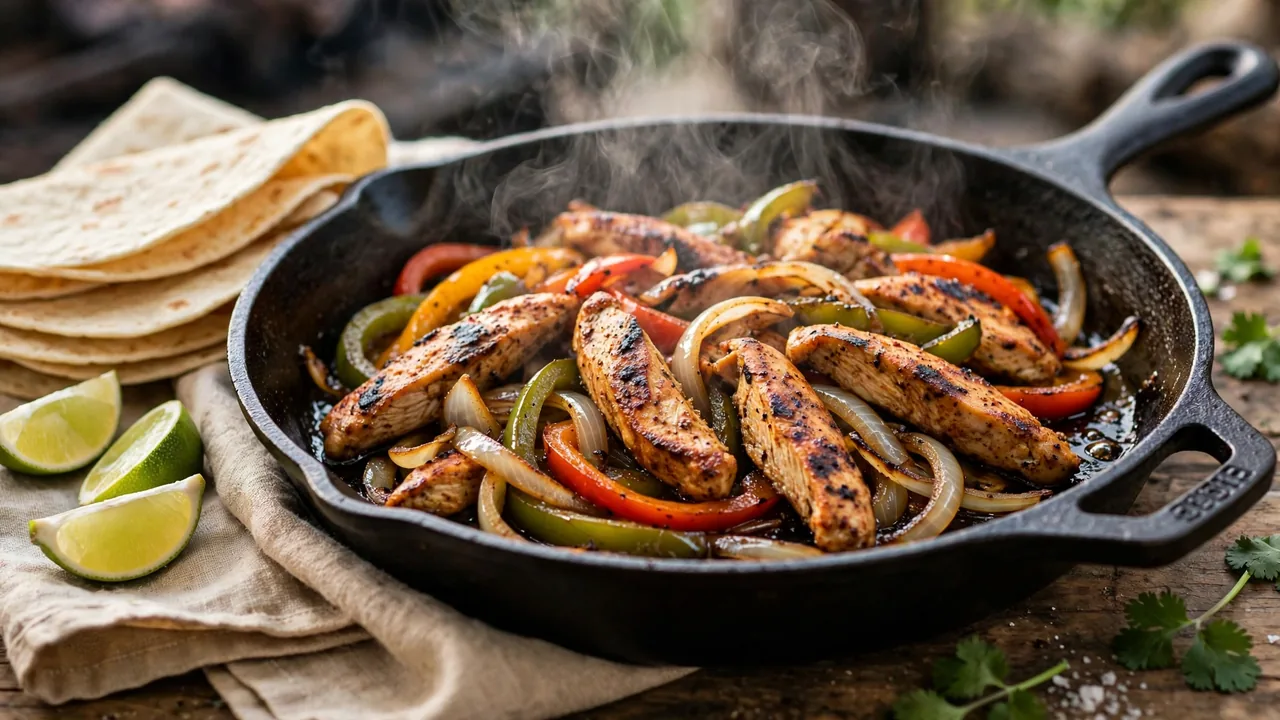
Chicken fajitas are the loudest, most fun dinner you can make at home. The sizzle, the smoke, the colors of the peppers, and the ritual of building your own tortilla make the meal feel like an event. It is also genuinely simple, which is why it has become a weeknight staple in so many homes.
The secret is high heat. Fajitas are not a gentle dish. The chicken needs a ripping hot pan so the outside chars and the spices bloom, while the inside stays juicy. The peppers and onions need the same treatment, softened just enough to sweeten but still crisp at the edges. A cast iron skillet holds heat better than anything else, and it is worth using if you have one.
The Spice Blend That Makes It
Chili powder, cumin, and smoked paprika are the backbone of the seasoning. Chili powder brings warmth and a little heat, cumin adds an earthy depth, and smoked paprika gives the charred flavor that makes fajitas taste like they came off a grill. Garlic powder and onion powder round out the base, and oregano adds a herbal note that keeps the blend from tasting flat.
You can buy a fajita seasoning packet, but the homemade blend takes two minutes and tastes noticeably better. Packet seasonings often contain a lot of salt and anti caking agents, and they are usually heavy on the chili powder. Mixing your own lets you control the salt and the heat, and you can adjust the cumin if you like it earthier.
If you want more heat, add a pinch of cayenne pepper or a finely diced jalapeño to the pan with the peppers. Chipotle powder is another good option, and it adds a smoky heat that suits the dish well. Start small, because you can always add more heat at the table with hot sauce, but you cannot take it out once it is in the pan.
Fresh lime juice is not optional. It goes over the chicken and vegetables right at the end, and it wakes up every flavor in the pan. Bottled lime juice is a poor substitute because it tastes flat and slightly bitter. One fresh lime is all you need, and it is worth squeezing it yourself.
How to Make Chicken Fajitas
Slice the chicken into even strips, about half an inch thick. Even pieces cook at the same rate, which matters when the heat is high and the cooking time is short. Toss the strips with olive oil and all the spices in a large bowl, making sure every piece is coated. Let the chicken sit for at least fifteen minutes while you slice the vegetables.
Slice the peppers and onion into strips of similar size. The vegetables should be thick enough to hold up to high heat without turning to mush. A quarter inch wide is about right. Thinner strips cook too fast and lose their crunch, while thicker strips stay raw in the middle.
Heat a large cast iron skillet over high heat until it is very hot. You should feel the heat radiating from the pan when you hold your hand a few inches above it. Add a little oil and lay the chicken in a single layer. Do not crowd the pan, or the chicken will steam instead of searing. Cook in two batches if you need to.
Cook the chicken for three to four minutes per side without moving it. You want dark charred edges and a smoky crust. When the chicken is cooked through, move it to a plate and let it rest. It will finish cooking from the residual heat while the vegetables are in the pan.
Cook the peppers and onion in the same skillet for four to five minutes, stirring only occasionally. Let them sit long enough to char at the edges, then stir and let them char again. They should be softened and sweet but still crisp. Return the chicken to the pan, squeeze the lime juice over everything, and toss it all together.
Toppings and Tortillas
Warm tortillas make a real difference. Cold tortillas tear and taste flat, while warm ones are soft and flexible. Heat them directly over a gas flame for a few seconds per side, or wrap them in a damp paper towel and microwave for thirty seconds. A dry skillet also works, and it adds a little char.
Flour tortillas are the classic choice for fajitas, but corn tortillas are excellent too, especially if you like their flavor. Warm corn tortillas the same way, and keep them wrapped in a clean kitchen towel so they stay soft while you eat. A tortilla warmer is a nice touch if you have one.
Sour cream, guacamole, and salsa are the essential toppings. Shredded cheese, diced tomatoes, and shredded lettuce are all welcome additions. Pickled red onions add a bright tang that cuts through the richness. Set everything out in small bowls and let people build their own, because half the fun of fajitas is the assembly.
Mistakes to Avoid
Crowding the pan is the most common mistake. Fajitas need space and high heat, and a crowded pan drops the temperature and steams everything. Cook the chicken in batches if your skillet is small. It takes a few extra minutes, but the char you get is worth it.
Overcooking the vegetables is the second trap. Peppers and onions should be charred at the edges and still crisp in the middle. If they go limp and soft, they lose the contrast that makes fajitas interesting. Five minutes is usually enough, and it is better to undercook them slightly than to overcook them.
Skipping the rest is another error. Chicken that is cut the moment it leaves the pan loses its juices onto the cutting board. Two or three minutes of rest keeps the meat juicy. Slice the chicken after it rests if you want thinner strips, or leave the strips whole for a heartier bite.
Using a cold pan is the last mistake. Fajitas need a pan that is already very hot when the chicken goes in. If the pan is not hot enough, the chicken releases its juices and steams. Heat the skillet for several minutes before you add any oil or chicken, and do not be afraid of the smoke.
How to Serve and Store It
Serve fajitas sizzling from the skillet if you can, with warm tortillas and toppings on the side. The drama of the sizzling pan is half the experience. If you do not have a cast iron skillet, serve the chicken and vegetables on a warm platter and let people fill their own tortillas.
Leftovers keep in the fridge for up to three days in a sealed container. Reheat the chicken and vegetables in a hot skillet for a few minutes, which brings back some of the char. The microwave works too, but it softens the vegetables. Store leftover tortillas separately so they do not go soggy.
Frequently Asked Questions
Can I use chicken thighs for fajitas?
Yes, boneless skinless thighs are excellent for fajitas. They have more fat than breasts, so they stay juicy even over very high heat, and they develop a beautiful char. Cook them the same way, adding an extra minute or two per side. Slice them into strips after they rest, or cook them as strips from the start.
What is the difference between fajitas and tacos?
Fajitas are a specific dish of grilled meat and vegetables served sizzling with tortillas and toppings on the side, so you build your own. Tacos are a broader category, and the filling is usually served already assembled in the tortilla. Fajitas traditionally use skirt steak, though chicken fajitas are now just as common. The sizzling presentation is the signature of fajitas.
Can I make fajitas on the grill?
Yes, and the grill is arguably the best way to make them. Grill the chicken whole, then slice it into strips after it rests. Grill the peppers and onion in a grill basket or on skewers so they do not fall through the grates. The smoke from the grill adds a flavor that a skillet cannot quite match.
How do I keep tortillas warm?
Wrap warm tortillas in a clean kitchen towel and place them in a covered basket or a tortilla warmer. The towel traps the steam and keeps them soft. You can also wrap them in foil and keep them in a low oven at 200 degrees Fahrenheit until you are ready to serve.
For more Mexican dishes, our tacos al pastor bring street food flavor home, and the shrimp tacos are just as fast. The birria tacos are the weekend project version, and homemade nachos make a perfect starter. The hot cast iron skillet is what makes fajitas sizzle, so heat it until it is smoking before the chicken goes in, and do not crowd the pan.
Chicken Fajitas
Ingredients
Equipment
Method
- Toss the chicken strips with olive oil, chili powder, cumin, paprika, garlic powder, onion powder, oregano, salt, and pepper.
- Heat a large cast iron skillet over high heat until very hot.
- Cook the chicken in a single layer for 3 to 4 minutes per side until charred at the edges and cooked through. Remove to a plate.
- Cook the peppers and onion in the same skillet for 4 to 5 minutes until charred and just tender.
- Return the chicken to the pan, squeeze lime juice over everything, and toss together.
- Serve immediately in warm tortillas with sour cream, guacamole, and salsa.
About the Author
Luke is the home cook and writer behind Lumomint Foods. He spends his time testing comforting, practical recipes from around the world and writing them up in plain, easy language for everyday cooks.