
Greek Moussaka
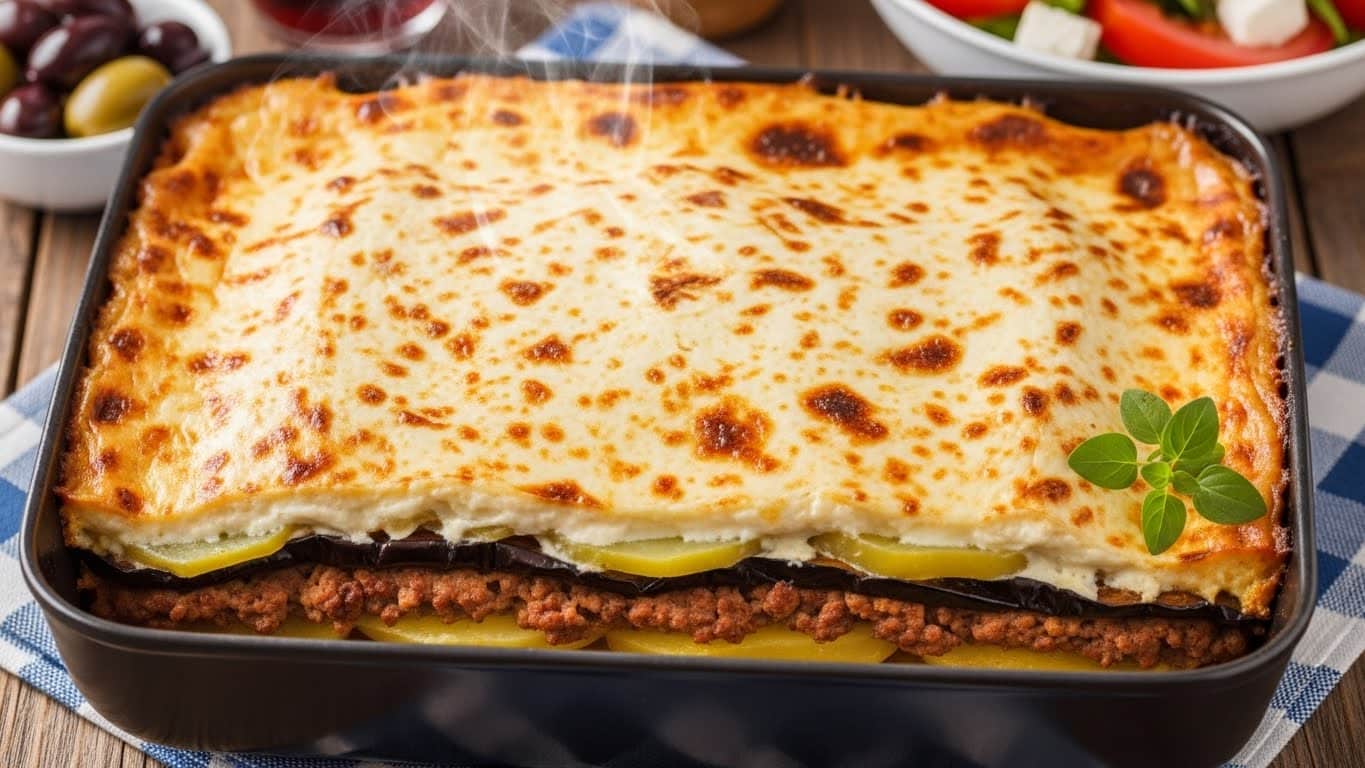
Some dishes are worth every minute they demand, and moussaka is one of them. Layers of roasted eggplant, warmly spiced meat sauce, and a golden béchamel top make this the most beloved casserole in Greek cooking.
I have made this recipe more times than I can count, for family dinners and holiday tables alike. Below I will walk you through the classic version, with every trick I have learned for clean layers and a silky béchamel, plus answers to the questions I hear most.
Greek Moussaka
Ingredients
Equipment
Method
- Preheat the oven to 350°F (180°C). Lightly grease a 9×13 inch baking dish.
- Salt the eggplant slices and rest 20 minutes. Rinse, pat dry, then roast or pan fry until golden.
- Sauté onion and garlic in olive oil until soft. Add the meat and brown, then stir in tomato puree, cinnamon, nutmeg, salt, and pepper. Simmer 20 to 30 minutes until thick.
- Melt the butter and whisk in the flour to form a roux. Gradually whisk in warm milk until smooth and thickened. Stir in the egg yolks and cheese off the heat.
- Layer potatoes, eggplant, and meat sauce in a greased baking dish. Repeat the layers and spread the béchamel over the top.
- Bake at 350°F (180°C) for 40 to 50 minutes until golden. Rest 15 minutes before serving.
Notes
What Makes Moussaka Special
Moussaka’s roots stretch back through the Ottoman Empire, with the name coming from the Arabic musaqqa, meaning moistened. The modern Greek version, crowned with béchamel, was popularized in the early 20th century by French trained chef Nikolaos Tselementes.
Today it is the star of tavernas across Greece, a holiday and family dish that symbolizes Greek hospitality. Like Italy’s lasagna, it celebrates layering and baking, but the flavors are distinctly Mediterranean: olive oil, eggplant, cinnamon, and nutmeg.
Key Elements of a Classic Moussaka
Vegetable Base
Traditionally eggplant, though potatoes and zucchini often join in. The vegetables are roasted or fried before layering, which keeps the final dish from turning watery.
Spiced Meat Sauce
Ground lamb or beef cooked with onion, garlic, tomato, cinnamon, and nutmeg, simmered until rich. The warm spices are what set moussaka apart from other baked casseroles.
Béchamel Topping
A creamy layer of butter, flour, milk, and sometimes egg yolks, often enriched with grated kefalotyri or parmesan. It bakes into a golden, puffy crown. If you love creamy sauces, try this creamy alfredo pasta next.
Tips for Perfect Layers
Salt the eggplant slices and let them sit 20 minutes, then rinse and pat dry. This draws out bitterness and excess moisture.
Simmer the meat sauce until thick. A watery sauce is the main cause of soggy moussaka. Roast the vegetables instead of frying for a lighter result.
For the béchamel, whisk constantly and add warm milk gradually to avoid lumps. Rest the baked moussaka 15 minutes before cutting so the layers set. Garlic does a lot of heavy lifting here, and my garlic confit guide shows an easy way to keep sweet, mellow garlic on hand.
Variations to Try
Swap the meat for lentils or mushrooms for a vegetarian version. For a vegan take, make the béchamel with olive oil and almond milk.
In Turkey, moussaka is often cooked on the stovetop without béchamel. For another take on the classic, see BBC Good Food’s moussaka recipe. And if you enjoy layered comfort food, this homemade Italian lasagna is another crowd pleaser.
Frequently Asked Questions
Can I make moussaka ahead of time?
Yes, moussaka is ideal for making ahead. Assemble it completely, refrigerate, and bake the next day, adding about 10 extra minutes. You can also bake it fully and reheat portions, since the flavors deepen overnight.
Why is my moussaka watery?
The usual culprits are unsalted eggplant and a thin meat sauce. Salt and rest the eggplant slices, roast instead of fry, and simmer the sauce until it is thick and rich. Resting the baked dish 15 minutes also helps the layers set.
What cheese goes on top of moussaka?
Kefalotyri is traditional, but parmesan or pecorino work beautifully. The cheese is stirred into the béchamel and sometimes sprinkled over the top for a golden crust.
Is moussaka gluten free?
Not as written, because the béchamel uses flour. You can make it gluten free by using a gluten free flour blend or cornstarch for the roux. The rest of the dish is naturally gluten free.
About the Author
Luke is the home cook and writer behind Lumomint Foods. He spends his time testing comforting, practical recipes from around the world and writing them up in plain, easy language for everyday cooks.
2 thoughts on “Greek Moussaka”