
Italian Cacio e Pepe: Why It Breaks and How to Fix It
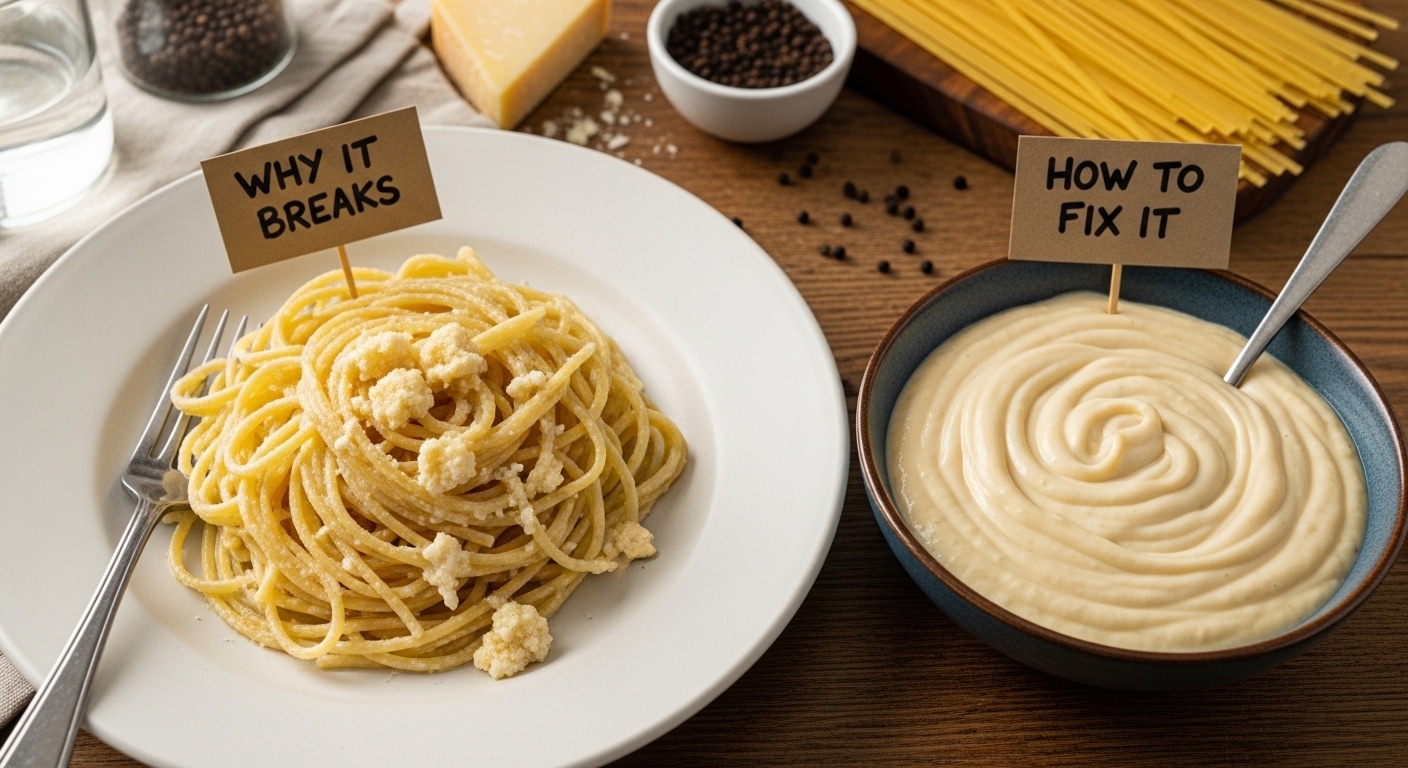
Cacio e pepe looks deceptively simple, yet it is one of the easiest Italian pastas to get wrong. Just pasta, Pecorino Romano, black pepper, and pasta water, but the sauce often turns grainy, clumpy, or oily instead of smooth and creamy.
I have broken this sauce more times than I care to admit, and each failure taught me something. This guide explains why cacio e pepe breaks and exactly how to fix it, so you can get the silky Roman trattoria result at home.
What Makes This Dish So Tricky
There is no cream, butter, or oil in the classic recipe. The creaminess comes entirely from an emulsion of cheese and starchy pasta water, flavored generously with black pepper.
Pecorino Romano is a hard, aged sheep’s milk cheese that melts poorly under high heat. When temperature, water ratio, or mixing goes wrong, the proteins seize and the sauce breaks into curds instead of coating the pasta.
Why Cacio e Pepe Breaks
Too much heat
Direct heat is the enemy. Adding cheese while the pan is too hot causes instant separation, as proteins tighten and expel fat. Roman cooks often pull the pan off the heat before the cheese goes in.
Not enough starch
Pasta water is the backbone of the sauce. Its starch binds fat and liquid into a smooth emulsion. Cooking pasta in too much water dilutes the starch, making the sauce harder to stabilize. Use less water to concentrate it.
Pre-grated cheese
Pre-grated Pecorino often contains anti-caking agents that block smooth melting. Freshly grated cheese melts evenly and absorbs water better, which greatly reduces clumping.
How to Fix a Broken Sauce
Do not throw it away. A broken sauce can usually be rescued with one of these methods.
Warm water rescue
Remove the pan from heat immediately. Add a small amount of warm, not hot, starchy pasta water and stir vigorously. This often brings the sauce back together.
Cold bowl method
Transfer the pasta to a cool bowl and mix in a little pasta water off the heat. Dropping the temperature quickly helps re-emulsify the sauce before the cheese fully seizes.
Cheese paste technique
Mix grated Pecorino with warm pasta water in a bowl to form a thick paste before it ever touches the pasta. This pre-emulsion removes temperature shock and is the most reliable prevention. Serious Eats has a perfect cacio e pepe guide that explains the emulsion science in depth.
A Foolproof Method That Works
- Cook the pasta in less water than usual to concentrate the starch, and reserve extra pasta water before draining.
- Toast cracked black pepper briefly in a dry pan until fragrant.
- Add a ladle of pasta water to the pepper, then take the pan off the heat.
- Whisk finely grated Pecorino with warm pasta water in a bowl into a smooth, thick paste.
- Combine everything off the heat, stirring continuously until the sauce turns glossy and coats the pasta.
Common Myths
Adding cream or butter may fix the texture, but it changes the dish entirely. Authentic cacio e pepe relies on technique, not added fat.
Parmesan is not a direct substitute. Pecorino Romano’s sharp, salty profile and melting behavior are what make the dish. Parmesan makes an easier sauce but a less traditional one. If you enjoy cheese sauces, my mac and cheese guide covers similar emulsion principles.
Frequently Asked Questions
Can I use Parmesan instead of Pecorino Romano?
You can, but the flavor and texture change. Parmesan melts more easily, so the sauce is less likely to break, but it lacks Pecorino’s sharp bite. For the authentic Roman result, stick with Pecorino Romano.
What pasta shape works best?
Tonnarelli is traditional, and spaghetti is the common substitute. Long shapes release enough starch and give the sauce surface to cling to. Short pastas make emulsification harder.
Why is my sauce grainy instead of smooth?
Graininess usually means the cheese got too hot or the water lacked starch. Grate the cheese finely, use well salted pasta water from a smaller pot, and always combine off the heat.
Can I make cacio e pepe ahead of time?
Not really. The sauce is an emulsion that sets as it cools and does not reheat well. It is a last minute dish, so have your cheese grated and water ready before the pasta finishes. For a creamy pasta that reheats beautifully, try this chicken alfredo bake instead.
Cacio e pepe breaks because heat moves faster than technique. Control the temperature, rely on starch, and respect the cheese. When treated gently, the sauce turns naturally creamy without cream.
About the Author
Luke is the home cook and writer behind Lumomint Foods. He spends his time testing comforting, practical recipes from around the world and writing them up in plain, easy language for everyday cooks.
1 thought on “Italian Cacio e Pepe: Why It Breaks and How to Fix It”