
What Is Chimichurri Sauce and What Goes Best With It
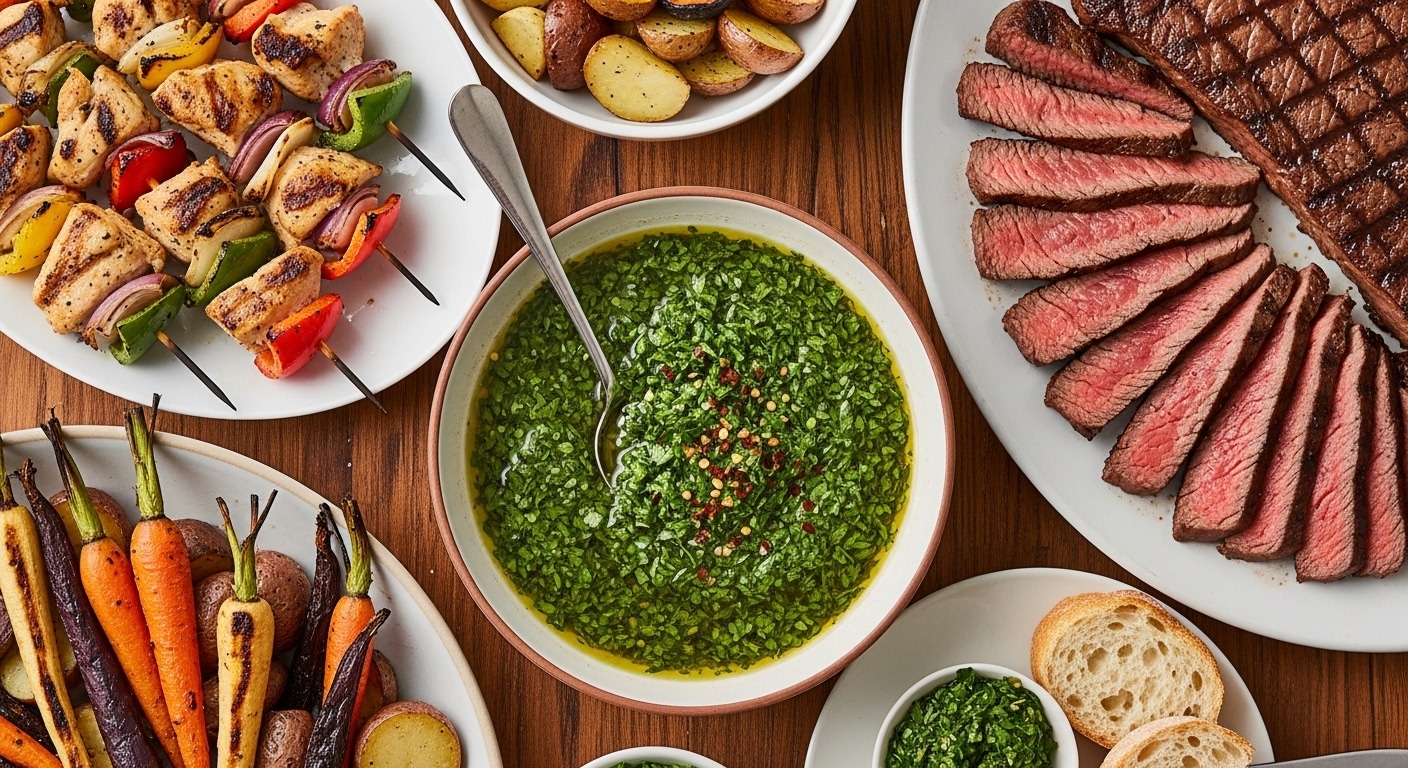
I keep a jar of chimichurri in my fridge nearly all year. This bright, herb-packed sauce takes about ten minutes to make, with no cooking at all, and it can turn a simple grilled dinner into something special. Most people know it as the sauce served with steak, but it belongs on so much more, from chicken and shrimp to roasted vegetables and even a humble bowl of rice.
What Is Chimichurri Sauce
Chimichurri is a traditional green sauce originating in Argentina and Uruguay. It is made from finely chopped parsley, garlic, olive oil, vinegar, salt, and chili. Unlike creamy sauces, chimichurri is loose and spoonable, meant to cut through richness with acidity and herbs.
Flavor Profile of Chimichurri
Chimichurri tastes fresh, garlicky, tangy, and lightly spicy. The vinegar provides sharpness, the herbs add brightness, and the oil carries flavor. It should never taste oily or muted. A good chimichurri wakes up fatty foods and adds contrast rather than heaviness.
Green vs Red Chimichurri
Green chimichurri uses parsley as the base and is the most common version. Red chimichurri includes paprika, dried chili, or tomato, creating a deeper, smokier profile. Both are authentic, but green chimichurri is more widely used as a table sauce.
Core Ingredients Explained
Parsley provides freshness and structure. Garlic adds punch but should not dominate. Olive oil binds the sauce and carries aroma. Vinegar balances fat and sharpens flavor. Chili contributes heat without overwhelming the herbs. Oregano is sometimes added for earthiness.
Why Chimichurri Is Not a Marinade
Chimichurri is best used after cooking, not before. The vinegar can overpower raw meat and mask natural flavors during grilling. Traditionally, meat is seasoned simply, grilled, then finished with chimichurri at the table.
What Goes Best With Chimichurri
Chimichurri shines when paired with foods that benefit from acidity and herbal freshness.
Grilled Steak
My authentic Turkish kebabs love a spoonful of chimichurri too. Steak remains the most classic pairing: the sauce cuts through fat and enhances char without hiding the meat’s flavor. It is especially effective with ribeye, flank steak, and skirt steak.
Grilled Chicken
Chicken benefits from chimichurri’s brightness, especially when grilled or roasted. The sauce adds moisture and complexity to lean cuts like breast meat.
Lamb and Pork
Rich meats like lamb chops and pork shoulder pair naturally with chimichurri. The garlic and vinegar balance richness while herbs add lift.
Grilled Sausages
Chorizo and other grilled sausages are traditional companions. Chimichurri offsets saltiness and adds freshness to cured meats.
Seafood
Grilled shrimp, fish, or scallops work well with lighter chimichurri variations that use less garlic and more lemon or mild vinegar.
Roasted and Grilled Vegetables
Chimichurri transforms vegetables like potatoes, carrots, zucchini, mushrooms, and cauliflower. The sauce adds flavor without masking natural sweetness.
Bread and Sandwiches
Used as a spread, chimichurri elevates sandwiches, burgers, and flatbreads. It pairs especially well with grilled meats and roasted vegetables inside bread. For the ultimate upgrade, make a sandwich with homemade fried chicken.
Eggs and Breakfast Dishes
A spoon of chimichurri over fried eggs, omelets, or breakfast potatoes adds acidity and herbaceous contrast that balances richness.
Chimichurri With Grains
Drizzled over rice, quinoa, or farro, chimichurri adds freshness and prevents grain-based dishes from tasting flat or dry.
Texture Matters in Chimichurri
Authentic chimichurri is hand-chopped, not blended. Blending creates a paste and dulls flavor. A loose, slightly chunky texture allows each ingredient to remain distinct.
How Long Chimichurri Lasts
Chimichurri keeps for up to one week refrigerated in an airtight container. Flavor improves after resting for a few hours as garlic mellows and herbs infuse the oil.
Common Mistakes to Avoid
Using dried parsley removes freshness. Overusing garlic makes the sauce harsh. Blending creates bitterness. Skipping acid makes chimichurri feel greasy rather than bright.
Chimichurri vs Pesto
Serious Eats explains these structural differences well. Unlike pesto, chimichurri contains no nuts or cheese; it is sharper, lighter, and designed as a finishing sauce rather than a primary base.
Cultural Role of Chimichurri
In Argentina, chimichurri is part of asado culture and is served at the table rather than cooked into dishes. It reflects a cooking philosophy focused on ingredient quality and restraint.
Modern Uses Beyond Tradition
Today, chimichurri appears in global kitchens as a sauce for roasted vegetables, grain bowls, and fusion dishes. I even like it drizzled over crispy roasted potatoes.
Final Practical Insight
Chimichurri succeeds because it adds contrast, not weight. Once you start making it at home, you will find excuses to spoon it over everything, from weeknight chicken to roasted vegetables. Keep the chop coarse, use it fresh, and let this simple sauce do the heavy lifting.
Frequently Asked Questions
What is chimichurri sauce made of?
Classic chimichurri is made from finely chopped fresh parsley, garlic, olive oil, red wine vinegar, salt, and a pinch of chili flakes. Some versions add oregano. Everything is chopped by hand and stirred together, never blended.
Is chimichurri spicy?
Only mildly. The heat comes from a small amount of chili or red pepper flakes and should sit quietly in the background. The dominant flavors are fresh herbs, garlic, and tangy vinegar.
How long does homemade chimichurri last?
Stored in an airtight container in the refrigerator, chimichurri keeps well for up to one week. The flavor actually improves after a few hours as the garlic mellows and the herbs infuse the oil.
Can I use chimichurri as a marinade?
It works better as a finishing sauce. The vinegar can overpower raw meat and mask its natural flavors during cooking. Season and grill your food simply, then spoon chimichurri over it just before serving.
About the Author
Luke is the home cook and writer behind Lumomint Foods. He spends his time testing comforting, practical recipes from around the world and writing them up in plain, easy language for everyday cooks.