
How to Make Falafel at Home
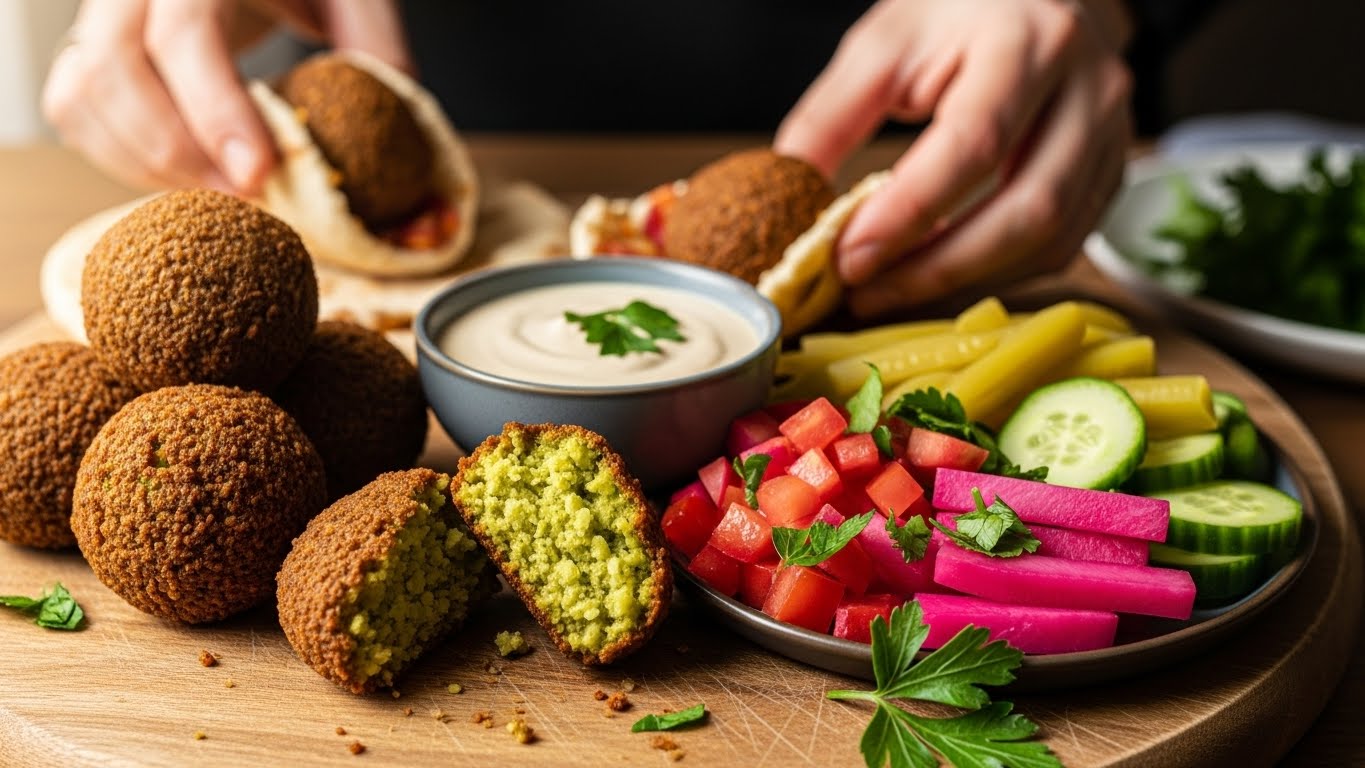
Introduction
Few dishes capture the essence of Middle Eastern street food as well as falafel. Crispy on the outside, soft and fluffy inside, these golden-brown fritters made from chickpeas or fava beans are both hearty and flavorful. Falafel is more than just food; it’s a symbol of cultural pride, a versatile vegetarian protein, and a global comfort dish enjoyed everywhere from Cairo to New York.
Over the years, falafel has transcended borders, becoming a vegan-friendly favorite for health-conscious eaters while still retaining its authenticity in Middle Eastern homes and restaurants. Whether tucked into a warm pita with fresh vegetables, paired with creamy hummus, or eaten as a snack with tahini sauce, falafel is celebrated for its flavor, nutrition, and adaptability. If you enjoy Middle Eastern street food, you will also love our authentic Turkish kebabs
This article explores the history of falafel, provides an authentic recipe you can make at home, offers cooking tips, and highlights its cultural significance, variations, and nutritional benefits.
Authentic Homemade Falafel
Ingredients
Equipment
Method
- Soak the chickpeas in plenty of water for 12 to 18 hours, then drain well. Do not use canned chickpeas.
- Add the drained chickpeas, onion, garlic, parsley, cilantro, cumin, and coriander to a food processor. Pulse until the mixture is grainy but holds together when pressed. Do not over-process into a paste.
- Transfer to a bowl and stir in the baking soda, salt, pepper, and flour if using. Cover and refrigerate for 1 hour.
- Scoop about 2 tablespoons of mixture and shape into balls or patties with your hands.
- Heat the vegetable oil to 350°F (175°C) in a deep skillet. Fry the falafel in batches for 3 to 4 minutes per side until golden brown and crisp. Drain on paper towels.
- Serve warm in pita with tahini, or on a mezze platter with hummus and salad.
Notes
A Brief History of Falafel
The exact origins of falafel are debated, but most agree it comes from the Middle East.
Some historians trace it back to Egypt, where fava beans were used to prepare fried patties known as ta’amiya. This dish was believed to be consumed by Coptic Christians as a meat alternative during Lent.
Others suggest that falafel spread through the Levant region (Palestine, Lebanon, Syria, and Jordan), where chickpeas became the base instead of fava beans.
By the 20th century, falafel had become a staple of Israeli and Arab cuisines alike, often sparking debates over ownership but simultaneously uniting communities through its universal love.
Today, falafel is one of the most recognized Middle Eastern foods worldwide, sold in food trucks in New York, served in trendy vegan cafés in London, and prepared traditionally in Cairo’s bustling markets.
Key Elements of Authentic Falafel
Tips for the Perfect Falafel
Soak, don’t boil: Always use soaked raw chickpeas or fava beans to maintain texture.
Keep mixture cold: Refrigerating helps falafel hold shape during frying.
Adjust herbs: Add extra parsley or cilantro for more freshness.
Crispiness trick: Add ½ tsp baking powder if you prefer lighter falafel.
- Healthier option: Bake falafel at 400°F (200°C) for 25 to 30 minutes, flipping halfway.
Cultural Significance of Falafel
Falafel is more than a dish; it is a cultural symbol.
In Egypt, falafel (ta’amiya) is considered a national breakfast dish, often served with ful medames (stewed fava beans).
In the Levant, falafel is a popular street food, sold by vendors and enjoyed in bustling city centers.
In Israel, falafel is often called the “national dish,” where it is widely consumed in pita wraps with salads and pickles.
Globally, falafel has become a vegan icon, representing plant-based protein at its best.
Regional Variations of Falafel
Egyptian Falafel (Ta’amiya): Made with fava beans, greener in color, and softer in texture.
Levantine Falafel: Chickpea-based, crunchy, and spiced with cumin and coriander.
Yemenite Style: Includes hawaij spice mix for extra warmth.
Modern Vegan Falafel: Baked instead of fried, often with quinoa or lentil blends.
Fusion Falafel: Falafel burgers, falafel tacos, or even falafel sushi rolls.
Nutritional Profile (Per 4 Falafel Balls, Fried)
Calories: ~350 kcal
Protein: 12 g
Carbohydrates: 35 g
Fiber: 10 g
Fat: 15 g
Health Benefits:
High in plant-based protein.
Rich in fiber for digestion.
Packed with vitamins from herbs.
Naturally gluten-free (if no flour is added).
Global Popularity of Falafel at a Glance
| Region | Base Ingredient | Common Serving Style | Key Feature |
|---|---|---|---|
| Egypt | Fava beans | Breakfast with bread | Softer, greener falafel |
| Levant (Lebanon, Syria, Palestine) | Chickpeas | Street food in pita wraps | Crunchy texture |
| Israel | Chickpeas | National dish with salads and tahini | Heavier use of pickles |
| Western World | Chickpeas | Vegan wraps, bowls, salads | Health-focused adaptations |
| Modern Fusion | Mixed legumes or lentils | Burgers, tacos, sushi rolls | Creative & trendy |
Conclusion
Falafel’s journey from the bustling streets of Cairo and Beirut to the global food scene is nothing short of remarkable. It represents history, culture, and community wrapped in a crispy golden bite. While debates over its true origin continue, one fact is undeniable: falafel is beloved across the world.
By learning how to make falafel at home, you can bring the flavors of the Middle East into your kitchen. Whether you stick to traditional chickpea or fava bean recipes, or experiment with modern baked versions, falafel is a dish that adapts beautifully to every table.
Soak, grind, fry, and enjoy. The art of falafel is simple, delicious, and endlessly satisfying. For another crispy homemade treat, try our restaurant style fried chicken
Frequently Asked Questions
Can I use canned chickpeas for falafel?
No. Canned chickpeas are too soft and will make your falafel mushy and fall apart. Always use dried chickpeas that have been soaked for 12 to 18 hours.
Why is my falafel falling apart?
The most common cause is using canned chickpeas or over-processing the mixture into a paste. Make sure to use soaked dried chickpeas, pulse until grainy, and chill the mixture for an hour before shaping. A tablespoon
Can I bake falafel instead of frying?
Yes. Preheat your oven to 400°F (200°C), place the shaped falafel on a greased baking sheet, and bake for 25 to 30 minutes, flipping halfway. They will be less crispy than fried but still delicious and much lighter.
About the Author
Luke is the home cook and writer behind Lumomint Foods. He spends his time testing comforting, practical recipes from around the world and writing them up in plain, easy language for everyday cooks.
3 thoughts on “How to Make Falafel at Home”