
Paella Valenciana
Introduction
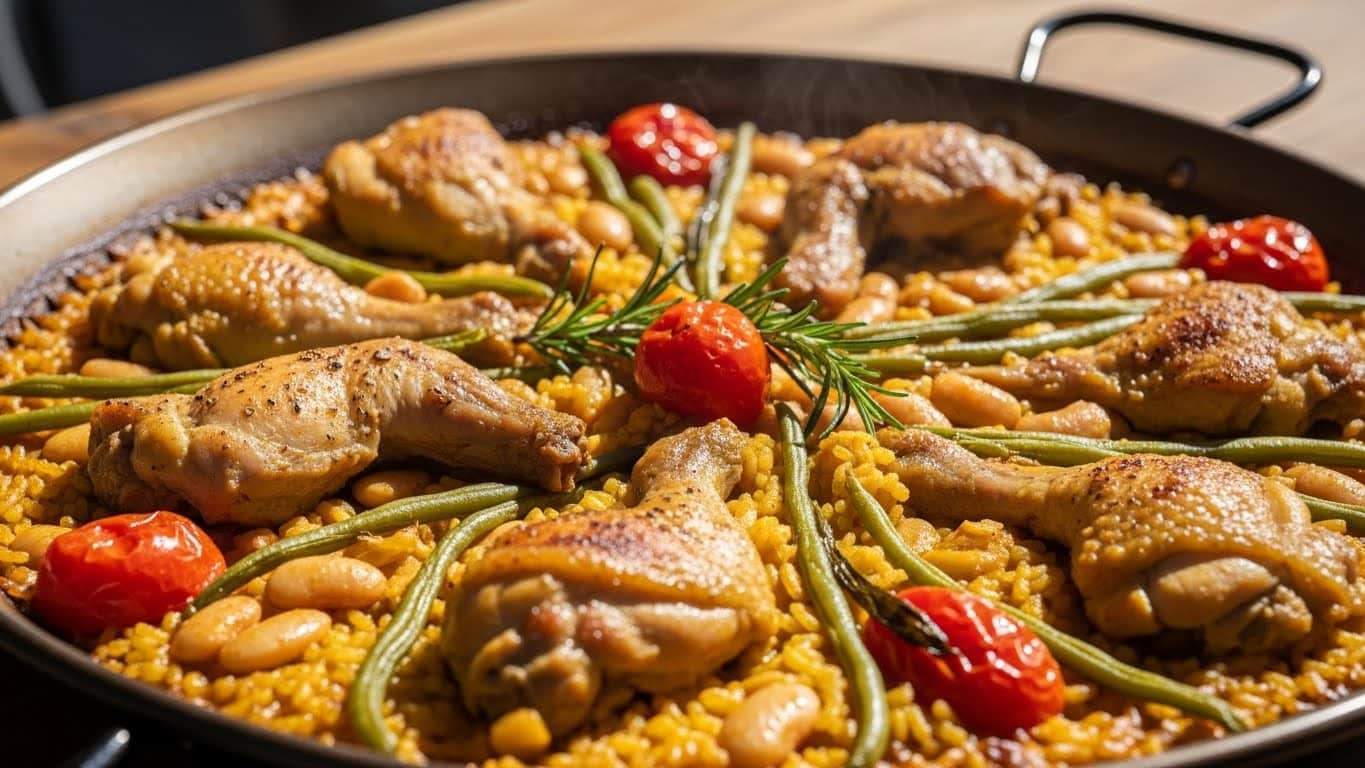
Few dishes embody the heart and soul of a nation quite like Paella Valenciana, Spain’s most iconic culinary treasure. Hailing from the sun-drenched region of Valencia, this dish has transcended local borders to become a global symbol of Spanish gastronomy. Paella is more than just a meal; it is a celebration of tradition, family, and community. Prepared in large, shallow pans and brimming with vibrant colors, aromas, and flavors, paella represents the perfect blend of land and sea, history and innovation.
In this article, we’ll explore the origins of Paella Valenciana, dive into its authentic ingredients, learn how to prepare it at home, and understand why it holds such a special place in Spanish culture.
Paella Valenciana
Ingredients
Equipment
Method
- Prep the ingredients: cut the chicken and rabbit into bite sized pieces, trim and halve the green beans, grate the tomato, and steep the saffron threads in a little warm water.
- Heat the chicken broth in a saucepan until steaming. Stir in the saffron threads and keep warm over low heat.
- Heat the olive oil in a 15 inch paella pan over medium high heat. Season the chicken and rabbit with salt and cook until deeply browned, 8 to 10 minutes. Remove and set aside.
- Add the green beans and lima beans to the pan and cook for 4 minutes. Stir in the grated tomato and paprika and cook for 2 minutes until the tomato darkens into a sofrito.
- Return the meats to the pan. Add the rice and stir to coat every grain. Pour in the hot saffron broth and bring to a boil. Do not stir from this point on.
- Reduce the heat to medium low and simmer for 18 to 20 minutes, rotating the pan now and then, until the rice is tender and the liquid is absorbed. Lay the rosemary on top for the last 5 minutes.
- Remove from the heat, cover with a clean kitchen towel, and rest for 5 to 10 minutes.
- Serve straight from the pan with lemon wedges.
Notes
The Origins of Paella Valenciana
Paella finds its roots in the Valencian region of Spain, where it was first cooked by farmers and peasants in the mid-19th century. Traditionally, it was a humble dish prepared outdoors over an open fire, using whatever ingredients were available locally, often rice, beans, snails, and rabbit.
The name “paella” itself comes from the Latin word patella, meaning “pan,” referring to the wide, flat vessel in which it is cooked. Unlike many modern variations, the authentic Paella Valenciana sticks to its agricultural roots, featuring meats from the land rather than seafood.
Over time, paella became a dish of celebration, enjoyed during family gatherings, festivals, and community events. Today, it remains one of Spain’s proudest culinary exports, though purists still insist that only the Valencian version deserves the true title of paella.
Key Ingredients of Paella Valenciana
The authenticity of Paella Valenciana lies in its specific ingredients. While many international versions feature seafood, the traditional Valencian paella includes a carefully curated selection:
Rice (Bomba or Calasparra): Short-grain rice varieties that absorb flavors beautifully without becoming mushy.
Proteins: Rabbit and chicken are the classic meats, though some versions include duck or snails.
Vegetables: Green beans (judía verde) and butter beans (garrofó).
Olive Oil: A staple in Spanish cooking, used as the cooking base.
Tomato, Garlic, and Paprika: Create the sofrito, the foundation of flavor.
Saffron: The prized spice that gives paella its signature golden hue and subtle aroma.
Rosemary: Adds an earthy, aromatic touch.
Stock (Chicken or Vegetable): Infuses the rice with depth and richness.
The harmony of these ingredients defines the dish, each playing a role in creating a balanced, rustic flavor profile.
Step-by-Step Guide: Cooking Paella Valenciana
Cooking Paella Valenciana is as much an art as it is a recipe. Here’s a simplified yet authentic method:
Ingredients (serves 6 to 8)
2 cups Bomba or Calasparra rice
4 cups chicken stock
½ cup olive oil
500g chicken, chopped
500g rabbit, chopped
200g green beans (judía verde)
200g butter beans (garrofó)
2 ripe tomatoes, grated
2 garlic cloves, minced
1 tsp smoked paprika
A pinch of saffron threads (soaked in warm water)
1 sprig fresh rosemary
Salt, to taste
Instructions
Heat the Pan: Add olive oil to the paella pan and heat until shimmering.
Cook the Meat: Brown the chicken and rabbit pieces until golden. Remove and set aside.
Add Vegetables: Sauté the beans until slightly softened.
Build the Sofrito: Add garlic, paprika, and grated tomato. Cook until a thick paste forms.
Add Rice: Stir the rice into the sofrito, ensuring it is well coated with oil and spices.
Pour in Stock: Add stock and saffron-infused water. Stir briefly.
- Simmer: Return the meats to the pan. Cook uncovered on medium heat for 15 to 20 minutes.
- Finish Cooking: Add rosemary. Reduce heat and allow rice to cook through, forming the prized socarrat, a crispy layer at the bottom.
Rest and Serve: Let the paella rest for 5 minutes before serving.
The result is a fragrant, golden dish with perfectly cooked rice and tender meat, a true taste of Valencia.
Variations of Paella
While Paella Valenciana is the original, Spain has developed many variations:
Seafood Paella (Paella de Marisco): Features prawns, mussels, squid, and clams.
Mixed Paella (Paella Mixta): Combines meats and seafood, a favorite among tourists.
Vegetarian Paella (Paella de Verduras): Uses seasonal vegetables for a lighter version.
Black Paella (Arroz Negro): Made with squid ink, giving it a rich, dark color and unique flavor.
Each version reflects the diversity of Spanish regions and their ingredients, though Valencians still hold firm that theirs is the only true paella.
Tips for Perfect Paella
Choose the Right Pan: A wide, shallow pan ensures even cooking and proper socarrat formation.
Don’t Stir After Adding Stock: Unlike risotto, paella rice should cook undisturbed.
Cook Over an Open Flame: Traditionally, paella is cooked outdoors over a wood fire for smoky depth.
Respect the Ingredients: Avoid overloading with seafood or mixing too many proteins. Simplicity is key.
Nutritional Value
Paella Valenciana is not only delicious but also nutritious and balanced.
Protein: From chicken and rabbit, ideal for muscle repair and growth.
Carbohydrates: Rice provides sustained energy.
Vitamins & Minerals: Beans and vegetables add fiber, vitamins A and C, and iron.
Healthy Fats: Olive oil contributes heart-healthy monounsaturated fats.
Low Sugar: Naturally low in sugar, making it suitable for most diets.
It’s a wholesome dish that can be enjoyed guilt-free when made with fresh, quality ingredients.
Cultural Significance
In Spain, paella is more than just food; it is a ritual of togetherness. Sundays in Valencia often mean families gathering around a large paella pan, sharing stories and laughter.
The dish has also become a symbol of Spanish identity worldwide, often featured at festivals, national celebrations, and international events. In fact, there’s even a World Paella Day celebrated on September 20th, honoring Valencia’s most beloved dish.
Frequently Asked Questions
What makes paella Valenciana authentic?
Authentic paella Valenciana uses ten specific ingredients: bomba rice, chicken, rabbit, flat green beans, lima beans, tomato, olive oil, saffron, paprika, and salt. It is cooked in a wide paella pan without stirring, which creates the socarrat.
Conclusion
Paella Valenciana is more than a recipe; it’s a story of history, community, and pride. From its humble origins in the fields of Valencia to its place as Spain’s national treasure, paella continues to bring people together.
Cooking Paella Valenciana at home allows you to not only enjoy a flavorful and satisfying dish but also connect with centuries of Spanish tradition. Whether shared with family or friends, paella is always best enjoyed in good company—with a glass of Spanish wine, laughter in the air, and a warm pan at the center of the table. For a hearty seafood feast with bold Cajun flavors, try our Seafood Boil too.
About the Author
Luke is the home cook and writer behind Lumomint Foods. He spends his time testing comforting, practical recipes from around the world and writing them up in plain, easy language for everyday cooks.