
Turkish Baklava
Introduction
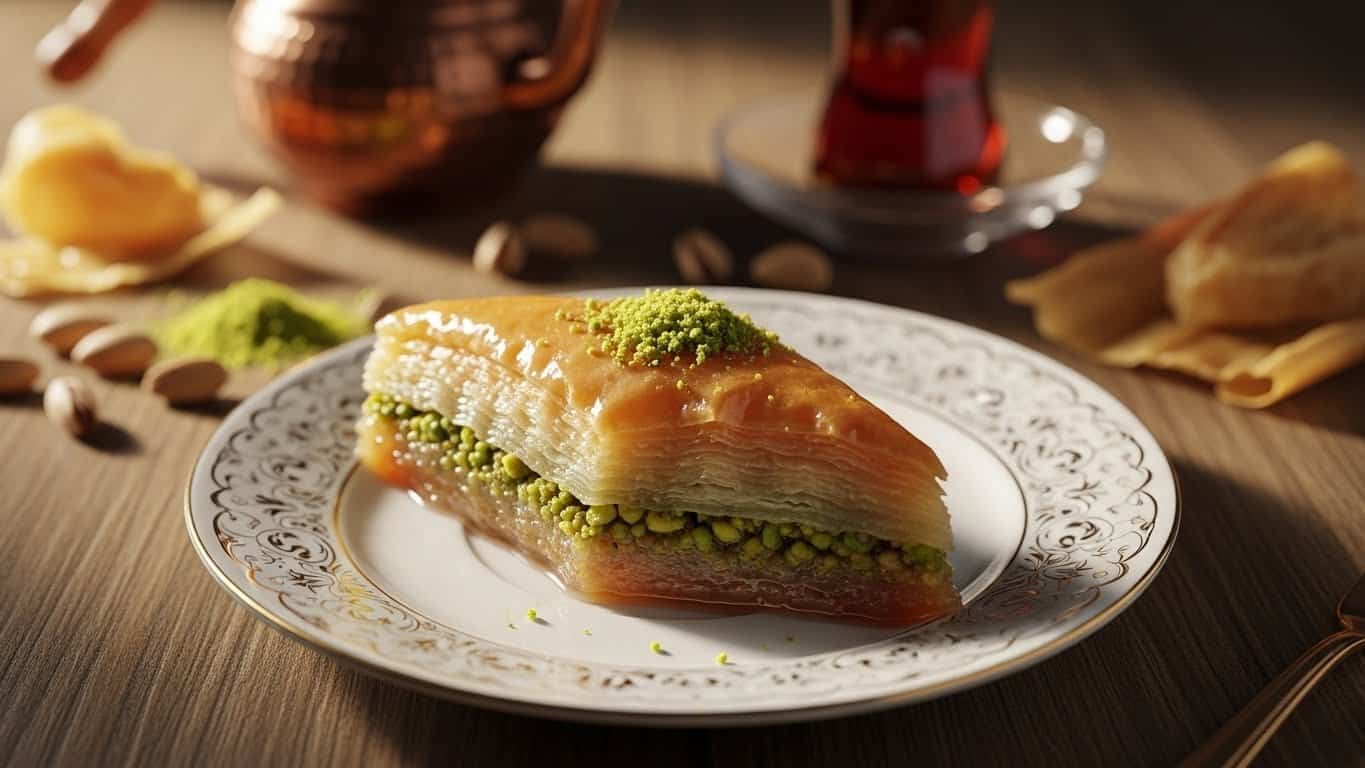
When it comes to desserts that carry history in every bite, few rival Turkish baklava. This flaky, nut-filled, syrup-soaked pastry has won hearts around the world. With delicate phyllo layers, a rich nutty filling, and fragrant syrup, it is a true symbol of tradition, hospitality, and celebration.
Baklava has earned its reputation for indulgence and artistry. Every golden bite carries centuries of refinement, from the kitchens of the Ottoman Empire to bakeries around the globe today. In this guide, we will explore where baklava comes from, why it matters culturally, the science behind getting it right, and a tested recipe you can make at home.
Turkish Baklava
Ingredients
Equipment
Method
- Prepare the syrup: Heat sugar and water until dissolved. Add lemon juice and simmer for 10 minutes. Cool completely.
- Prepare the nuts: Chop pistachios finely and set aside.
- Layer the phyllo: Brush a baking dish with butter. Place 10 layers of phyllo, brushing each with butter. Spread half the nuts evenly, add 10 more buttered layers, spread the remaining nuts, and finish with 10 to 12 buttered layers.
- Cut before baking: Slice into diamonds or squares using a sharp knife.
- Bake at 170°C for 45 to 50 minutes until golden and crisp.
- Add syrup: Pour the cooled syrup evenly over the hot baklava. Let it rest at least 6 hours, preferably overnight.
- Serve: Garnish with crushed pistachios. Serve with Turkish tea or coffee.
-
A Bite of History: Origins of Baklava
The exact origin of baklava remains debated, but most agree that it was perfected in the royal kitchens of the Ottoman Empire. Some food historians trace its roots to ancient Mesopotamia, where layered bread with honey and nuts was enjoyed. Others believe Greek and Middle Eastern influences played a role.
By the 15th century, baklava had become a staple in the Ottoman palace, reserved for sultans and dignitaries. Over time, it spread to the wider population and across borders, adapting to local tastes in Greece, the Middle East, and the Balkans.
In Turkey, baklava is especially significant during Ramadan and festive celebrations, symbolizing generosity and hospitality.
What Makes Turkish Baklava Special?
Though many countries boast baklava traditions, Turkish baklava is distinct in several ways:
- Phyllo Dough Mastery: Ultra-thin sheets of dough (sometimes up to 40 layers) are used.
- Nut Choices: Pistachios (especially from Gaziantep), walnuts, and hazelnuts are most common.
- Aromatic Syrup: Made with sugar, water, and lemon juice, sometimes infused with rose or orange blossom.
- Craftsmanship: Each tray requires precision, balance, and patience.
The result is a dessert that is crisp yet moist, rich yet balanced, sweet yet not overpowering.
The Science Behind Perfect Baklava
The secret to great baklava lies in balancing texture, flavor, and moisture:
- Phyllo Dough: The thinner the layers, the crispier the final texture. Gluten development ensures elasticity.
- Nuts: Ground finely but not into paste, providing crunch and flavor.
- Butter or Ghee: Brushed between each layer, ensuring flakiness and richness.
- Syrup: Must be poured correctly: either hot syrup on cooled pastry or cooled syrup on hot pastry. This prevents sogginess.
- Resting Time: Baklava is best enjoyed a day after baking, when syrup has settled evenly.
Opportunities and Risks in Baking Baklava
| Opportunities | Risks |
|---|---|
| Experiment with nuts (almonds, cashews, pecans). | Over-soaking in syrup leads to soggy baklava. |
| Flavor infusions (cardamom, saffron, rose water). | Using thick phyllo leads to dense pastry. |
| Fusion desserts (baklava cheesecake, ice cream). | Uneven buttering leads to dry patches. |
| Vegan versions with olive oil instead of butter. | Cutting after baking makes the pastry shatter. |
Graph: Syrup Absorption Over Time
Immediately after pouring, baklava is too wet.
- At 8 to 12 hours, flavors begin to balance.
At 24 hours, baklava reaches its peak taste and texture.
Step-by-Step Recipe: Classic Turkish Baklava
Ingredients:
500g phyllo dough (store-bought or homemade)
300g pistachios (or walnuts/hazelnuts)
250g unsalted butter (clarified)
400g sugar
250ml water
1 tbsp lemon juice
Optional: 1 tsp rose water or orange blossom water
Instructions:
Prepare Syrup
Heat sugar and water until dissolved. Add lemon juice and simmer for 10 minutes. Cool completely.
Prepare Nuts
Chop pistachios finely. Set aside.
Layer the Phyllo Dough
Brush a baking dish with butter. Place 10 layers of phyllo, brushing each with butter.
Spread half the nuts evenly.
Add another 10 buttered phyllo layers. Spread remaining nuts.
- Finish with 10 to 12 buttered layers.
Cut Before Baking
Slice into diamonds or squares using a sharp knife.
Bake
- Bake at 170°C for 45 to 50 minutes until golden and crisp.
Add Syrup
Pour cooled syrup evenly over hot baklava. Let it rest at least 6 hours (preferably overnight).
Serve
Garnish with crushed pistachios. Serve with Turkish tea or coffee.
Common Mistakes and Fixes
- Dry Baklava: Didn’t use enough butter or syrup, increase carefully.
Too Sweet: Use less syrup or reduce sugar in filling.
Soggy Texture: Syrup and baklava must be at opposite temperatures when combined.
Breaking Phyllo: Keep dough covered with a damp cloth to prevent drying.
Variations of Baklava
- Sütlü Nuriye: A lighter Turkish version using milk in syrup.
- Chocolate Baklava: Modern fusion with cocoa and chocolate drizzle.
- Rolled Baklava: Phyllo rolled around nut filling instead of layered.
- Baklava Ice Cream Sandwich: A popular global twist.
Baklava in Turkish Culture
In Turkey, baklava is more than food. It is tradition. It is:
Served during Ramadan and Eid celebrations.
- A symbol of hospitality, guests are often welcomed with baklava.
Associated with family gatherings, weddings, and festivals.
A culinary emblem of Gaziantep, where the best pistachio baklava is made.
Baklava vs. Western Pastries
| Feature | Baklava | Western Pastries |
|---|---|---|
| Base | Phyllo dough | Puff pastry/shortcrust |
| Sweetener | Syrup (sugar + lemon) | Sugar, frosting, or cream |
| Texture | Crisp + soaked | Fluffy or crumbly |
| Flavor | Nutty, buttery, aromatic | Often dairy- or chocolate-heavy |
Tips for Success
Always clarify butter to avoid soggy layers.
Use fresh nuts for maximum flavor.
Cut baklava before baking, not after.
Let baklava rest overnight for best taste.
Conclusion
Turkish baklava is more than a dessert. It is a sweet legacy of history, artistry, and tradition. Born in the royal kitchens of the Ottoman Empire, perfected in Gaziantep, and loved across the world, it tells a story with every bite. For a cool contrast, serve it with our no-churn ice cream.
Its secret lies in precision: paper-thin layers of phyllo, the richness of butter, the crunch of nuts, and the sweetness of syrup in perfect balance. Baking baklava at home may require patience, but the result is a dessert that connects you to centuries of culinary tradition.
Whether you share it at a festive gathering, with family, or alongside Turkish coffee, baklava remains a dessert worth mastering. For another sweet homemade project, try our Belgian waffles.
Frequently Asked Questions
How long does baklava stay fresh?
Stored in an airtight container at room temperature, baklava stays crisp for up to two weeks. Avoid the refrigerator, as moisture softens the phyllo.
Can I freeze baklava?
Yes. Freeze the baked, unsyruped pastry in a sealed container for up to three months. Thaw it fully, then pour fresh warm syrup over it before serving.
Why did my baklava turn out soggy?
Sogginess usually comes from a syrup and pastry temperature mismatch. Pour hot syrup over fully cooled pastry, or cooled syrup over hot pastry, and let it absorb slowly.
Can I use walnuts instead of pistachios?
Absolutely. Walnuts and hazelnuts are traditional in many regions. Pistachios give the classic Gaziantep style, but any fresh, finely ground nut works well.
About the Author
Luke is the home cook and writer behind Lumomint Foods. He spends his time testing comforting, practical recipes from around the world and writing them up in plain, easy language for everyday cooks.
4 thoughts on “Turkish Baklava”