
Chicken Katsu
Why This Chicken Katsu Works
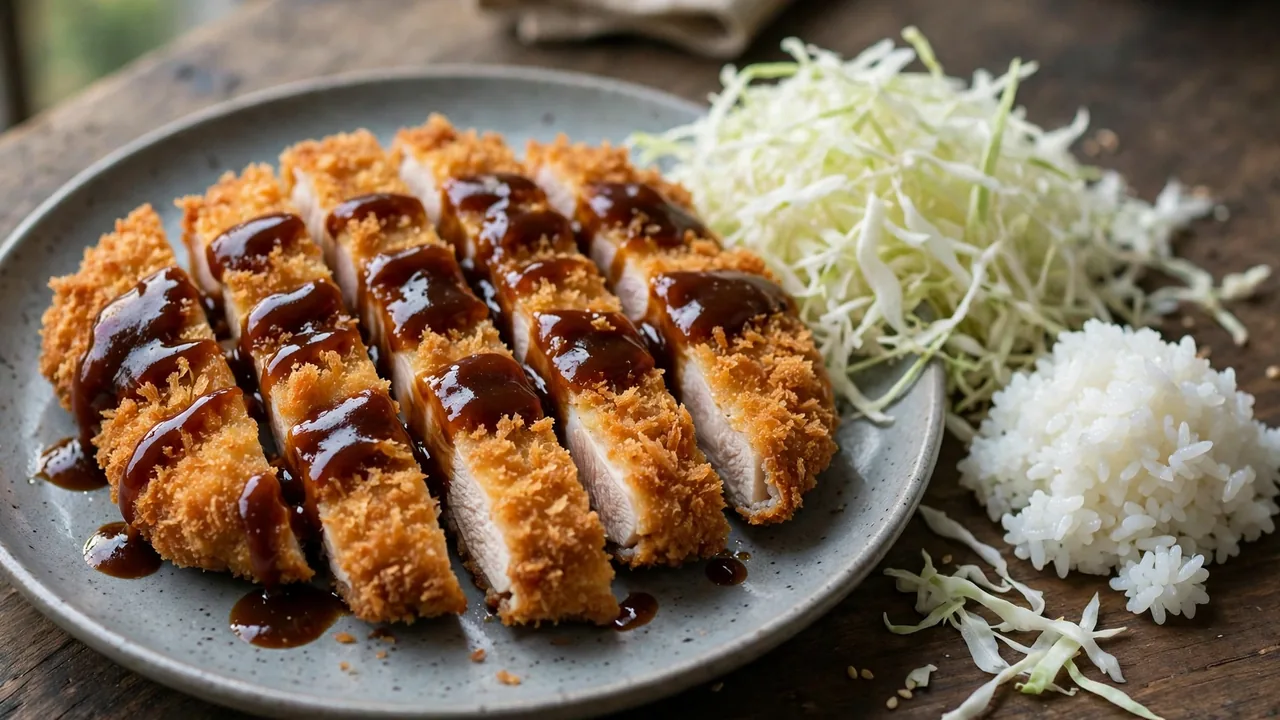
Chicken katsu is one of the most satisfying dishes in Japanese cooking. A thin chicken cutlet coated in panko breadcrumbs and fried until the crust is golden and shatteringly crisp, while the meat inside stays juicy and tender. It is simple, it is fast, and it is the kind of food that makes people close their eyes on the first bite.
The secret is the panko. These Japanese breadcrumbs are larger and flakier than regular breadcrumbs, and they fry up lighter and crispier. They absorb less oil, so the crust stays crunchy instead of turning greasy. Regular breadcrumbs work in a pinch, but the texture is noticeably different. Panko is worth buying.
Pounding the chicken to an even thickness is the other key step. A cutlet that is thick in the middle and thin at the edges cooks unevenly, and the thin parts dry out before the center is done. An even half inch thickness means the chicken cooks through in the same time it takes the crust to turn golden.
The Breading Station
Set up three shallow bowls before you start. The first holds flour seasoned with salt and pepper. The second holds beaten eggs. The third holds the panko breadcrumbs. This assembly line keeps the process clean and fast, and it ensures that every piece of chicken gets an even coating.
Coat each cutlet in flour first, shaking off the excess. The flour helps the egg stick, and the egg helps the panko stick. Without the flour layer, the breading can slide off during frying. Dip the floured chicken in the egg, letting the excess drip off, then press it into the panko. Press gently so the crumbs adhere in an even layer.
Let the breaded cutlets rest for a few minutes before frying. This rest helps the coating set and stick to the chicken. If you fry them immediately, the breading is more likely to fall off in the oil. Five minutes on a plate is enough, and you can use that time to heat the oil and shred the cabbage.
Use one hand for the wet steps and one hand for the dry steps if you can. This keeps your fingers from getting coated in a thick paste of flour, egg, and breadcrumbs. It is a small trick, but it makes the process much cleaner and faster.
How to Make Chicken Katsu
Place each chicken breast between two sheets of plastic wrap and pound it with a meat mallet or a rolling pin until it is an even half inch thick. Work from the center outward, and be gentle. You are flattening the chicken, not pulverizing it. Season both sides with salt and pepper.
Coat each cutlet in flour, then egg, then panko, pressing the crumbs on gently. Set the breaded cutlets on a plate and let them rest for five minutes while the oil heats. The rest helps the coating adhere and gives you a cleaner fry.
Heat vegetable oil in a large skillet over medium high heat until it reaches 350 degrees Fahrenheit. The oil should be about half an inch deep, enough to come halfway up the sides of the cutlets. A thermometer takes the guesswork out of the temperature, and it is worth using.
Fry the cutlets for four to five minutes per side, until they are deep golden brown and the chicken is cooked through. Do not move them for the first two minutes, so the crust has time to set. Flip them carefully with tongs, and do not press down on them, because pressing squeezes out the juices.
Drain the cutlets on a wire rack, not on paper towels. The wire rack lets air circulate underneath, which keeps the bottom crust crisp. Let the chicken rest for three minutes, then slice it into strips about an inch wide. Serve with tonkatsu sauce, shredded cabbage, lemon wedges, and steamed rice.
Tonkatsu Sauce and Sides
Tonkatsu sauce is the classic accompaniment, and you can buy it bottled or make it at home. The homemade version is a mix of ketchup, Worcestershire sauce, soy sauce, and a little sugar. It is sweet, tangy, and savory, and it takes two minutes to whisk together. Bottled tonkatsu sauce is also good, and it is worth keeping a bottle in the pantry.
Shredded cabbage is the traditional side, and it is not just a garnish. The cool, crisp cabbage balances the richness of the fried chicken, and a squeeze of lemon over it adds brightness. Shred the cabbage as thinly as you can, and soak it in ice water for a few minutes to make it extra crisp.
Steamed rice is the standard partner, and it turns the katsu into a complete meal. For a heartier plate, serve the katsu over a bed of rice with the sauce drizzled on top. This is called katsu don when an egg is added, and it is a beloved comfort dish in its own right.
Mistakes to Avoid
Uneven thickness is the most common mistake. A cutlet that is thick in the middle and thin at the edges will not cook evenly. The thin parts dry out while the center is still raw. Take the time to pound the chicken to an even half inch, and the frying becomes easy.
Oil that is too cool is the second mistake. If the oil is below 325 degrees, the panko absorbs oil instead of crisping, and the crust turns greasy and heavy. Use a thermometer and wait for 350 degrees before the chicken goes in. Let the oil recover between batches.
Pressing down on the cutlets while they fry is another error. Pressing squeezes out the juices and flattens the crust. Let the chicken fry undisturbed, and flip it only once. The crust will set on its own if you leave it alone.
Slicing the chicken too soon is the last mistake. The cutlets need three minutes of rest after frying so the juices redistribute. Slicing immediately lets the juices run out onto the cutting board, and the meat dries out. The crust also firms up during the rest, which makes cleaner slices.
How to Serve and Store It
Serve chicken katsu sliced into strips with tonkatsu sauce, shredded cabbage, lemon wedges, and steamed rice. The contrast of the hot crispy chicken and the cool crisp cabbage is part of the experience. Eat it right away, while the crust is at its crunchiest.
Leftovers keep in the fridge for up to two days in a sealed container. Reheat them in the oven at 375 degrees for about ten minutes, or in the air fryer for five minutes. The microwave makes the crust soggy, so avoid it. Leftover katsu is excellent sliced into a sandwich with cabbage and tonkatsu sauce.
Breaded raw cutlets freeze well for up to a month. Freeze them on a baking sheet until solid, then transfer them to a freezer bag. Fry them straight from frozen, adding two extra minutes per side. This is a great way to have katsu ready for a quick dinner.
Frequently Asked Questions
Can I bake chicken katsu instead of frying it?
Yes, bake the breaded cutlets on a wire rack over a baking sheet at 425 degrees Fahrenheit for about twenty minutes, flipping once. Spray the cutlets with oil before baking to help them crisp. The crust will not be quite as golden as the fried version, but the dish is still delicious and much lighter.
What is the difference between chicken katsu and tonkatsu?
Katsu is the general term for a breaded and fried cutlet, and tonkatsu specifically refers to the pork version. Chicken katsu uses the same panko breading and frying method, but with chicken instead of pork. Both are served with tonkatsu sauce and shredded cabbage, and both are equally beloved.
Can I use chicken thighs for katsu?
Yes, boneless skinless thighs work well for katsu. They are juicier than breasts and more forgiving if you overcook them slightly. Pound them to an even thickness the same way, and fry them for the same amount of time. The crust and the method are identical.
Where do I find panko breadcrumbs?
Panko is available in the Asian aisle of most supermarkets and at any Asian grocery store. It is also sold in the breadcrumb section of larger stores. Look for plain panko without added seasoning, so you can control the salt yourself. A bag lasts for months in the pantry.
For more Japanese dishes, try our sushi rolls and authentic ramen. The fried chicken uses a similar crispy coating, and Japanese mochi makes a sweet finish. The panko breadcrumbs are what make katsu shatteringly crisp, so do not substitute regular breadcrumbs, and fry at 350 degrees for a golden crust that stays crunchy.
Ingredients
Equipment
Method
- Pound the chicken breasts to an even thickness of about 1/2 inch.
- Season with salt and pepper, then coat in flour, beaten egg, and panko, pressing gently.
- Heat oil in a large skillet to 350 degrees Fahrenheit.
- Fry the chicken for 4 to 5 minutes per side until deep golden and cooked through.
- Drain on a wire rack and rest for 3 minutes.
- Slice into strips and serve with tonkatsu sauce, shredded cabbage, lemon, and rice.
About the Author
Luke is the home cook and writer behind Lumomint Foods. He spends his time testing comforting, practical recipes from around the world and writing them up in plain, easy language for everyday cooks.