
Authentic Lebanese Garlic Sauce (Toum), No Egg Version
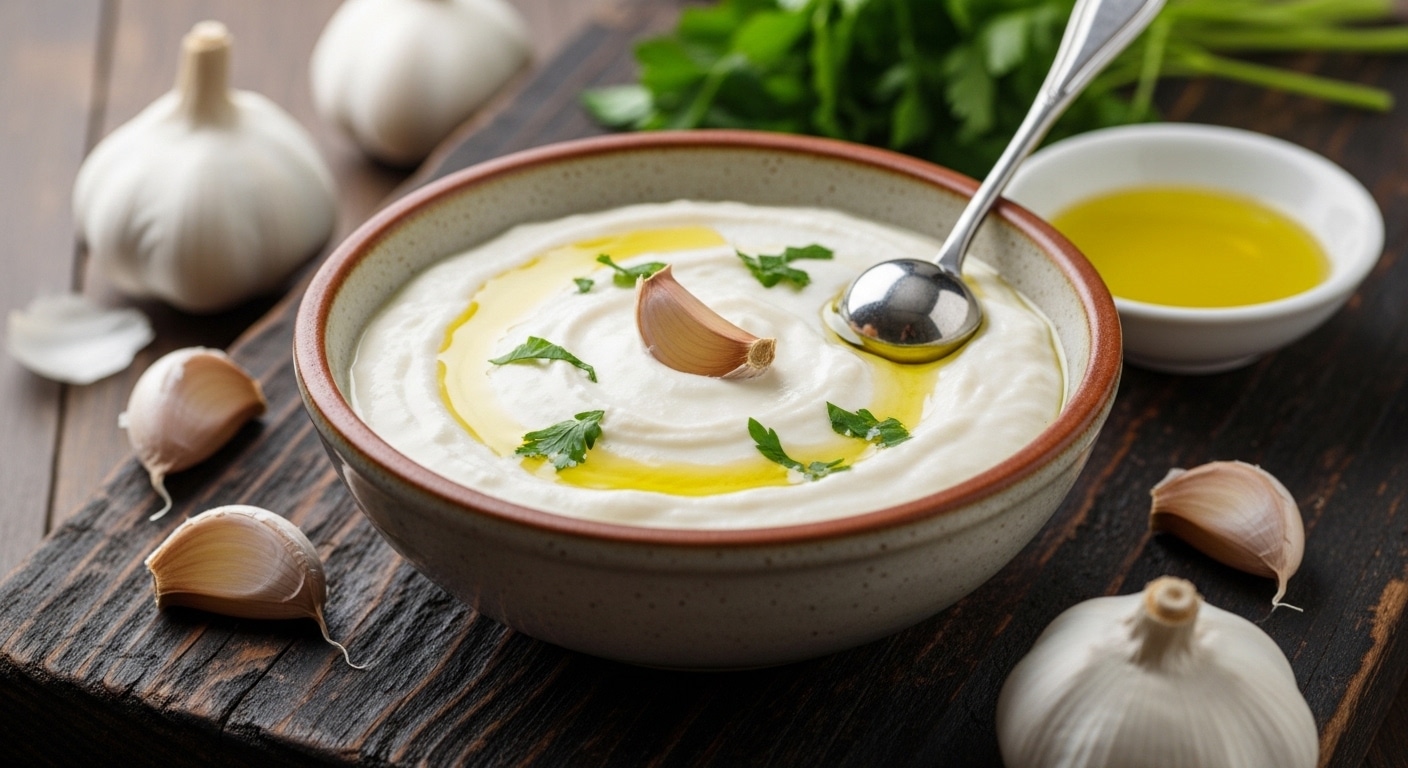
This Lebanese toum recipe makes a powerful, creamy garlic sauce without eggs, dairy, or fillers. It relies entirely on garlic, oil, lemon juice, and salt, emulsified through technique rather than shortcuts. In Lebanon, toum is not a dip but a core condiment, served with grilled meats, shawarma, roasted chicken, fries, and flatbreads. When made correctly, eggless toum becomes snow-white, fluffy, intensely garlicky, and stable for days in the refrigerator.
Authentic Lebanese Garlic Sauce Toum (No Egg)
Ingredients
Equipment
Method
- Place garlic and salt in the food processor. Process until completely smooth, stopping frequently to scrape down the sides.
- With the processor running, add oil one teaspoon at a time. This slow start is essential for the emulsion to form.
- Once the emulsion forms, continue adding oil in a thin stream, alternating occasionally with small amounts of lemon juice.
- Continue blending until the toum becomes fluffy, white, and holds its shape. Taste and adjust salt or lemon juice.
What Is Toum
Toum is a traditional Lebanese garlic emulsion similar in structure to mayonnaise but entirely plant-based. Instead of egg yolk acting as the emulsifier, raw garlic itself provides the structure. Garlic contains natural emulsifying compounds that bind oil and liquid when processed slowly and correctly. This makes toum naturally vegan and shelf-stable when handled properly.
Why Authentic Toum Never Uses Eggs
Eggs mute garlic’s sharpness and alter the sauce’s identity. Lebanese toum is meant to be bold, sharp, and clean, not rich like aioli. Adding eggs or yogurt creates a different sauce entirely. Traditional kitchens rely on garlic’s own emulsifying power, which produces a lighter texture and brighter flavor that cuts through fatty meats.
Flavor and Texture of Real Toum
Properly made toum is intensely aromatic with a clean, sharp garlic bite that mellows slightly after chilling. The texture is airy, fluffy, and spreadable, holding stiff peaks like whipped cream. It should never taste oily, bitter, or heavy. The color remains pure white, never yellow.
Ingredients Used in Authentic Lebanese Toum
Authentic toum uses four ingredients only: fresh garlic cloves, neutral oil, lemon juice, and salt. Garlic must be fresh, firm, and free of green sprouts. Neutral oils like sunflower, canola, or grapeseed are preferred over olive oil, which can turn bitter during blending. Fresh lemon juice adds acidity and stabilizes the emulsion, while salt enhances flavor and helps break down the garlic.
Why Oil Choice Matters
Extra virgin olive oil is not traditional for toum because its strong flavor and polyphenols can make the sauce bitter when whipped at high speed. Neutral oils allow garlic to dominate while creating a stable, smooth emulsion. This is one of the most important differences between authentic toum and Western adaptations.
Equipment Needed for Eggless Toum
A food processor produces the most reliable results, but a high-speed blender also works. A mortar and pestle is traditional but requires skill and patience. Consistent, slow oil addition is easier with a machine, especially for beginners.
Preparing Garlic for Toum
Peel the garlic cloves and remove the green germ from the center if present. This step is critical, as the germ causes bitterness and harsh aftertaste. Once cleaned, rinse and dry the garlic thoroughly before processing.
Authentic No-Egg Toum Recipe
This recipe yields approximately two cups of traditional Lebanese toum.
Ingredients
2 cups peeled garlic cloves, 4 to 5 cups neutral oil, ½ cup fresh lemon juice, 2 teaspoons salt.
Step 1: Start the Garlic Paste
Place garlic and salt in the food processor. Process until completely smooth, stopping frequently to scrape down the sides. This stage determines final texture. The garlic must become a fine, creamy paste with no visible chunks.
Step 2: Begin the Emulsion
With the processor running, add oil one teaspoon at a time. This slow start is essential. The mixture will begin to thicken and turn pale. Rushing this step will cause separation.
Step 3: Alternate Oil and Lemon Juice
Once the emulsion forms, continue adding oil in a thin stream, alternating occasionally with small amounts of lemon juice. This balance keeps the sauce stable and prevents it from becoming greasy.
Step 4: Achieve Final Texture
Continue blending until the toum becomes fluffy, white, and holds shape. Taste and adjust salt or lemon carefully. The sauce should be intense but clean.
How Long Toum Takes to Make
Expect 15 to 25 minutes of active blending time. Toum cannot be rushed. Slow emulsification is the foundation of success.
Common Mistakes That Ruin Toum
Adding oil too fast breaks the emulsion. Using olive oil causes bitterness. Skipping germ removal results in harsh flavor. Warm ingredients destabilize the sauce. Always work with room-temperature garlic and chilled oil for best control.
How to Fix Broken Toum
If toum separates, start a new batch with a small amount of garlic paste or lemon juice in a clean processor, then slowly add the broken mixture as if it were oil. This often rescues the emulsion.
Storage and Food Safety
Store toum in a clean, airtight container in the refrigerator. Properly made toum lasts up to four weeks. Always use a clean spoon to prevent contamination. The high acidity and lack of eggs make it safer than many creamy sauces.
Why Toum Gets Milder Over Time
Fresh toum is sharp and aggressive. After 24 to 48 hours in the refrigerator, the garlic flavor mellows and becomes more balanced. Many Lebanese cooks prefer toum on the second or third day.
Traditional Uses of Toum in Lebanese Cuisine
Toum is traditionally served with shish tawook, rotisserie chicken, grilled lamb, kafta, and shawarma. It is also spread inside flatbreads, mixed into sandwiches, or served as a dip for fries.
Toum With Chicken
Toum and chicken are inseparable in Lebanese food culture. The sharp garlic cuts through fat and enhances grilled or roasted flavors without heaviness.
Toum With Meat and Seafood
While famous with chicken, toum also pairs with beef, lamb, and shrimp. It adds punch without masking natural flavors.
Toum as a Marinade Base
Mixed with lemon juice and spices, toum becomes an excellent marinade that tenderizes meat while infusing garlic flavor.
Toum vs Aioli
Aioli often includes egg yolk and olive oil, resulting in a richer, heavier sauce. Toum is lighter, sharper, and entirely plant-based. The two share technique but not identity.
Toum vs Garlic Mayo
Garlic mayonnaise is mild and creamy, designed for balance. Toum is intentionally bold and unapologetically garlicky, meant to be used generously with robust foods.
Is Toum Healthy
Toum is high in calories due to oil but offers benefits from raw garlic, including antioxidant and antimicrobial properties. Because it is egg-free and dairy-free, it suits vegan and lactose-free diets.
Cultural Importance of Toum
In Lebanon, toum represents restraint and technique. It reflects a culinary philosophy where few ingredients, handled correctly, create powerful results. Many families consider toum-making a skill passed down through generations.
Learning From Authentic Lebanese Sources
For traditional ratios and technique, Taste of Beirut documents classic Lebanese methods and cultural context: https://www.tasteofbeirut.com/toum-garlic-sauce/. Serious Eats provides a technical breakdown of garlic emulsions and why toum works without eggs: https://www.seriouseats.com/toum-lebanese-garlic-sauce. For broader Lebanese culinary heritage, the Lebanese Cuisine section of Saveur offers regional insights: https://www.saveur.com/.
Frequently Asked Questions
Why does my toum taste bitter?
Bitterness usually comes from using extra virgin olive oil or leaving the green germ inside the garlic cloves. Always use a neutral oil and remove the germ before bl
Can I make toum without a food processor?
A food processor gives the most reliable emulsion, but a high-speed blender works if you add the oil very slowly. A mortar and pestle is traditional but demands serious patience. Avoid weak blenders, which struggle to build the emulsion.
How long does homemade toum last?
Stored in a clean, airtight container in the refrigerator, toum keeps for up to four weeks. Always use a clean spoon to avoid contamination. If it smells off or changes color, discard it.
Why did my toum not thicken?
The most common cause is adding oil too quickly before the emulsion forms. Start with oil one teaspoon at a time until the mixture turns white and fluffy. Room-temperature ingredients also emulsify better than cold ones.
Authentic Lebanese toum is not about convenience but control. When garlic, oil, lemon, and salt are handled with patience and respect, the result is bold, fresh, and deeply satisfying. If you love homemade condiments, try my traditional pesto sauce and authentic Thai green curry paste from scratch next.
About the Author
Luke is the home cook and writer behind Lumomint Foods. He spends his time testing comforting, practical recipes from around the world and writing them up in plain, easy language for everyday cooks.
1 thought on “Authentic Lebanese Garlic Sauce (Toum), No Egg Version”