
French Crème Brûlée
Introduction
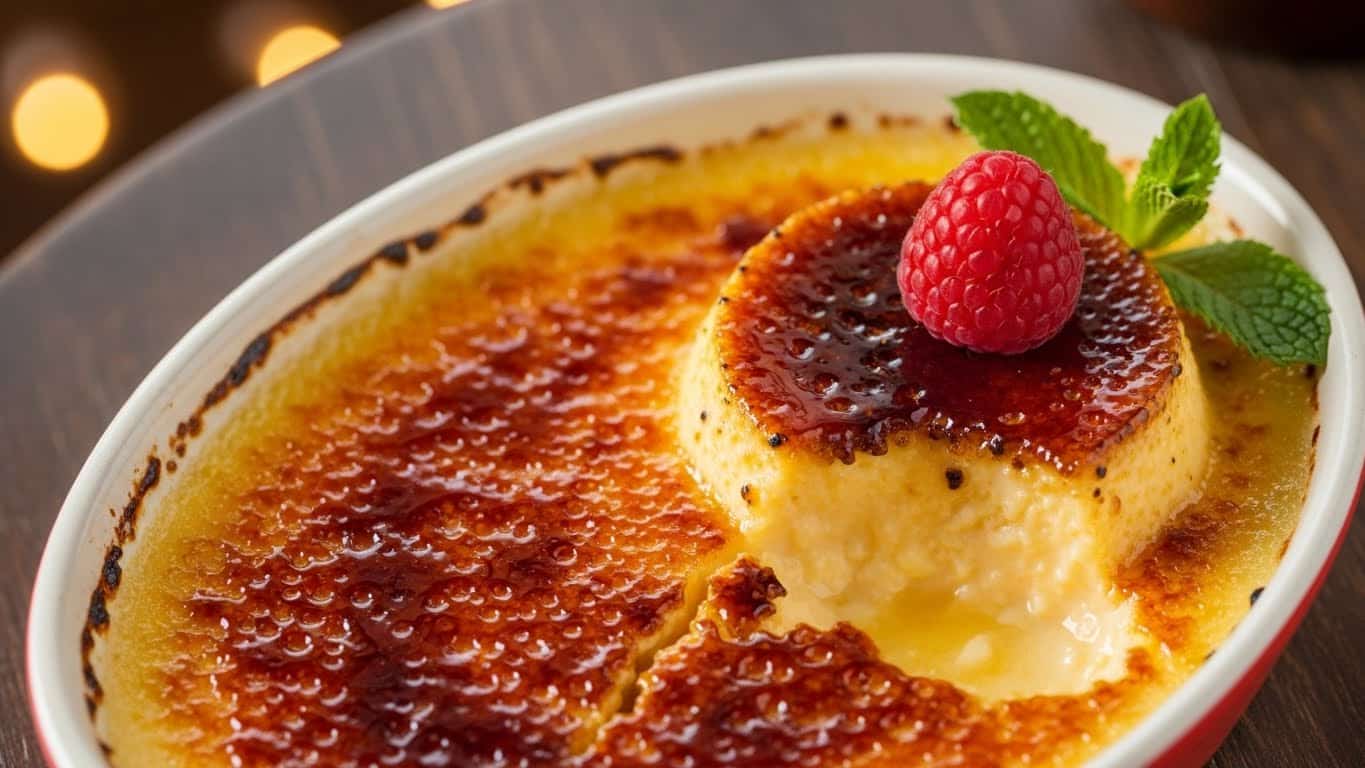
Cool, silky vanilla custard hides under a thin, glassy sheet of caramelized sugar, and that first crack of the spoon is half the fun. It looks like restaurant magic, but Crème Brûlée is really just cream, egg yolks, sugar, and vanilla handled with a little care.
Once you get the custard setting and the sugar topping right, this is one of the easiest showstopper desserts you can make at home. Below you will find the classic French method, the story behind the dish, smart variations, and the tips that keep your custard smooth instead of scrambled.
Classic French Crème Brûlée
Ingredients
Method
- Heat the cream: In a saucepan, heat the heavy cream with the split vanilla bean (or extract) until just simmering. Remove from heat and let it infuse for 10 to 15 minutes.
- Whisk the yolks: In a bowl, whisk the egg yolks with the sugar until pale and creamy.
- Combine: Slowly pour the warm cream into the egg mixture while whisking to avoid curdling.
- Strain: Pass the mixture through a fine sieve for an ultra-smooth custard.
- Bake: Pour into ramekins. Set ramekins in a baking dish and add hot water halfway up their sides. Bake at 150°C (300°F) for 35 to 40 minutes, until set but slightly wobbly in the center.
- Chill: Refrigerate for at least 4 hours or overnight.
- Caramelize: Just before serving, sprinkle sugar evenly over each custard and torch until golden and crisp.
- Serve: Let the sugar harden for 1 to 2 minutes, then crack and enjoy.
Notes
The History of Crème Brûlée
The exact origins of Crème Brûlée are a subject of culinary debate. While it is most famously associated with France, similar custard-based desserts appear across Europe.
France: The first recorded mention of “Crème Brûlée” appeared in François Massialot’s 1691 cookbook. He described a dessert of custard topped with a hardened layer of sugar, made by placing a hot iron over the surface.
England: In Cambridge, a similar dish known as “Trinity Cream” or “Cambridge Burnt Cream” was served in the 19th century.
Spain: The Spanish “Crema Catalana,” flavored with citrus and cinnamon, is another close relative.
Despite these variations, the French version became the most iconic, evolving into a dessert that symbolized elegance and indulgence.
Key Ingredients of Crème Brûlée
The magic of Crème Brûlée lies in its simplicity: few ingredients, handled with care, yield an extraordinary dessert.
Heavy Cream: Provides the custard’s luxurious texture.
Egg Yolks: Enrich the custard and help it set.
Sugar: Sweetens the custard and forms the caramelized crust.
Vanilla Bean (or extract): Infuses the dessert with aromatic depth.
Salt (optional): A pinch enhances flavor balance.
Each component plays a crucial role in delivering the creamy, smooth interior and the crisp sugar topping that defines Crème Brûlée.
Step-by-Step Recipe: Authentic French Crème Brûlée
Ingredients (serves 6)
2 cups heavy cream
5 large egg yolks
½ cup granulated sugar (plus extra for topping)
1 vanilla bean (or 1 tsp vanilla extract)
Pinch of salt
Instructions
- Prepare the Cream: In a saucepan, heat heavy cream with the split vanilla bean (or extract) until just simmering. Remove from heat and let it infuse for 10 to 15 minutes.
Whisk the Yolks: In a bowl, whisk egg yolks with sugar until pale and creamy.
Combine: Slowly pour the warm cream into the egg mixture while whisking, to avoid curdling.
Strain: Pass the mixture through a fine sieve for an ultra-smooth custard.
- Bake: Pour into ramekins. Place ramekins in a baking dish and add hot water halfway up their sides (bain-marie). Bake at 150°C (300°F) for 35 to 40 minutes until set but slightly wobbly in the center.
Chill: Refrigerate for at least 4 hours (or overnight).
Caramelize: Before serving, sprinkle sugar evenly on top of each custard. Torch until golden and crisp.
- Serve: Allow 1 to 2 minutes for the sugar to harden, then serve with a satisfying crack.
Variations of Crème Brûlée
While the classic vanilla Crème Brûlée is timeless, chefs worldwide have experimented with flavors:
Chocolate Crème Brûlée: Infuses melted dark chocolate into the custard.
Coffee Crème Brûlée: A bold twist with espresso or coffee extract.
Citrus Crème Brûlée: Lemon or orange zest adds brightness.
Matcha Crème Brûlée: Green tea powder creates an earthy, modern version.
Lavender Crème Brûlée: Infused with dried lavender for floral notes.
Seasonal Fruit Crème Brûlée: Topped with berries, figs, or passionfruit for freshness.
New York cheesecake is another baked classic worth trying if you love custard desserts. Each variation above keeps the signature balance of creamy custard and caramelized sugar while adding its own twist.
For another reliable take on the classic, see the ultimate creme brulee recipe at BBC Good Food.
Tips for the Perfect Crème Brûlée
Use Fresh Vanilla: Vanilla bean seeds provide unmatched aroma.
Avoid Overbaking: The custard should tremble slightly when done.
Chill Thoroughly: Proper chilling ensures the custard sets firmly.
Caramelize Just Before Serving: This keeps the sugar crust crisp.
Use a Kitchen Torch: For even caramelization, a torch is better than an oven broiler.
Serious Eats also explains the torching technique in their detailed creme brulee recipe.
Nutritional Value
While indulgent, Crème Brûlée offers certain nutrients:
- Calories: Around 250 to 300 per serving.
Protein: Egg yolks contribute high-quality protein.
Calcium: Cream provides calcium for bone health.
Vitamins: Rich in vitamin A and B12 from eggs and cream.
Sugar: High in sugar, so moderation is key.
It’s a treat best enjoyed occasionally, celebrated for its indulgence rather than everyday consumption.
Cultural Significance
Crème Brûlée is more than dessert. It is a culinary experience. In France, it is a staple of fine dining, often saved for special occasions and romantic evenings. Its global presence in restaurants shows how French gastronomy keeps influencing world cuisine.
The iconic crack moment, when the spoon breaks through the caramelized sugar, has become a symbol of dessert perfection. It blends texture, sound, and taste in one memorable bite.
Conclusion
Crème Brûlée proves that simple ingredients can make an unforgettable dessert. Velvety custard, fragrant vanilla, and that crisp sugar crust deliver the elegance French cooking is famous for, without any fussy technique.
Whether you serve it in a Parisian café or your own kitchen, this dessert never fails to impress. Its history and flavors make it more than a sweet ending. It is a small celebration of cooking done well.
Homemade donuts make another fun weekend baking project. So the next time you make Crème Brûlée, take a second to enjoy its story, then crack that sugar shell and savor every spoonful.
Frequently Asked Questions
Why is my creme brulee watery or runny?
It was most likely underbaked. The custards should still tremble slightly in the center when you take them out of the oven, then firm up as they chill for at least 4 hours. A full overnight chill gives the most reliable set.
Can I make creme brulee without a kitchen torch?
Yes. Sprinkle the sugar over the chilled custards and place the ramekins under a very hot oven broiler for 2 to 3 minutes. Watch them closely and rotate the ramekins so the sugar browns evenly without burning.
How far ahead can I prepare creme brulee?
You can bake and chill the custards up to 2 days in advance, which makes this dessert ideal for dinner parties. Add the sugar topping and torch just before serving so the crust stays crisp and glassy.
What cream works best for creme brulee?
Heavy cream with at least 36 percent fat gives the silkiest texture. Lighter cream or milk can work, but the custard will set softer and taste less rich, so use full fat heavy cream for classic results.
About the Author
Luke is the home cook and writer behind Lumomint Foods. He spends his time testing comforting, practical recipes from around the world and writing them up in plain, easy language for everyday cooks.
4 thoughts on “French Crème Brûlée”