
Classic French Onion Soup Recipe
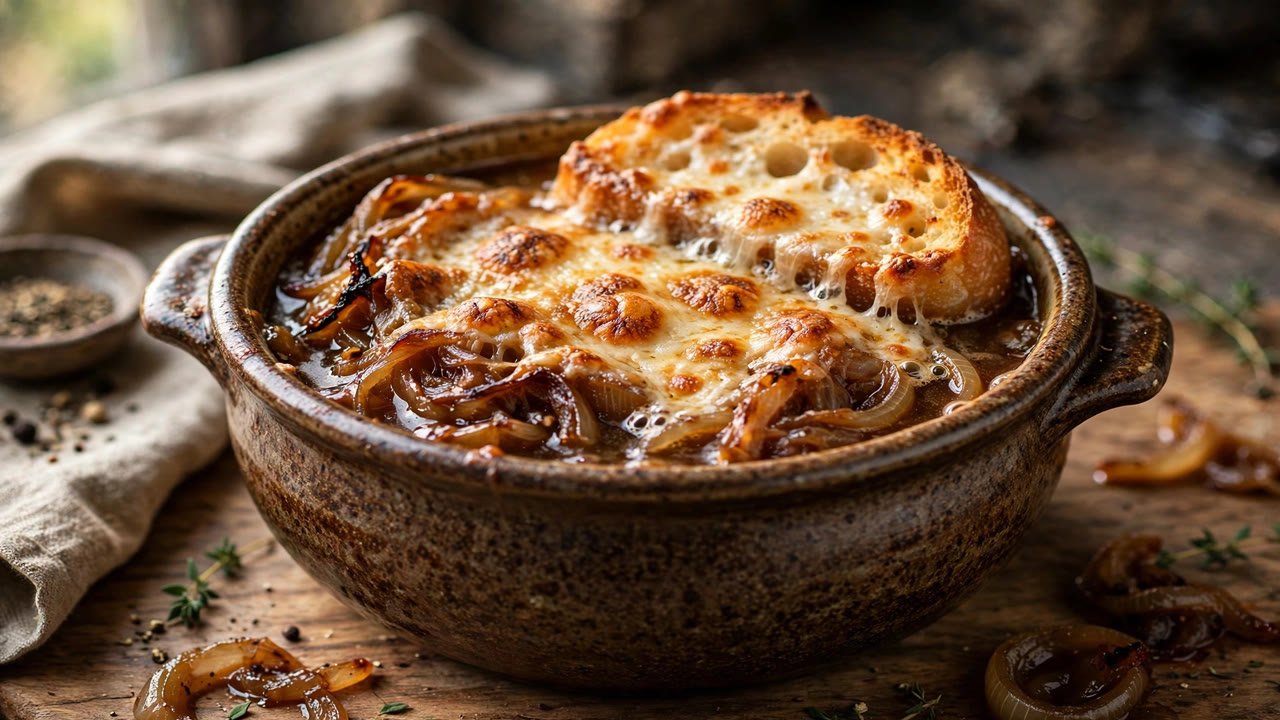
Imagine the aroma of sweet caramelized onions slowly melting into a deep, savory beef broth, all crowned with a golden crust of bubbling Gruyère cheese. That’s the magic of a classic French onion soup recipe, a timeless dish that warms the soul and satisfies the palate with every spoonful. Whether you’re hosting a dinner party or craving comfort on a chilly evening, this iconic French bistro favorite delivers rich flavor and elegant simplicity in one bowl.
Classic French Onion Soup
Ingredients
Equipment
Method
-
- Caramelize the onions: Slice onions thinly. Melt butter in a heavy pot over medium-low heat. Add onions and salt. Cook slowly, stirring occasionally, for 40 to 50 minutes until deep golden brown.
- Deglaze and build the broth: Pour in white wine and scrape up browned bits. Simmer 2 to 3 minutes. Add beef broth, thyme, and bay leaf. Simmer 20 to 25 minutes. Season with salt and pepper.
- Toast the bread and assemble: Preheat broiler. Toast baguette slices. Remove thyme and bay leaf. Ladle soup into oven-safe bowls. Top with toasted bread and grated Gruyère.
- Broil and serve: Broil 2 to 4 minutes until cheese is melted and bubbly. Let cool 2 to 3 minutes before serving.
Notes
This recipe stays true to tradition while being accessible for home cooks. No fancy equipment or hard-to-find ingredients, just patience, quality components, and a few key techniques that make all the difference. From slow-cooked onions to the perfect cheesy gratinée topping, we’ll walk you through every step to recreate this restaurant-quality soup in your own kitchen.
Why This Classic French Onion Soup Recipe Stands Out
French onion soup isn’t just another soup, it’s a culinary experience. Originating in 18th-century France, it was once a humble street food enjoyed by late-night workers. Today, it’s a symbol of French comfort cuisine, served in bistros and homes alike. What makes it special? The depth of flavor comes entirely from patience: slowly caramelizing onions until they turn deep golden brown, releasing their natural sugars and creating a foundation that’s both sweet and savory.
Unlike quick soups that rely on heavy cream or thickeners, this version builds complexity through technique. The broth, traditionally made with beef stock, absorbs the essence of the onions, while a splash of dry white wine adds brightness. Topped with toasted baguette slices and melted cheese, each bite offers a satisfying contrast of textures: silky broth, tender onions, crunchy bread, and gooey cheese.
This recipe balances authenticity with practicality. We use readily available ingredients and offer smart substitutions (like vegetable broth for a vegetarian version), so you can adapt it to your needs without sacrificing flavor.
Authentic Ingredients for the Best French Onion Soup
Great French onion soup starts with quality ingredients. Here’s what you’ll need for a rich, balanced flavor profile:
- Yellow onions: 6 large (about 2.5 lbs / 1.1 kg). Their high sugar content caramelizes beautifully.
- Unsalted butter: 4 tablespoons. Adds richness and helps prevent burning.
- Beef broth: 6 cups (1.4 liters). Use low-sodium for better control over seasoning. For depth, combine with 1 cup of water and 1 beef bouillon cube if needed.
- Dry white wine: 1/2 cup. Adds acidity and complexity. A dry Sauvignon Blanc or Pinot Grigio works well.
- Fresh thyme: 3 sprigs, or 1 teaspoon dried. Earthy and aromatic.
- Bay leaf: 1 whole leaf. Enhances the broth’s depth.
- French baguette: 4 to 6 thick slices, toasted. Choose a crusty loaf for the best texture.
- Gruyère cheese: 1.5 cups (150g), grated. Nutty and melts perfectly. You can substitute with Swiss or Emmental.
- Salt and freshly ground black pepper: to taste.
- Optional: Worcestershire sauce: 1 teaspoon. Adds umami depth (use vegetarian version if needed).
For a vegetarian or vegan twist, swap beef broth for rich vegetable stock and use a plant-based cheese alternative. The onions and wine still deliver that signature flavor.
Step-by-Step Cooking Instructions
Making French onion soup is all about low and slow. Rushing the caramelization process will result in bitter onions and a flat-tasting soup. Follow these steps for a deeply flavorful result.
1. Caramelize the Onions Properly
Slice the onions thinly and evenly, this ensures even cooking. Melt the butter in a large, heavy-bottomed pot or Dutch oven over medium-low heat. Add the onions and a pinch of salt. Cook slowly, stirring occasionally, for 40 to 50 minutes. The onions should turn a deep golden brown, not black. If they start to stick, deglaze with a splash of water or wine. For a deeper look at the science behind perfect caramelization, see this French onion soup guide from Serious Eats.
Patience is key. True caramelization can’t be rushed. The onions will reduce significantly, releasing their natural sweetness. You’ll know they’re ready when they’re soft, translucent, and richly colored.
2. Deglaze and Build the Broth
Pour in the white wine and scrape up any browned bits from the bottom of the pot. These are packed with flavor. Let the wine simmer for 2 to 3 minutes until mostly evaporated. This step adds brightness and balances the richness of the onions.
Add the beef broth, thyme, and bay leaf. Bring to a gentle simmer and cook for 20 to 25 minutes. This allows the flavors to meld. Taste and adjust seasoning with salt and pepper. If using Worcestershire sauce, add it now.
3. Toast the Bread and Prepare for Broiling
While the soup simmers, preheat your oven broiler. Toast the baguette slices until golden and crisp. This prevents them from becoming soggy under the cheese. Set aside.
Remove the thyme sprigs and bay leaf from the soup. Ladle the hot soup into oven-safe bowls or crocks. Place one or two toasted bread slices on top of each bowl. Generously sprinkle grated Gruyère over the bread, enough to cover it completely.
4. Broil Until Golden and Bubbly
Place the bowls on a baking sheet and slide them under the broiler. Watch closely, cheese can go from golden to burnt in seconds. Broil for 2 to 4 minutes, or until the cheese is melted, bubbly, and lightly browned.
Let the soup cool for 2 to 3 minutes before serving. The cheese will be extremely hot!
Pro Tips for Perfect French Onion Soup
Even experienced cooks can benefit from these insider tips to elevate their soup:
- Use a mix of broths: Combine beef and chicken stock for a more complex flavor. Some chefs even add a splash of beef consommé for extra richness.
- Don’t skip the wine: It’s essential for cutting through the richness. If you avoid alcohol, substitute with apple cider vinegar (1 tablespoon) plus extra broth.
- Caramelize in batches if needed: Overcrowding the pot lowers the temperature and steams the onions instead of browning them.
- Make it ahead: The soup base (without bread and cheese) can be made 2 to 3 days in advance and refrigerated. Reheat gently before finishing.
- Serve in traditional crocks: Oven-safe ceramic bowls help retain heat and are perfect for broiling.
- Freeze with care: The broth freezes well for up to 3 months, but don’t freeze with bread and cheese, add those fresh when reheating.
Nutritional Highlights and Serving Suggestions
This classic French onion soup is surprisingly balanced. A single serving (about 1.5 cups) contains approximately:
| Nutrient | Amount |
|---|---|
| Calories | 320 |
| Protein | 14g |
| Carbohydrates | 28g |
| Fat | 16g |
| Fiber | 3g |
| Sodium | 850mg (adjust based on broth) |
While rich, the soup is not overly heavy thanks to the wine and aromatic herbs. It’s a satisfying main course or a luxurious starter. Pair it with a simple green salad dressed in Dijon vinaigrette or serve alongside a charcuterie board for a complete French-inspired meal. For dessert, try our New York cheesecake or French crème brûlée.
For a lighter version, reduce the cheese slightly or use half Gruyère and half low-fat mozzarella. You’ll still get that melty, comforting texture with fewer calories.
Variations and Modern Twists
While the traditional recipe is unbeatable, there’s room for creativity. Try these variations to suit different tastes or dietary needs:
- Vegan French Onion Soup: Use vegetable broth, olive oil instead of butter, and a blend of nutritional yeast and vegan cheese for that umami-cheese flavor.
- Gluten-Free Option: Serve with gluten-free baguette slices. Most broths are naturally gluten-free, just double-check labels.
- Smoky Twist: Add a pinch of smoked paprika or a splash of liquid smoke for a deeper, campfire-inspired note.
- Herb Upgrade: Stir in a teaspoon of fresh parsley or chives after broiling for a pop of color and freshness.
- Wine Pairing: Serve with a glass of dry French wine like a Burgundy or Côtes du Rhône to complement the soup’s richness.
These tweaks keep the soul of the dish intact while making it adaptable for modern kitchens and diverse palates.
Common Mistakes to Avoid
Even small missteps can affect the final result. Here’s what to watch out for:
- Burning the onions: High heat causes bitterness. Keep the flame low and stir often.
- Using pre-shredded cheese: It contains anti-caking agents that prevent smooth melting. Always grate your own.
- Overloading with bread: Too much bread makes the soup heavy. One or two slices per bowl is plenty.
- Skipping the deglazing step: Those browned bits (fond) are flavor gold. Don’t wash them away!
- Broiling too long: Cheese can burn quickly. Stay close and remove as soon as it’s bubbly and golden.
With attention to these details, your soup will be restaurant-worthy every time.
Key Takeaways
- The secret to great French onion soup is slow-cooked, deeply caramelized onions.
- Use quality beef broth, dry white wine, and fresh herbs for authentic flavor.
- Toast the bread and broil with Gruyère for the perfect cheesy crust.
- Patience and low heat are essential, don’t rush the process.
- This recipe is adaptable for vegetarians, vegans, and gluten-free diets.
Frequently Asked Questions
Can I make French onion soup without wine?
Yes! Substitute the wine with 1 tablespoon of apple cider vinegar plus an extra 1/2 cup of broth. This maintains the acidity needed to balance the richness.
How long does French onion soup last in the fridge?
The soup base (without bread and cheese) keeps for up to 4 days in an airtight container. Reheat gently on the stove and finish with fresh bread and cheese under the broiler.
Can I freeze French onion soup?
Absolutely. Freeze the broth for up to 3 months. Thaw in the fridge overnight, reheat, and add toasted bread and cheese just before serving. Do not freeze with the toppings.
What cheese is best for French onion soup?
Gruyère is the classic choice for its nutty flavor and excellent melting. Swiss or Emmental work well too. Always grate your own cheese, as pre-shredded cheese contains anti-caking agents that prevent smooth melting.
Final Thoughts: A Bowl of French Comfort
The classic French onion soup recipe is more than just a dish, it’s a celebration of patience, flavor, and tradition. From the first slow stir of onions to the final golden crust of cheese, every step builds toward a deeply satisfying meal. Whether you’re cooking for one or hosting a dinner party, this soup delivers elegance and comfort in equal measure.
With simple ingredients and straightforward techniques, anyone can master this bistro favorite. Serve it with a crisp salad, a glass of wine, and good company, and you’ve got the makings of a memorable meal. So grab your pot, turn down the heat, and let the onions work their magic. Your perfect bowl of French onion soup awaits.
About the Author
Luke is the home cook and writer behind Lumomint Foods. He spends his time testing comforting, practical recipes from around the world and writing them up in plain, easy language for everyday cooks.
1 thought on “Classic French Onion Soup Recipe”