
Authentic Thai Green Curry Paste From Scratch
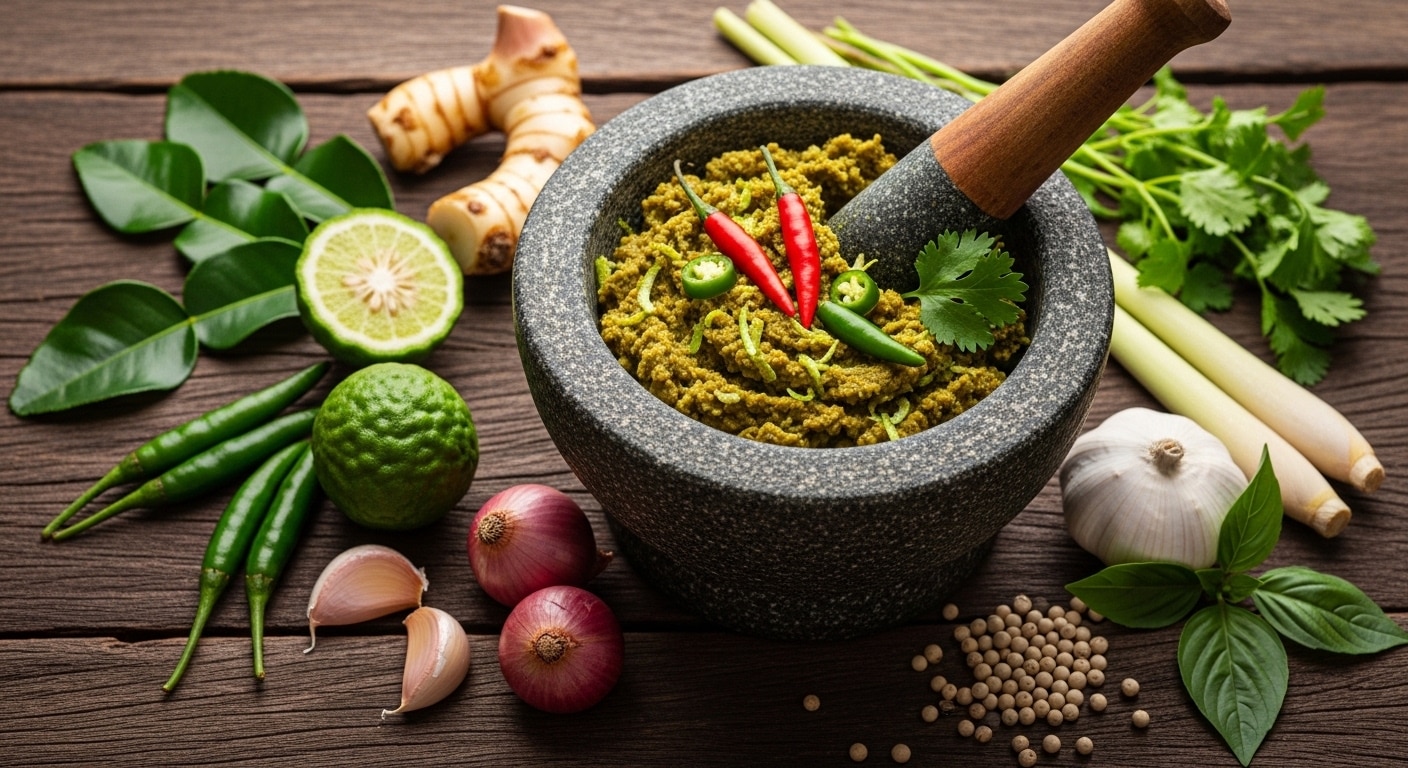
Thai green curry paste is the aromatic backbone of one of Thailand’s most iconic dishes. When made from scratch, it delivers brightness, heat, herbal freshness, and depth that store-bought versions rarely match. Authentic green curry paste is not just spicy; it is layered, fragrant, and balanced, built from fresh herbs pounded into a vivid green paste using traditional technique.
What Is Thai Green Curry Paste
Green curry paste is a raw spice and herb blend used as the flavor base for Thai green curry. It originates in Thailand and is traditionally made by hand using a mortar and pestle. The paste combines fresh green chilies, aromatics, herbs, spices, and shrimp paste, creating a concentrated flavor foundation that blooms when cooked.
Why Homemade Green Curry Paste Matters
Freshly made green curry paste tastes brighter, more complex, and more herbal than packaged versions. Commercial pastes are often cooked, preserved, or diluted, which dulls volatile aromas. Homemade paste lets you control heat level, salt, and freshness while preserving the curry’s true character.
Flavor Profile of Authentic Green Curry Paste
Authentic green curry paste is sharp, citrusy, herbal, and spicy with a lingering heat rather than immediate burn. The green color comes naturally from fresh chilies and herbs, not food coloring. The aroma should be fragrant and grassy, never muddy or overly salty.
Core Ingredients in Authentic Green Curry Paste
Green curry paste relies on fresh ingredients rather than dried spices. The essential components include green Thai chilies, garlic, shallots, lemongrass, galangal, kaffir lime zest, cilantro roots or stems, white peppercorns, coriander seeds, cumin seeds, shrimp paste, and salt.
Green Chilies and Heat Level
Traditional green curry uses Thai green chilies, which are hot and grassy. Using fewer chilies reduces heat without changing flavor balance. Avoid substituting bell peppers or mild chilies, which dilute aroma and authenticity.
Lemongrass and Galangal
Lemongrass provides citrus brightness, while galangal adds piney, peppery warmth. Ginger is not a true substitute for galangal, though it is sometimes used when galangal is unavailable. Thin slicing is essential to achieve a smooth paste.
Kaffir Lime Zest vs Leaves
The zest of kaffir lime delivers concentrated citrus oils critical to green curry paste. Leaves are aromatic but less potent. Using zest ensures intensity without excess bulk. Serious Eats explains why fresh aromatics like lemongrass and lime zest are crucial for authentic Thai curry pastes and how they affect flavor extraction: https://www.seriouseats.com/thai-green-curry-paste.
Cilantro Roots or Stems
Cilantro roots are traditional and intensely aromatic. When unavailable, thick lower stems work well. Leaves are too mild and watery for paste-making.
Spices and Shrimp Paste
White peppercorns add gentle heat, while coriander and cumin seeds contribute warmth and depth. Shrimp paste adds umami and saltiness. It should be toasted lightly to mellow harshness before use.
Why Mortar and Pestle Is Traditional
Pounding breaks down fibers more gently than blades, releasing oils rather than chopping them. This creates a smoother paste and deeper aroma. A food processor works but produces a sharper, less integrated flavor.
Authentic Thai Green Curry Paste Recipe
This recipe yields about one cup of paste, enough for multiple curries.
Ingredients
15 to 20 green Thai chilies, 1 tablespoon coriander seeds, 1 teaspoon cumin seeds, 1 teaspoon white peppercorns, 1 teaspoon salt, 2 tablespoons finely sliced lemongrass, 1 tablespoon sliced galangal, 1 tablespoon kaffir lime zest, 4 cloves garlic, 3 shallots, 2 tablespoons chopped cilantro roots or stems, 1 teaspoon shrimp paste.
Step 1: Toast the Dry Spices
Lightly toast coriander seeds, cumin seeds, and white peppercorns in a dry pan until fragrant. Cool completely, then grind into a fine powder. Toasting enhances aroma and reduces raw bitterness.
Step 2: Prepare Fresh Aromatics
Slice lemongrass, galangal, and chilies as finely as possible. This step reduces pounding time and ensures smoother texture.
Step 3: Pound the Paste
Add salt to the mortar first, followed by chilies. Pound until broken down. Add ground spices, then aromatics gradually, pounding after each addition. Finish with shrimp paste. Continue pounding until a smooth, cohesive paste forms.
Step 4: Adjust Texture
The finished paste should be thick, slightly coarse, and intensely fragrant. Do not add water or oil. Proper texture comes from patience, not dilution.
Using a Food Processor Instead
If using a processor, blend in stages and scrape frequently. Add a small amount of neutral oil only if absolutely necessary to help blades move, understanding this slightly alters authenticity. ThaiTable explains traditional curry paste preparation and why pounding is preferred in Thai kitchens: https://www.thaitable.com/thai/recipe/green-curry-paste.
How to Store Homemade Green Curry Paste
Store paste in an airtight container in the refrigerator for up to two weeks. For longer storage, freeze in small portions. Freezing preserves flavor well and allows easy portioning.
How Green Curry Paste Is Cooked
Green curry paste must be cooked in oil or coconut cream before adding liquids. This step releases aroma and mellows raw edges. Adding paste directly to liquid produces flat, underdeveloped curry.
Common Mistakes to Avoid
Using dried herbs instead of fresh, skipping shrimp paste, adding water, under-toasting spices, and rushing the pounding process all lead to inferior paste. Authentic green curry paste depends on technique, not shortcuts.
Green Curry Paste vs Red Curry Paste
Green curry paste is hotter and more herbal, while red curry paste is deeper and slightly sweeter due to dried chilies. They are not interchangeable despite similar ingredient lists.
Is Green Curry Paste Vegetarian
Traditional versions include shrimp paste. Vegetarian versions substitute fermented soybean paste or miso, but flavor changes noticeably. Authenticity relies on shrimp paste for depth.
Cultural Importance of Curry Paste in Thailand
In Thai cooking, curry paste reflects regional identity and family tradition. Many households adjust ratios based on preference, but the technique remains consistent. The Tourism Authority of Thailand highlights curry paste as a foundational element of Thai culinary heritage and regional cuisine: https://www.tourismthailand.org/Articles/thai-curry.
How Much Paste to Use
For one standard curry serving four people, 2 to 3 tablespoons of fresh paste is typical. Homemade paste is stronger than commercial versions, so less is often more.
Final Practical Insight
Authentic Thai green curry paste is about freshness, balance, and patience. When made from scratch, it transforms green curry from a simple dish into an aromatic expression of Thai cooking tradition, proving that true flavor begins long before the pot ever reaches the stove.
Authentic Thai Green Curry Paste
Ingredients
Equipment
Method
-
- Lightly toast coriander seeds, cumin seeds, and white peppercorns in a dry pan until fragrant. Cool completely, then grind into a fine powder.
- Slice lemongrass, galangal, and chilies as finely as possible.
- Add salt to the mortar first, followed by chilies. Pound until broken down. Add ground spices, then aromatics gradually, pounding after each addition. Finish with shrimp paste. Continue pounding until a smooth, cohesive paste forms.
- The finished paste should be thick, slightly coarse, and intensely fragrant. Do not add water or oil.
Notes
Frequently Asked Questions
Can I make green curry paste without shrimp paste?
Yes. Swap the shrimp paste for an equal amount of fermented soybean paste or white miso to keep things vegetarian. The result will taste a little less deep and pungent, yet still wonderfully aromatic. If you love Thai flavors, our guide to making authentic pad thai at home pairs beautifully with homemade pastes.
How spicy is homemade green curry paste?
Noticeably hotter than most store-bought jars. Fresh Thai green chilies bring a bright, grassy heat that builds slowly rather than hitting all at once. Start with 15 chilies for a medium heat, or use the full 20 for the traditional kick.
Can I freeze green curry paste?
Yes, it freezes very well for up to three months. Portion it into an ice cube tray so you can thaw exactly what you need, then transfer the cubes to a freezer bag. Thaw in the refrigerator and bloom the paste in hot oil or coconut cream as usual.
What should I cook with homemade green curry paste?
The classic move is a proper Thai green curry with chicken, vegetables, and coconut milk. It also shines as a marinade for grilled prawns or stirred through coconut rice. For a full hands-on Asian cooking night, try our easy homemade dumplings guide alongside your curry.
About the Author
Luke is the home cook and writer behind Lumomint Foods. He spends his time testing comforting, practical recipes from around the world and writing them up in plain, easy language for everyday cooks.
2 thoughts on “Authentic Thai Green Curry Paste From Scratch”