
How to Make the Perfect French Croissant at Home
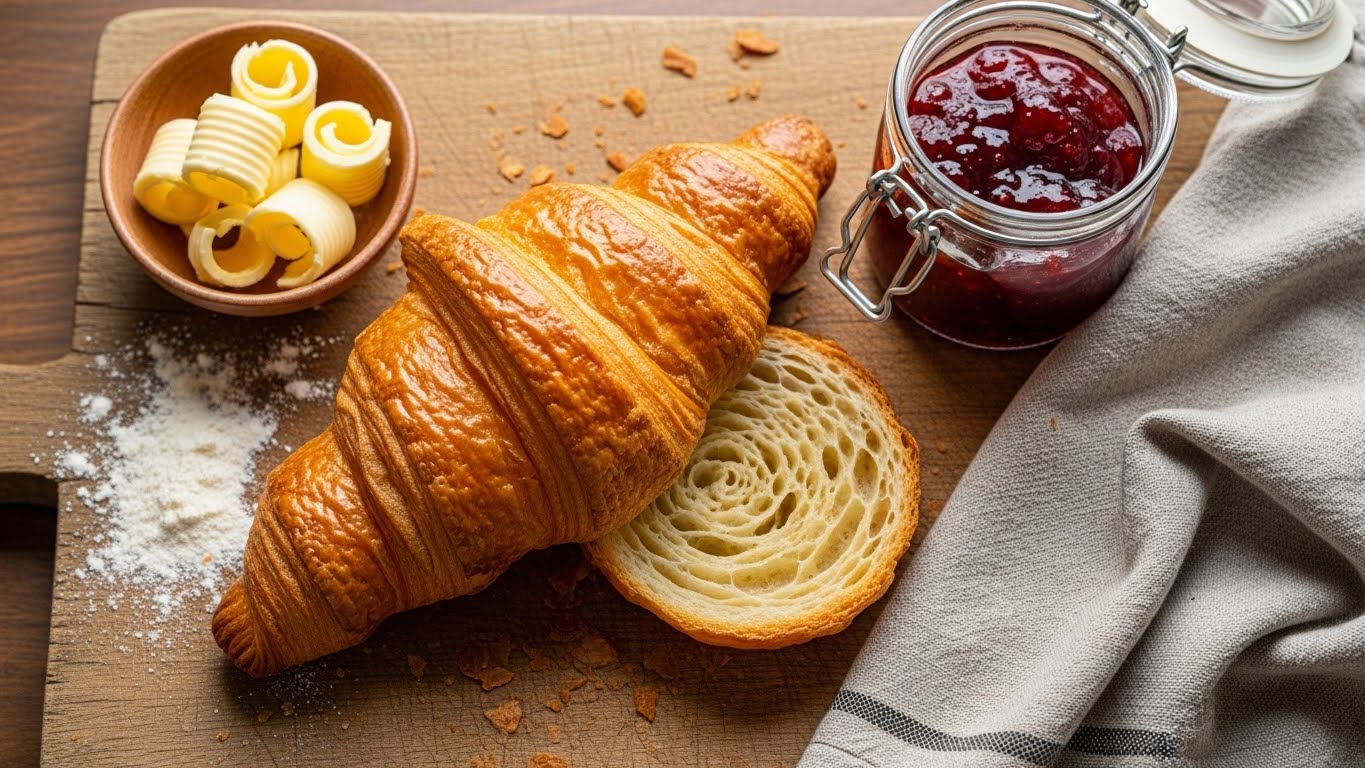
Few baked goods capture the essence of French cuisine like the croissant. With its buttery aroma, golden flaky crust, and tender layered interior, the croissant is a true masterpiece of pastry. For many of us, croissants mean Parisian cafes, slow breakfasts, and weekend treats. The good news? You do not need to be in France, or a professional baker, to enjoy authentic croissants. With patience, precision, and the right technique, you can make them at home.
In this guide, I will walk you through the history of the croissant, the step-by-step process, common mistakes, and tasty variations. By the end, you will be ready to bake croissants that rival your favorite bakery.
Perfect French Croissants at Home
Ingredients
Equipment
Method
- Make the dough: Mix flour, sugar, salt, and yeast. Add warm milk and knead 10 minutes until smooth. Cover and rest 1 hour until doubled. Punch down, wrap, and refrigerate 30 minutes.
- Prepare the butter block: Place butter between parchment and pound/roll into a 6×8 inch rectangle. Chill until firm but pliable.
- Laminate: Roll dough to 12×8 inches. Place butter in center and fold like a letter. Roll out, fold into thirds (one turn). Chill 30 minutes. Repeat for 3 turns total.
- Shape: Roll to 1/4-inch thick. Cut into triangles (4 inch base, 8 inch height). Stretch base, roll toward tip. Place seam-down on parchment-lined trays.
- Proof: Cover lightly and rise 1 to 2 hours until doubled, puffy, and jiggly.
- Bake: Preheat to 200C (400F). Brush with beaten egg. Bake 18 to 22 minutes until golden. Cool 10 minutes.
Notes
- Keep everything cold; if butter leaks, your dough was too warm.
- Do not under-proof; croissants should look puffy and jiggle slightly when touched.
- Best made over 2 days; an overnight chill improves flavor.
The History of the Croissant
Though now a French icon, the croissant’s story begins in Austria. Its ancestor, the kipferl, dates back to the 17th century. According to legend, Viennese bakers created crescent-shaped pastries to celebrate a victory over the Ottoman Empire. When Austrian officer August Zang opened a Viennese bakery in Paris in 1839, he introduced Parisians to the kipferl. French bakers, already masters of pastry, refined the recipe, adding laminated dough and butter, ultimately transforming it into the croissant we know today.
So while the croissant was born in Austria, it was perfected in France, where it became an everyday breakfast staple and a global culinary treasure.
What Makes Croissants Unique?
The defining feature of a croissant is laminated dough. Unlike simple breads, croissants are made by folding layers of butter into dough repeatedly. This creates dozens of alternating sheets of dough and butter. When baked, steam from the butter expands, puffing up the layers and giving croissants their signature flakiness. For a tested formula with baker’s percentages, see King Arthur Baking’s croissants recipe.
Croissants are:
- Artistic: They require skill and patience.
- Delicate: Light, airy inside; crisp golden outside.
- Rewarding: Few pastries deliver such satisfaction.
Ingredients for Classic Croissants
To make bakery-quality croissants at home, start with high-quality ingredients. See the recipe card below for exact amounts and the full method.
- 500 g (4 cups) all-purpose flour (or bread flour for extra chewiness)
- 55 g (1/4 cup) sugar
- 10 g (2 tsp) salt
- 10 g (1 tbsp) instant yeast
- 300 ml (1 1/4 cups) warm milk
- 250 g (2 sticks + 2 tbsp) unsalted butter, cold (European-style butter works best)
- 1 egg (for egg wash)
That is it: just simple pantry staples. But it is the method that transforms them into flaky perfection.
Step-by-Step Recipe for Croissants
1. Make the Dough (Detrempe)
- Mix flour, sugar, salt, and yeast in a large bowl.
- Add warm milk and knead until smooth (about 10 minutes).
- Cover and let rest for 1 hour until doubled in size.
- Punch down, wrap in plastic, and refrigerate for at least 30 minutes.
2. Prepare the Butter Block (Beurrage)
- Place butter between two sheets of parchment paper.
- Pound and roll into a 6×8 inch rectangle.
- Chill until firm but still pliable.
3. Laminate the Dough
This is where the magic happens.
- Roll the chilled dough into a 12×8 inch rectangle.
- Place butter block in the center. Fold dough over like a letter.
- Roll out gently, then fold into thirds. This is one turn.
- Chill for 30 minutes.
- Repeat this rolling and folding three times total.
Each turn multiplies the layers. After 3 turns, you will have dozens of butter-dough sheets.
4. Shape the Croissants
- Roll the laminated dough into a large rectangle, about 1/4-inch thick.
- Cut into long triangles (base 4 inches wide, height 8 inches).
- Stretch the base slightly, then roll toward the tip.
- Place on parchment-lined trays with the seam tucked under.
5. Proof the Dough
- Cover lightly with a towel or plastic wrap.
- Let rise for 1 to 2 hours until doubled in size.
- Croissants should look puffy and jiggle slightly when touched.
6. Bake
- Preheat oven to 200C (400F).
- Brush croissants with beaten egg for shine.
- Bake for 18 to 22 minutes until golden brown.
- Let cool 10 minutes before serving.
Time Breakdown for Croissants
| Step | Time Required | Notes |
|---|---|---|
| Dough preparation | 1.5 hours | Includes resting |
| Butter block | 15 minutes | Keep cold |
| Lamination (3 turns) | 2 hours | Includes chilling between folds |
| Shaping and proofing | 2 hours | Patience is key |
| Baking | 20 minutes | Crisp and golden |
| Total | About 6 hours (best over 2 days) | Better flavor if chilled overnight |
Common Mistakes and Fixes
- Butter leaking out: Dough or butter was too warm. Keep everything chilled.
- Dense croissants: Under-proofed. Allow them to rise fully before baking.
- Tough texture: Over-kneading or too much flour. Keep dough soft.
- Flat croissants: Oven not hot enough. Preheat fully.
Variations to Try
Once you master plain croissants, try these:
- Pain au Chocolat: add chocolate sticks before rolling.
- Almond Croissants: fill with almond paste and top with almonds.
- Savory Croissants: stuff with ham, cheese, or spinach.
- Whole Wheat Croissants: substitute part of the flour for whole wheat.
How to Serve Croissants
- Classic French breakfast: Pair with coffee or hot chocolate.
- Sandwich base: Fill with ham, cheese, or egg. For another homemade sandwich, try our Vietnamese banh mi guide.
- Sweet option: Spread with jam, honey, or Nutella.
Why Homemade Is Worth It
Store-bought croissants often use margarine, preservatives, or shortcuts that compromise flavor. Homemade croissants:
- Use real butter for authentic taste.
- Fill your kitchen with heavenly aroma.
- Deliver unmatched satisfaction with every flaky bite.
It is a labor of love, but the reward is extraordinary.
Final Thoughts
Croissants are more than just pastries: they are edible works of art. Making them at home teaches patience, precision, and appreciation for French baking. While the process is time-consuming, the result is worth every fold and rise.
Next time you crave something special, skip the bakery line. Roll out some dough, fold in some butter, and let your kitchen become a Parisian cafe. And for a sweet finish, browse our simple desserts with 5 ingredients or fewer.
Frequently Asked Questions
Can I make croissants without a stand mixer?
Yes. Knead the dough by hand for 10 to 12 minutes until smooth and elastic. It takes a little more effort, but the result is just as good. A stand mixer simply saves your arms.
Why did butter leak out of my croissants?
Butter leaks when the dough or butter gets too warm during lamination. Keep everything chilled, work quickly, and return the dough to the fridge for 30 minutes between turns. If your kitchen is warm, chill the dough more often.
Can I freeze croissant dough?
Yes. Freeze shaped, unbaked croissants on a tray, then transfer to a freezer bag for up to 1 month. Thaw overnight in the fridge, then proof at room temperature for 1 to 2 hours before baking.
How long do homemade croissants stay fresh?
They are best the day they are baked. Store leftovers in an airtight container at room temperature for up to 2 days, and refresh in a 160C (325F) oven for 5 minutes to restore crispness.
About the Author
Luke is the home cook and writer behind Lumomint Foods. He spends his time testing comforting, practical recipes from around the world and writing them up in plain, easy language for everyday cooks.