
How to Make Café-Style Cold Brew Coffee at Home
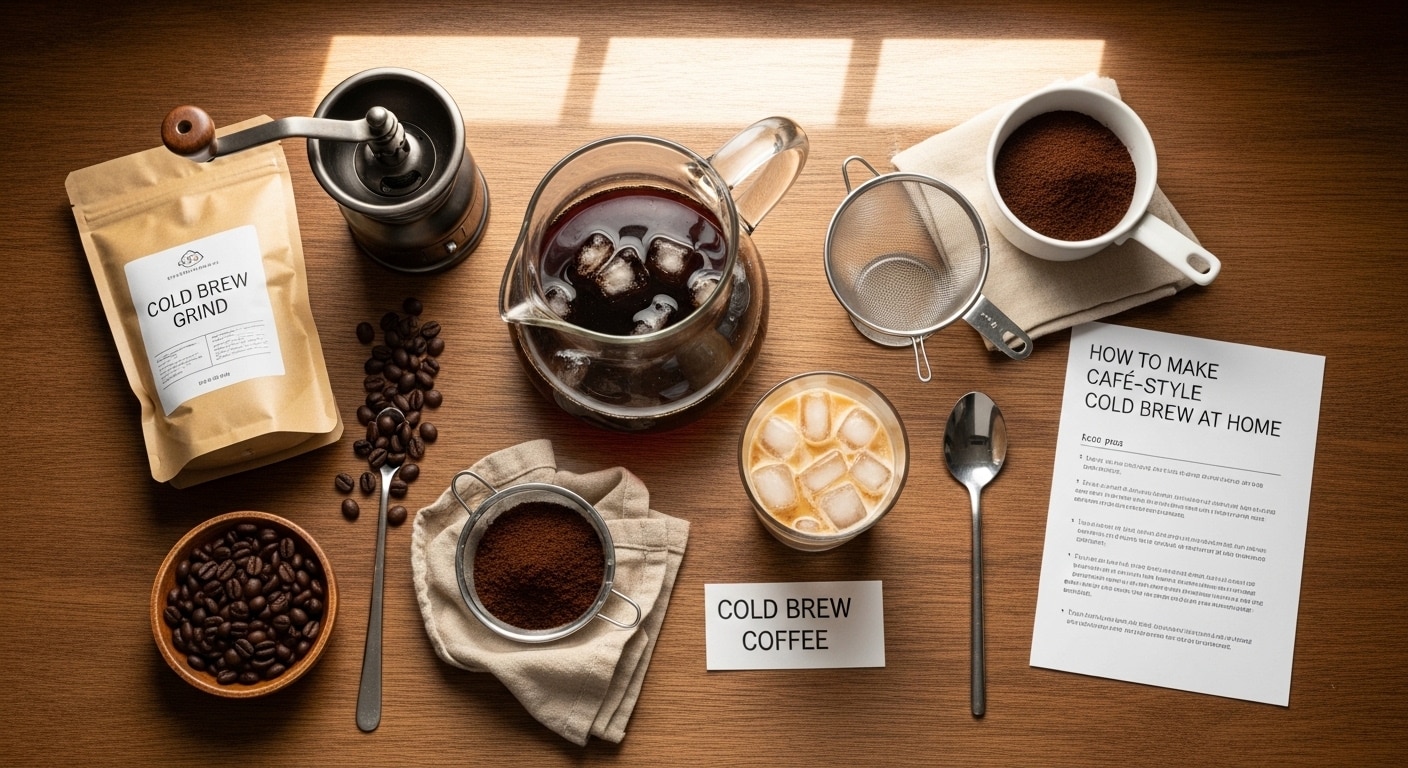
Nothing beats a tall glass of smooth, naturally sweet cold brew on a warm afternoon. I used to buy it at cafés every week until I learned the secret.
Café-Style Cold Brew Coffee
Ingredients
Equipment
Method
- Grind the coffee beans to a coarse texture, similar to raw sugar or sea salt.
- Add the ground coffee to a large jar or pitcher and pour in the cold filtered water.
- Stir gently until all the grounds are fully saturated with water.
- Cover and steep at room temperature for 12 hours, or in the refrigerator for up to 24 hours.
- Strain the coffee through a fine mesh sieve to remove the large grounds.
- Filter again through a paper coffee filter or cheesecloth for a clean, smooth finish.
- Dilute one part concentrate with one part water or milk, pour over ice, and enjoy.
Notes
What Is Cold Brew Coffee
Cold brew coffee is made by steeping coarsely ground coffee in cold or room-temperature water for an extended period, usually 12 to 24 hours. Unlike iced coffee, which is brewed hot and cooled, cold brew extracts flavor slowly, reducing bitterness and acidity while emphasizing chocolatey and nutty notes.
Why Café-Style Cold Brew Tastes Better
Coffee shops achieve better cold brew because they control grind consistency, coffee-to-water ratios, and filtration. Many home attempts fail because of under-extraction, weak ratios, or incorrect grind size. Once these fundamentals are mastered, café-quality results are easy to replicate.
Choosing the Right Coffee Beans
Medium to dark roast beans work best for classic café-style cold brew because they produce a smoother, fuller-bodied flavor. Single-origin beans offer unique notes, but blends are more forgiving and consistent. Always use freshly roasted whole beans and grind them just before brewing.
Best Grind Size for Cold Brew
Cold brew requires a coarse grind similar to raw sugar or sea salt. Fine grounds cause over-extraction, bitterness, and cloudy coffee. An even coarse grind ensures clean flavor and easy filtration.
Coffee-to-Water Ratio for Café-Style Results
For a cold brew concentrate, use a 1:4 ratio, one part coffee to four parts water. For ready-to-drink cold brew, use a 1:8 ratio. Cafés typically brew a concentrate and dilute it when serving to control strength and consistency.
Water Quality Matters
Cold brew is mostly water, so poor-quality water leads to flat or off flavors. Use filtered water with neutral taste. Avoid distilled water, which lacks minerals needed for proper extraction.
Equipment You Need
You do not need a cold brew maker. A large glass jar, French press, or pitcher works perfectly. A burr grinder, fine mesh strainer, and paper filter help achieve café-level clarity.
Step-by-Step Café-Style Cold Brew Recipe
Start by grinding your coffee beans coarsely, about the texture of raw sugar. Add 1 cup of ground coffee to 4 cups of cold filtered water and stir gently so every ground is saturated.
Cover and steep at room temperature for 12 hours, or in the refrigerator for up to 24 hours. Longer steeping adds strength, but too long can turn the brew bitter.
Filtering for Smoothness
After steeping, strain the coffee through a fine mesh sieve to remove large particles. Then filter again through a paper coffee filter or cheesecloth for a clean, sediment-free finish. This double filtration is the key café technique for a smooth cup.
Diluting Like a Coffee Shop
Cold brew concentrate should be diluted before drinking. A common ratio is one part concentrate to one part water or milk. Adjust to taste. Cafés often use ice as part of dilution, which further softens the brew.
Serving Café-Style Cold Brew
Serve cold brew over ice in a chilled glass. Add milk, oat milk, or cream if you like. For a quick affogato, pour it over a scoop of easy homemade ice cream. And if you love coffee in dessert form, our classic tiramisu is a must try.
Flavor Customization Without Ruining the Brew
Add cinnamon sticks, vanilla bean, or orange peel during steeping for subtle flavor. Avoid syrups during brewing, as sugar interferes with extraction. Flavoring is best done after filtration.
How Long Cold Brew Lasts
Cold brew concentrate keeps up to 7 days refrigerated in an airtight container. Ready-to-drink cold brew is best consumed within 3 to 4 days for optimal freshness.
Common Mistakes to Avoid
Using fine grounds causes bitterness and sludge. Steeping too long creates harsh flavors.
Skipping filtration leads to a cloudy texture. And low quality beans give flat taste no matter how good your technique is.
Cold Brew vs Iced Coffee
Cold brew is smoother, less acidic, and naturally sweeter. Iced coffee retains brightness and bitterness from hot extraction. Café menus often offer both, but cold brew is preferred for those sensitive to acidity.
Is Cold Brew Stronger Than Regular Coffee
Cold brew concentrate contains more caffeine per ounce, but once diluted, caffeine levels are similar to regular coffee. Strength depends on ratio, not brewing temperature.
Making Cold Brew at Scale
For weekly batches, multiply ratios consistently. Cafés rely on precise scaling to maintain flavor. Label containers with brew date to track freshness.
Learn More About Cold Brew
For a deeper look at extraction science and filtration, see this cold brew coffee guide from Serious Eats.
Why Homemade Cold Brew Matches Café Quality
Cold brew rewards patience and precision more than expensive equipment. With the right grind, ratio, and filtration, home-brewed cold brew delivers the same smooth body, clarity, and balance found in cafés.
Final Practical Insight
At the end of the day, great cold brew is about control, not complexity. Lock in your grind, ratio, and steep time once, and your fridge will hold smooth, café worthy coffee all week. That daily ritual is well worth the small effort.
Frequently Asked Questions
How long should I steep cold brew coffee?
Steep for 12 to 24 hours. Start tasting at 12 hours for a balanced cup. Longer steeps add strength but can turn bitter, so find the timing you like best.
Can I use pre-ground coffee for cold brew?
You can, but a coarse grind gives a cleaner, smoother cup. Pre-ground coffee is usually too fine, which leads to bitterness and cloudy results. If possible, grind whole beans just before brewing.
Why does my cold brew taste bitter?
Bitterness usually comes from too fine a grind or steeping too long. Use a coarse grind like raw sugar and keep the steep between 12 and 24 hours. Double filtration also removes bitter sediment.
How long does cold brew concentrate last in the fridge?
Stored in an airtight container, cold brew concentrate stays fresh for up to 7 days. Ready to drink cold brew is best within 3 to 4 days. Always keep it refrigerated.
About the Author
Luke is the home cook and writer behind Lumomint Foods. He spends his time testing comforting, practical recipes from around the world and writing them up in plain, easy language for everyday cooks.