
How to Bake the Classic British Victoria Sponge Cake
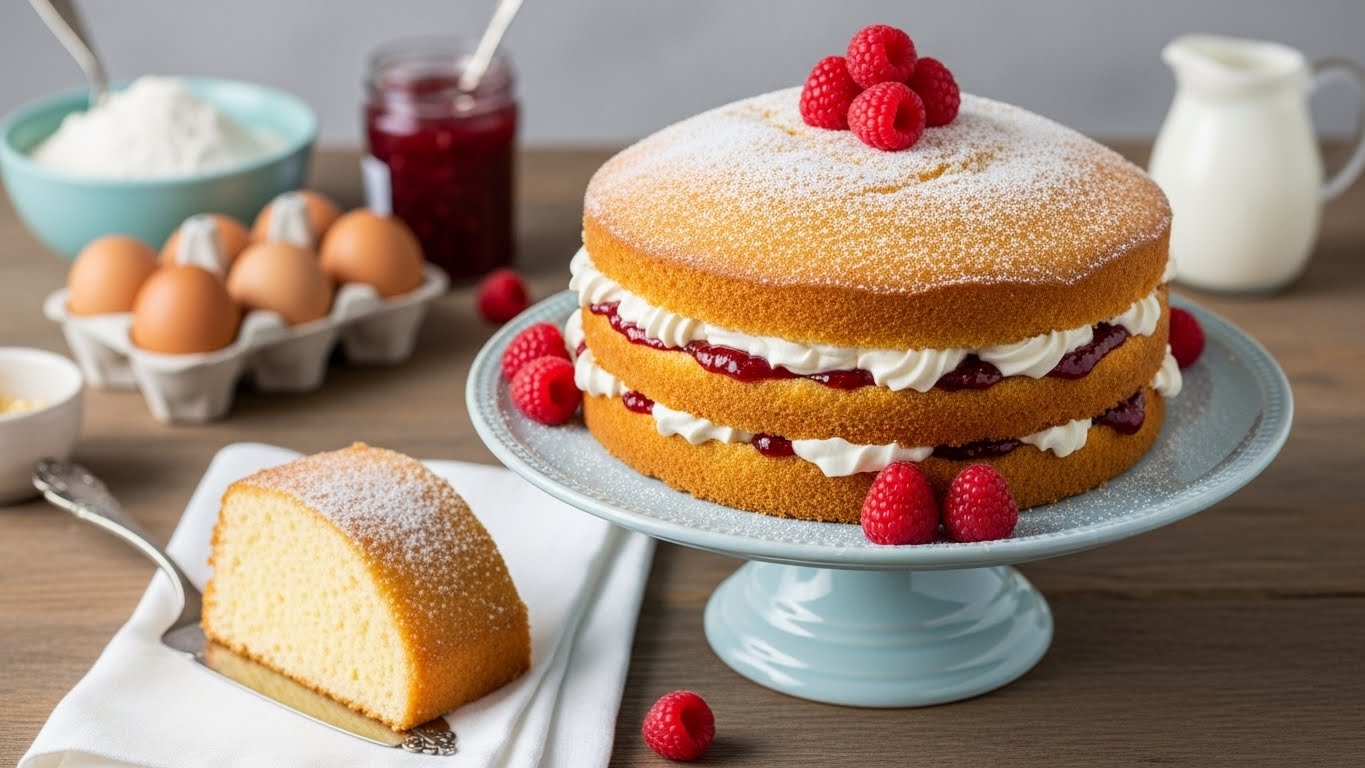
Few cakes are as iconic as the Victoria sponge. Layers of light, buttery sponge sandwich sweet raspberry jam and softly whipped cream, making it a true British classic. It looks impressive, yet it comes together with simple pantry ingredients and one reliable method.
In this guide, you will learn the story behind the Victoria sponge, the science of a perfect rise, and a reliable step by step method. I will also share common mistakes and tasty variations, so your first bake turns out beautifully.
Classic British Victoria Sponge Cake
Ingredients
Method
- Preheat the oven to 170C fan (180C conventional). Grease and line two 20cm round cake tins.
- Beat the butter and caster sugar together until pale and fluffy, about 4 minutes.
- Beat in the eggs one at a time, adding a spoonful of flour with each if the mixture curdles.
- Sift in the self-raising flour and baking powder, then fold gently with a spatula until just combined.
- Stir in the milk and vanilla extract for a soft dropping consistency.
- Divide the batter between the tins, level the tops, and bake for 20 to 25 minutes until golden and springy.
- Turn out onto a wire rack and leave to cool completely.
- Spread jam over one sponge and whipped cream over the other, sandwich together, and dust with icing sugar.
Notes
- Bring the butter and eggs to room temperature before you start for a smoother batter and better rise.
- Do not open the oven door during the first 15 minutes of baking or the sponge may sink.
- Assemble the cake just before serving so the whipped cream stays fresh and light.
A Slice of History: Origins of the Victoria Sponge
The Victoria sponge cake dates back to the 19th century, during the reign of Queen Victoria. Afternoon tea had become a fashionable social activity, and sponge cakes, lighter than the fruitcakes traditionally served, quickly grew in popularity.
Originally, sponges were made with whisked eggs and sugar alone, which required immense effort. However, the invention of baking powder by Alfred Bird in 1843 revolutionized home baking. This leavening agent allowed for fluffier, more reliable cakes, making the Victoria sponge an instant favorite.
Queen Victoria herself was known to enjoy this cake with raspberry jam at her daily teatime, cementing its royal association and timeless appeal.
What Makes a Victoria Sponge Special?
The charm of a Victoria sponge lies in its balance of flavors and textures:
- Light sponge layers: airy, buttery, and golden.
- Simple filling: typically raspberry or strawberry jam, with fresh cream or buttercream.
- Minimal decoration: just a dusting of icing sugar on top, no elaborate frostings.
Unlike modern cakes overloaded with sweetness, the Victoria sponge focuses on harmony, making it both elegant and satisfying.
The Science Behind the Perfect Sponge
Understanding the science of baking helps ensure success.
Key Elements:
- Eggs: provide structure and stability by trapping air when beaten.
- Butter: adds richness, moisture, and tenderness.
- Sugar: creates sweetness and helps aerate the batter when creamed with butter.
- Flour: provides structure through gluten formation.
- Baking powder: ensures a consistent rise and prevents dense layers.
The traditional method follows the “equal weights rule”: equal parts butter, sugar, eggs, and flour for balance and consistency.
Getting the Oven Temperature Right
At 150°C, the cake rises too slowly and may be dense.
- 170 to 180°C provides the best rise with even cooking.
Above 190°C, the outside may burn before the inside sets.
Step-by-Step Recipe: Classic Victoria Sponge
Ingredients:
200g unsalted butter (softened)
200g caster sugar
4 large eggs
200g self-raising flour
1 tsp baking powder
2 tbsp milk
1 tsp vanilla extract (optional)
4 tbsp raspberry or strawberry jam
150ml double cream (lightly whipped) or buttercream
Icing sugar for dusting
Instructions:
Preheat the Oven
Heat to 170°C (fan) or 180°C (conventional). Grease and line two 20cm round cake tins.
Cream Butter and Sugar
Beat butter and sugar together until pale, fluffy, and light.
Add Eggs
Beat eggs lightly, then add gradually to the mixture. Add 1 tbsp of flour if it looks curdled.
Fold in Flour
Sift flour and baking powder, then fold gently using a spatula.
Adjust Consistency
Add milk to create a soft dropping consistency.
Bake
- Divide mixture between tins, level the tops, and bake for 20 to 25 minutes until golden and springy.
Cool and Assemble
Allow cakes to cool. Spread jam on one sponge, whipped cream on the other, and sandwich together.
Finish
Dust with icing sugar and serve with tea.
Common Mistakes and How to Avoid Them
- Dense cake: do not overmix the flour, fold gently instead.
- Sunken center: avoid opening the oven door before the cake has set.
- Dry sponge: measure ingredients accurately and avoid overbaking.
- Curdled batter: add eggs slowly and balance with flour if needed.
Variations to Try
- Lemon Victoria sponge: add lemon zest and use lemon curd as filling.
- Chocolate sponge: replace part of the flour with cocoa powder.
- Berry version: add fresh strawberries or raspberries to the cream layer.
- Buttercream filling: replace fresh cream with a sweet buttercream for longer shelf life.
Victoria Sponge vs. Modern Layer Cakes
| Feature | Victoria Sponge | Modern Layer Cakes |
|---|---|---|
| Layers | Two | Multiple |
| Filling | Jam + cream/buttercream | Variety: ganache, mousse, fruit, etc. |
| Decoration | Minimal, icing sugar | Heavy frosting and designs |
| Flavor Profile | Light, balanced | Rich, often very sweet |
Tips for Success
Use room temperature ingredients for smoother mixing.
Always sift flour for a lighter sponge.
- Weigh ingredients precisely, accuracy is key.
Allow cakes to cool fully before adding cream to prevent melting.
Conclusion
The Victoria sponge cake is more than a recipe. It is a piece of British culinary history that has delighted generations. Its simple layers of sponge, jam, and cream prove that great baking does not need to be complicated.
Whether served at a family gathering, afternoon tea, or a festive occasion, the Victoria sponge continues to bring people together. Bake it once, and it will become a favorite in your kitchen too. If you love classic European desserts, try our tiramisu next, or explore the layers of Turkish baklava. For another take on this British icon, see the classic Victoria sandwich recipe at BBC Good Food.
Frequently Asked Questions
Can I make Victoria sponge without baking powder?
Self-raising flour already contains leavening, but the extra teaspoon of baking powder gives a more reliable rise, especially if your flour is old. If you only have plain flour, use 2 tsp baking powder per 200g flour. Measure carefully, since too much can make the sponge taste soapy.
Why did my Victoria sponge sink in the middle?
A sunken middle usually means the oven door was opened too early or the cake was underbaked. Bake until the top springs back when lightly pressed and a skewer comes out clean. See our detailed guide on why cakes sink in the middle for every cause and fix.
Can I freeze Victoria sponge cake?
Yes. Freeze the unfilled sponge layers wrapped tightly in cling film for up to 3 months. Thaw at room temperature, then fill with jam and cream just before serving. Do not freeze the assembled cake, as the cream will not hold its texture.
Should I use butter or margarine for Victoria sponge?
Real butter gives the best flavor and a tender crumb. Margarine or baking spreads work in a pinch and can produce a lighter texture, but the taste will be less rich. For an authentic result, use good quality unsalted butter at room temperature.
About the Author
Luke is the home cook and writer behind Lumomint Foods. He spends his time testing comforting, practical recipes from around the world and writing them up in plain, easy language for everyday cooks.