
Homemade Italian Lasagna
Introduction
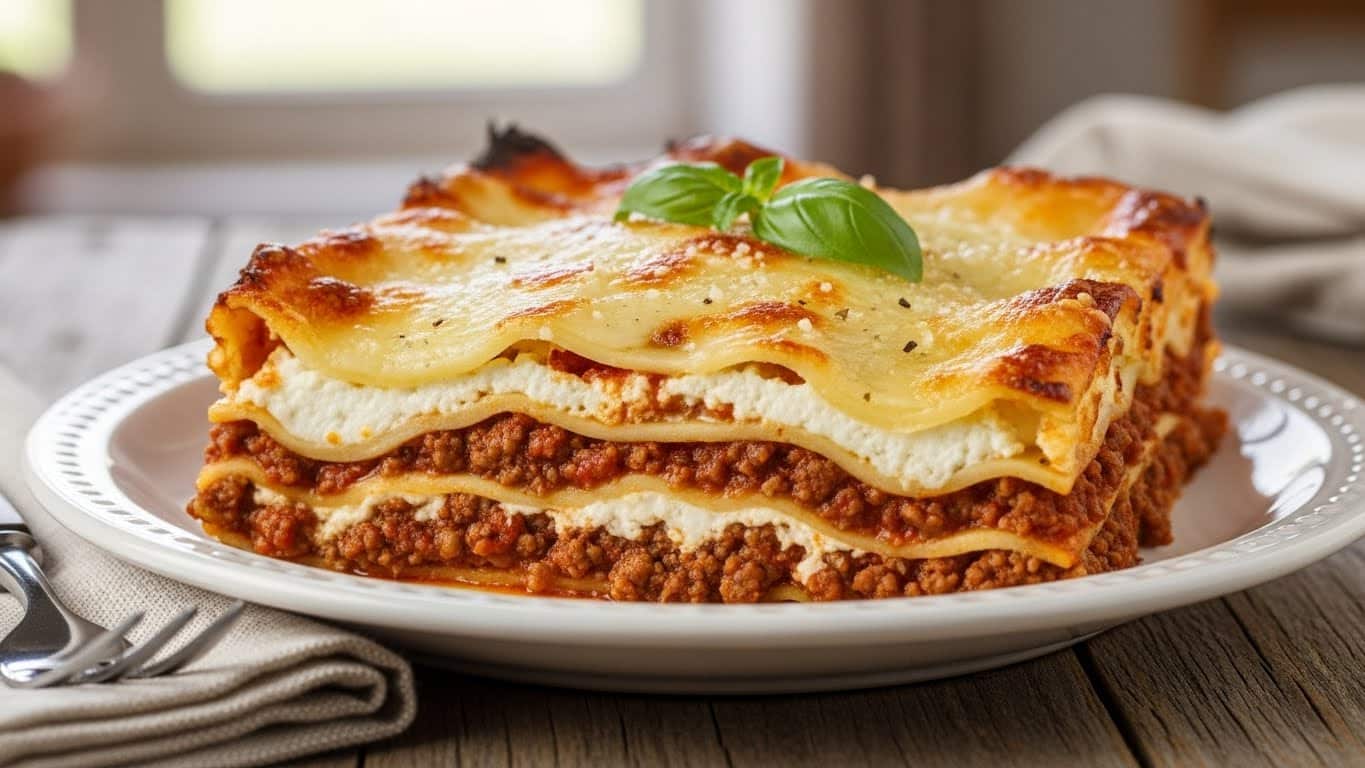
When it comes to hearty, soul-satisfying comfort food, few dishes can compete with Italian lasagna. Layer after layer of tender pasta sheets, creamy béchamel or ricotta, rich tomato-based meat sauce, and melted cheese creates a dish that is both rustic and elegant. It’s the kind of meal that can bring families together, spark nostalgia, and fill your kitchen with irresistible aromas.
Lasagna is not just food, it’s a culinary symbol of Italy’s love affair with pasta and tradition. In this article, we’ll explore the history of lasagna, provide a step-by-step authentic recipe, share cooking tips, discuss cultural importance, explore regional variations, and even break down the nutritional profile. While every region and even every family has its own unique version, the essence of lasagna lies in its layers of flavor
Homemade Italian Lasagna
Ingredients
Equipment
Method
- Heat olive oil in a large skillet or Dutch oven over medium heat. Add onion, carrot, and celery; saute until softened, about 5 to 7 minutes. Stir in garlic, then add ground beef and pork; cook until browned. Mix in tomato paste, crushed tomatoes, broth or wine, oregano, and basil. Simmer uncovered for 45 to 60 minutes, stirring occasionally, until thickened.
- In a saucepan, melt butter over medium heat. Whisk in flour and cook for 1 to 2 minutes to form a roux. Gradually whisk in warm milk until smooth. Simmer until thickened, about 10 minutes. Season with nutmeg, salt, and pepper.
- If using dried pasta, boil lasagna noodles according to package instructions until al dente. Drain and lay flat on parchment to prevent sticking. If using fresh pasta, no pre-cooking may be necessary.
- Preheat oven to 375 degrees F (190 degrees C). Spread a thin layer of meat sauce on the bottom of a 9×13 inch baking dish. Add a layer of noodles, followed by meat sauce, bechamel or ricotta, and mozzarella. Repeat layers until ingredients are used up, finishing with noodles, sauce, bechamel, and cheese on top. Sprinkle generously with Parmesan.
- Cover with foil and bake for 30 minutes. Remove foil and bake another 15 to 20 minutes until golden and bubbling. Let rest for 10 to 15 minutes before slicing.
A Brief History of Lasagna
Lasagna has roots that stretch back centuries, though its exact origin is often debated. The word “lasagna” comes from the Greek term laganon, meaning strips of flat dough. Ancient Romans also prepared layered dishes of pasta-like sheets, though not quite the lasagna we know today.
The modern Italian lasagna we’re familiar with is believed to have originated in Emilia-Romagna, a northern Italian region famous for its rich meat sauces, Parmesan cheese, and fresh egg pasta. Traditional “Lasagna alla Bolognese” features layers of handmade pasta, creamy béchamel, slow-cooked Bolognese sauce, and generous amounts of Parmigiano-Reggiano.
Over time, lasagna spread throughout Italy and beyond, adapting to local tastes. In southern Italy, ricotta often replaces béchamel, and mozzarella is used more heavily. In America, Italian immigrants introduced lasagna in the late 19th and early 20th centuries, leading to the beloved cheesy, hearty, tomato-forward versions we see today.
The Ultimate Homemade Lasagna Recipe
Ingredients
For the meat sauce (Ragù alla Bolognese):
2 tbsp olive oil
1 onion, finely chopped
2 carrots, finely chopped
2 celery stalks, finely chopped
2 cloves garlic, minced
500g (1 lb) ground beef
250g (½ lb) ground pork or Italian sausage
2 tbsp tomato paste
1 can (800g/28 oz) crushed tomatoes
1 cup beef broth or red wine
2 tsp dried oregano
2 tsp dried basil (or fresh if available)
Salt and pepper, to taste
For the béchamel sauce:
4 tbsp butter
4 tbsp all-purpose flour
4 cups whole milk, warmed
Pinch of nutmeg
Salt and pepper, to taste
For assembling:
- 12 to 14 lasagna noodles (fresh or boiled according to package)
2 cups ricotta cheese (or substitute with extra béchamel for traditional northern style)
3 cups shredded mozzarella cheese
1 cup freshly grated Parmesan cheese
Fresh basil leaves, for garnish
Step-by-Step Instructions
1. Prepare the Meat Sauce
Heat olive oil in a large skillet or Dutch oven.
- Add onion, carrot, and celery. Sauté until softened, about 5 to 7 minutes.
Stir in garlic, then add ground beef and pork. Cook until browned.
Mix in tomato paste, crushed tomatoes, broth/wine, and herbs.
- Simmer uncovered for 45 to 60 minutes, stirring occasionally, until sauce thickens and flavors deepen.
2. Make the Béchamel Sauce
In a saucepan, melt butter over medium heat.
- Whisk in flour and cook for 1 to 2 minutes to form a roux.
Gradually whisk in warm milk until smooth.
Simmer until thickened (about 10 minutes).
Season with nutmeg, salt, and pepper.
3. Cook the Lasagna Noodles
If using dried pasta, boil according to package instructions until al dente. Drain and lay flat on parchment paper to prevent sticking.
If using fresh pasta, no pre-cooking may be necessary.
4. Assemble the Lasagna
Preheat oven to 375°F (190°C).
Spread a thin layer of meat sauce on the bottom of a 9×13 inch baking dish.
Add a layer of noodles, followed by meat sauce, béchamel/ricotta, and mozzarella.
Repeat layers until ingredients are used up, finishing with noodles, sauce, béchamel, and cheese on top.
Sprinkle generously with Parmesan.
5. Bake
Cover with foil and bake for 30 minutes.
- Remove foil and bake another 15 to 20 minutes until golden and bubbling.
- Let rest for 10 to 15 minutes before slicing.
Tips for the Perfect Lasagna
Make ahead: Lasagna tastes even better the next day as flavors meld.
Balance the layers: Don’t overload one layer with sauce; keep it even.
Use fresh pasta if possible: It provides better texture and authenticity.
Rest before serving: Letting it sit prevents a runny mess when cutting.
Try béchamel and ricotta: For a fusion of northern and southern Italian styles.
Cultural Significance of Lasagna
Lasagna is often seen as a celebratory dish in Italy, prepared for Sunday dinners, family gatherings, and holidays. Its labor-intensive preparation reflects care and love, making it a dish that brings families together around the table.
Outside Italy, lasagna has become a global comfort food. In the United States, lasagna is one of the most beloved Italian-American dishes, often baked with extra mozzarella and ricotta for a cheesier, richer experience. In the UK and other countries, vegetarian lasagnas featuring spinach, eggplant, or zucchini have become popular.
Regional Variations
Lasagna alla Bolognese (Emilia-Romagna): Uses béchamel and Parmigiano with meat ragù.
Lasagna Napoletana (Naples): Features ricotta, mozzarella, small meatballs, hard-boiled eggs, and tomato sauce.
Vegetarian Lasagna: Layers of roasted vegetables with ricotta and spinach.
Seafood Lasagna (Southern Italy): Uses shrimp, clams, and béchamel for coastal regions.
American-Style Lasagna: Heavy on ricotta, mozzarella, and tomato sauce.
Nutritional Profile (Approximate per Serving)
- Calories: 600 to 750 kcal
- Protein: 30 to 35 g
- Carbohydrates: 50 to 60 g
- Fat: 25 to 30 g
- Fiber: 3 to 5 g
While lasagna is indulgent, it also provides protein, calcium, and energy. For a lighter version, use whole wheat noodles, reduce cheese, and load up on vegetables.
Frequently Asked Questions
Can I make lasagna ahead of time?
Yes! Assemble the lasagna, cover tightly with foil, and refrigerate for up to 24 hours before baking. Add 10 to 15 minutes to the bake time if starting from cold. This actually improves the flavor as the ingredients meld together.
Can I freeze lasagna?
Absolutely. Assemble the lasagna in a freezer-safe dish, wrap tightly with plastic wrap and foil, and freeze for up to 3 months. Thaw overnight in the refrigerator before baking as directed. You may need to add extra bake time.
What is the best cheese combination for lasagna?
A mix of ricotta, mozzarella, and Parmesan gives the best results. Use whole milk ricotta for creaminess, low moisture mozzarella to avoid sogginess, and freshly grated Parmesan for sharp flavor. Avoid pre-shredded cheese which contains anti-caking agents.
Conclusion
Homemade Italian lasagna is more than just a dish, it’s a celebration of tradition, patience, and love. Its history spans centuries, from ancient pasta dishes to the richly layered masterpiece we know today. With its tender noodles, flavorful sauces, and cheesy topping, lasagna has earned its place as one of the world’s most cherished meals.
By following this recipe and tips, you can create a dish that rivals even the best Italian trattorias. Whether you prepare it for a family gathering, a romantic dinner, or a cozy weekend meal, lasagna brings warmth, richness, and satisfaction to every bite.
So, roll up your sleeves, layer with love, and enjoy the ultimate rich, cheesy, and delicious homemade lasagna.
If you love hearty baked dishes, try our Greek Moussaka and Best Chicken Alfredo Bake next. For more Italian favorites, try our Chicken Parmesan and Baked Ziti too.
About the Author
Luke is the home cook and writer behind Lumomint Foods. He spends his time testing comforting, practical recipes from around the world and writing them up in plain, easy language for everyday cooks.
7 thoughts on “Homemade Italian Lasagna”