
How to Make Authentic Pad Thai
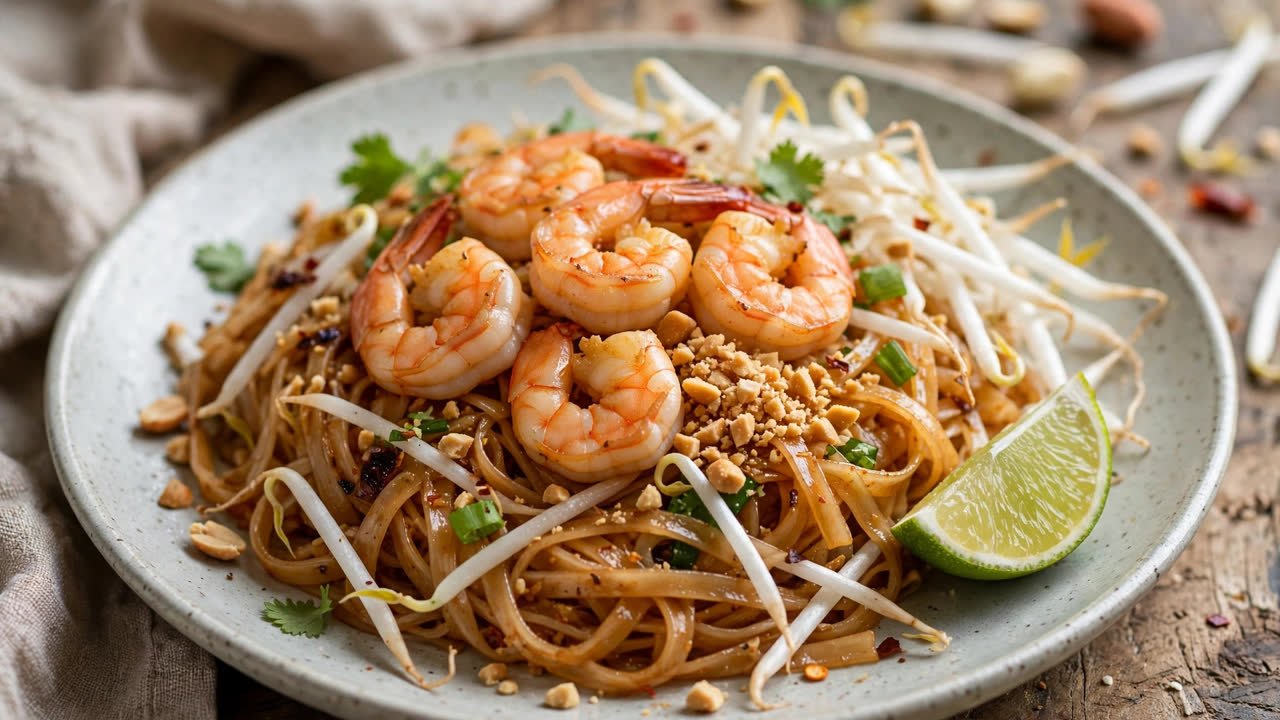
Craving that perfect balance of sweet, sour, salty, and umami in a single wok-full of noodles? You are not alone. Authentic Pad Thai is one of Thailand’s most beloved street foods, and for good reason. With its vibrant flavors, satisfying texture, and aromatic finish, it captures the soul of Thai cuisine. I have made this dish dozens of times, and nothing beats the homemade version using traditional techniques and real ingredients.
Pad Thai
Ingredients
Method
- Soak rice noodles in room-temperature water for 30 to 45 minutes until pliable but firm. Drain and set aside.
- Whisk together tamarind paste, fish sauce, palm sugar, and dried shrimp until sugar dissolves. Taste and adjust the balance.
- Prep all ingredients: mince garlic, slice protein into bite-sized pieces, trim chives into 2-inch segments, chill sprouts, and crush peanuts.
- Heat a wok over high heat until smoking. Add oil, sear protein, push to one side, scramble eggs, then mix together.
- Add drained noodles and sauce. Toss vigorously for 1 to 2 minutes until glossy and coated. Stir in bean sprouts and garlic chives; remove from heat.
- Plate immediately with crushed peanuts, lime juice, and chili flakes. Serve with extra lime wedges and chili on the side.
In this guide, I will walk you through every step to create authentic Pad Thai just like they do in Thailand. No shortcuts, no substitutions that compromise flavor. From sourcing the right rice noodles to mastering the sauce balance, you will learn how to recreate this iconic dish with confidence.
What Makes Pad Thai “Authentic”?
Many restaurant versions of Pad Thai lean heavily on sugar, ketchup, or even soy sauce, ingredients that stray far from the original. True authentic Pad Thai relies on a delicate harmony of tamarind paste, fish sauce, palm sugar, and dried shrimp, all working together to create its signature complex flavor profile. For another take on the technique, see Serious Eats’ Pad Thai recipe.
The dish originated in the 1930s as part of a national campaign to promote Thai identity, and while it is now globally recognized, its roots remain firmly in Thai street food culture. Authenticity is not just about taste, it is about technique: quick stir-frying over high heat, using soaked (not boiled) rice noodles, and finishing with fresh herbs and crushed peanuts.
Unlike Westernized versions, real Pad Thai uses sen lek (thin flat rice noodles), which absorb sauce beautifully without turning mushy. The protein, usually shrimp, tofu, or chicken, is cooked first, then set aside so the noodles can soak up the wok’s heat and flavor. This method ensures every bite is layered, not soggy or clumpy.
Essential Ingredients for Authentic Pad Thai
Getting the ingredients right is half the battle. While some items might seem obscure, most are available at Asian grocery stores or online. Here is what you will need:
- Rice noodles: (sen lek) Look for dried flat rice noodles about 1/4 inch wide. Avoid pre-packaged noodles with sauce, they are often overly sweet.
- Tamarind paste: This is the key sour component. Use 100% natural tamarind pulp or concentrate.
- Fish sauce: (nam pla) Choose a clear, amber-colored fish sauce with no added sugar. It provides the essential salty-umami backbone.
- Palm sugar: Milder and less refined than white sugar, it melts smoothly and adds depth. Substitute dark brown sugar if needed.
- Dried shrimp: Small, pinkish dried shrimp add a subtle briny note. Toast them lightly before use for maximum aroma.
- Eggs: Fresh, preferably free-range. They will be scrambled into the noodles for richness.
- Protein: Traditional choices include fresh shrimp, firm tofu, or boneless chicken thigh.
- Bean sprouts and garlic chives: Added at the end for crunch and freshness.
- Roasted peanuts: Crushed and sprinkled on top for texture and nuttiness.
- Lime wedges and chili flakes: Served on the side for individual customization.
Step-by-Step Guide to Cooking Authentic Pad Thai
1. Prepare the Noodles
Start by soaking your rice noodles in room-temperature water for 30 to 45 minutes until they are pliable but still slightly firm. Over-soaking leads to mushiness; under-soaking makes them tough. Drain and set aside. They should be damp, not dripping wet.
Never boil the noodles! Boiling breaks down their structure and ruins the texture. The residual heat from the wok will finish cooking them perfectly during stir-frying.
2. Make the Pad Thai Sauce
In a small bowl, combine:
- 3 tablespoons tamarind paste (strained if using pulp)
- 3 tablespoons fish sauce
- 2 tablespoons palm sugar (finely chopped or grated)
- 1 teaspoon dried shrimp (lightly toasted and ground)
Stir until the sugar dissolves completely. Taste and adjust. Authentic Pad Thai should be boldly flavored, not cloyingly sweet. The sauce should lean slightly sour with a salty-sweet undertone.
3. Prep Your Ingredients
Have everything ready before you start cooking. Pad Thai comes together in under 5 minutes. Mince garlic (or try my garlic confit for deeper flavor), slice protein into bite-sized pieces, trim garlic chives into 2-inch segments, and keep bean sprouts chilled.
Crush roasted peanuts coarsely with a mortar and pestle or rolling pin. Set aside half for garnish and reserve the rest to mix into the dish.
4. Stir-Fry Like a Pro
Heat a large wok or skillet over high heat until smoking. Add 2 tablespoons of neutral oil (like peanut or canola). Swirl to coat.
Add your protein and sear until nearly cooked through. Push to one side, crack in 2 eggs, and scramble lightly. Once set, mix everything together.
Add drained noodles and pour in the sauce. Toss vigorously with tongs or spatulas for 1 to 2 minutes until noodles are glossy and evenly coated. The high heat will caramelize the sauce slightly. This is where the magic happens.
Stir in bean sprouts and garlic chives, tossing just until wilted. Remove from heat immediately to preserve crunch.
5. Serve with Style
Plate the Pad Thai immediately while hot. Sprinkle generously with crushed peanuts, a squeeze of fresh lime juice, and a pinch of chili flakes. Serve extra lime wedges and chili on the side so everyone can customize their bowl.
Garnish with a few whole garlic chive stalks for visual appeal. In Thailand, Pad Thai is often served on banana leaves or wrapped in paper, feel free to get creative!
Common Mistakes to Avoid
Even experienced cooks can stumble when making Pad Thai. Here are the top pitfalls:
- Using the wrong noodles: Thick or instant rice noodles will not absorb sauce properly. Stick to thin, dried flat rice noodles.
- Overcooking the noodles: Remember, they continue cooking in the wok. Soak, do not boil.
- Skipping the tamarind: Lemon juice or vinegar cannot replicate tamarind’s deep, fruity sourness.
- Crowding the wok: Cook in batches if needed. Too much food lowers the temperature and steams instead of sears.
- Adding sauce too early: The sauce should go in after the protein and eggs are mostly cooked, so it reduces and clings to the noodles.
Tips for Perfect Texture and Flavor
Achieving that restaurant-quality bite takes practice, but these tips will fast-track your success:
- Use high heat: Pad Thai is a stir-fry, not a simmer. A blazing-hot wok creates the signature wok hei (breath of the wok), that smoky aroma that elevates the dish.
- Do not skip the dried shrimp: It is subtle but essential. If you are vegetarian, try using a pinch of seaweed flakes or mushroom powder for umami.
- Balance is everything: Taste as you go. If it is too sour, add a touch more palm sugar. Too salty? A splash of water or extra tamarind can help.
- Freshness matters: Use day-old bean sprouts for better texture, they hold up better under heat.
- Serve immediately: Pad Thai waits for no one. The noodles will continue to soften as they cool.
Nutritional Notes and Dietary Adaptations
Traditional Pad Thai is naturally gluten-free (check your fish sauce and tamarind for hidden additives) and can easily be made vegetarian or vegan.
For a plant-based version, swap fish sauce for soy sauce or a blend of soy sauce and a dash of seaweed. Use extra-firm tofu pressed and pan-fried until golden. Nutritional yeast can also boost umami.
A typical serving (about 1 cup cooked) contains roughly 350 to 400 calories, with moderate carbs from noodles, healthy fats from peanuts and oil, and protein from eggs and your chosen protein source. It is a balanced meal when enjoyed as part of a varied diet.
Key Takeaways
- Authentic Pad Thai hinges on the right ingredients: tamarind, fish sauce, palm sugar, and thin rice noodles.
- Soak, do not boil, the noodles to preserve texture.
- The sauce should be bold, balanced, and made fresh each time.
- Cook over high heat for that signature smoky flavor.
- Serve immediately with lime, peanuts, and chili for the full experience.
Frequently Asked Questions
Can I make Pad Thai ahead of time?
Pad Thai is best served fresh, as the noodles continue to soften and absorb moisture over time. However, you can prep all ingredients (soak noodles, make sauce, chop veggies) up to a day in advance and store them separately in the fridge. Cook just before serving.
What if I cannot find tamarind paste?
Tamarind is non-negotiable for authentic flavor, but if unavailable, mix 2 tablespoons of lime juice with 1 teaspoon of brown sugar and a pinch of vinegar. It will not be identical, but it will provide a similar sweet-sour base.
Is Pad Thai spicy?
Traditionally, Pad Thai itself is not spicy, the heat comes from chili flakes or fresh chilies served on the side. This allows each person to adjust the spice level to their preference, making it family-friendly and customizable.
Final Thoughts
Making authentic Pad Thai at home is easier than you think, and far more rewarding than any takeout version. With the right ingredients, a hot wok, and a little practice, you will master one of Thailand’s most iconic dishes. It is more than just a meal; it is a celebration of balance, texture, and bold flavor.
So grab your tongs, fire up the stove, and get ready to taste the real deal. Once you have made it yourself, you will never look at Pad Thai the same way again. Once you have mastered Pad Thai, try my easy butter naan for another hands-on favorite.
About the Author
Luke is the home cook and writer behind Lumomint Foods. He spends his time testing comforting, practical recipes from around the world and writing them up in plain, easy language for everyday cooks.
1 thought on “How to Make Authentic Pad Thai”